Marine Deck Covering Manufacturer for Commercial Vessel Projects

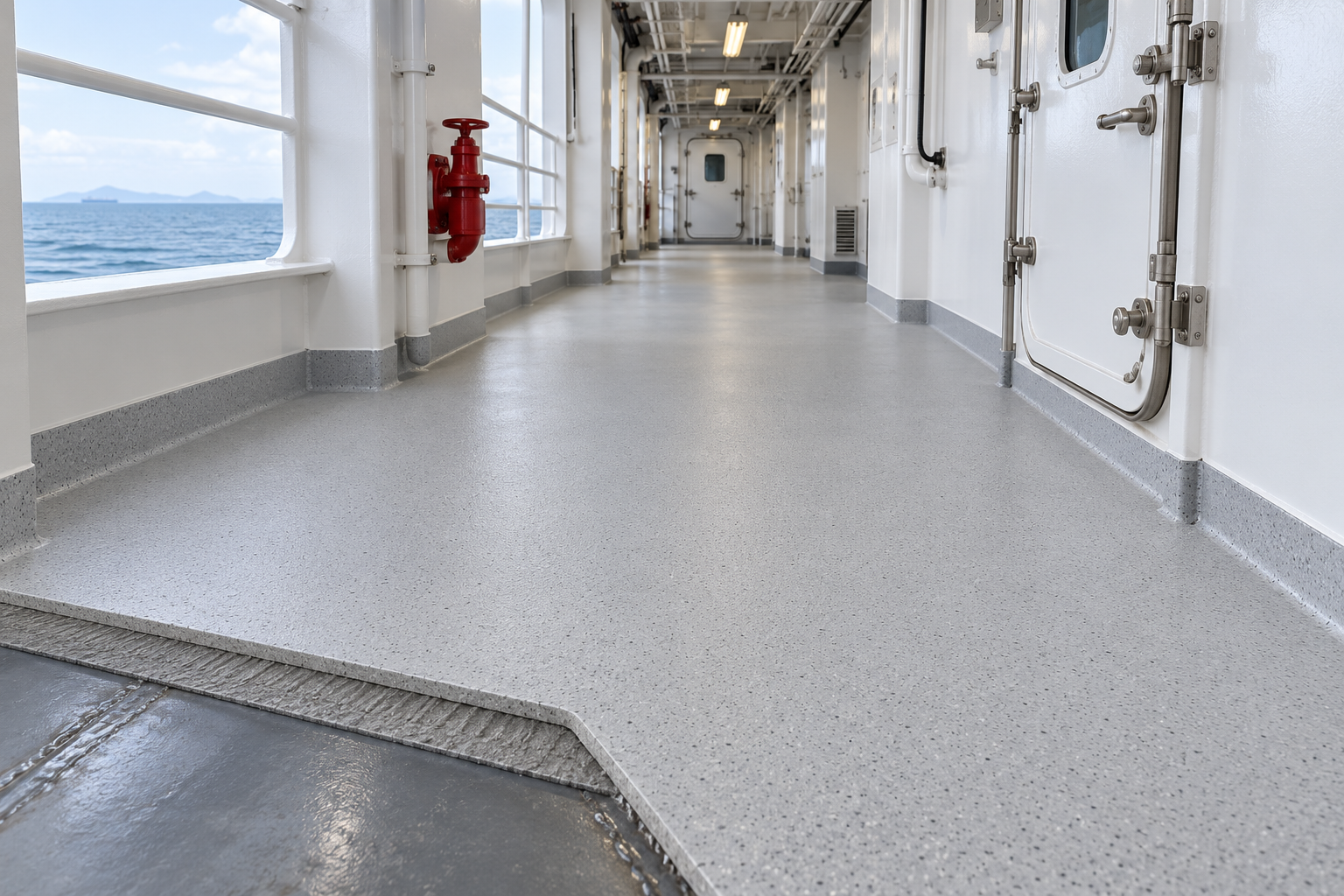
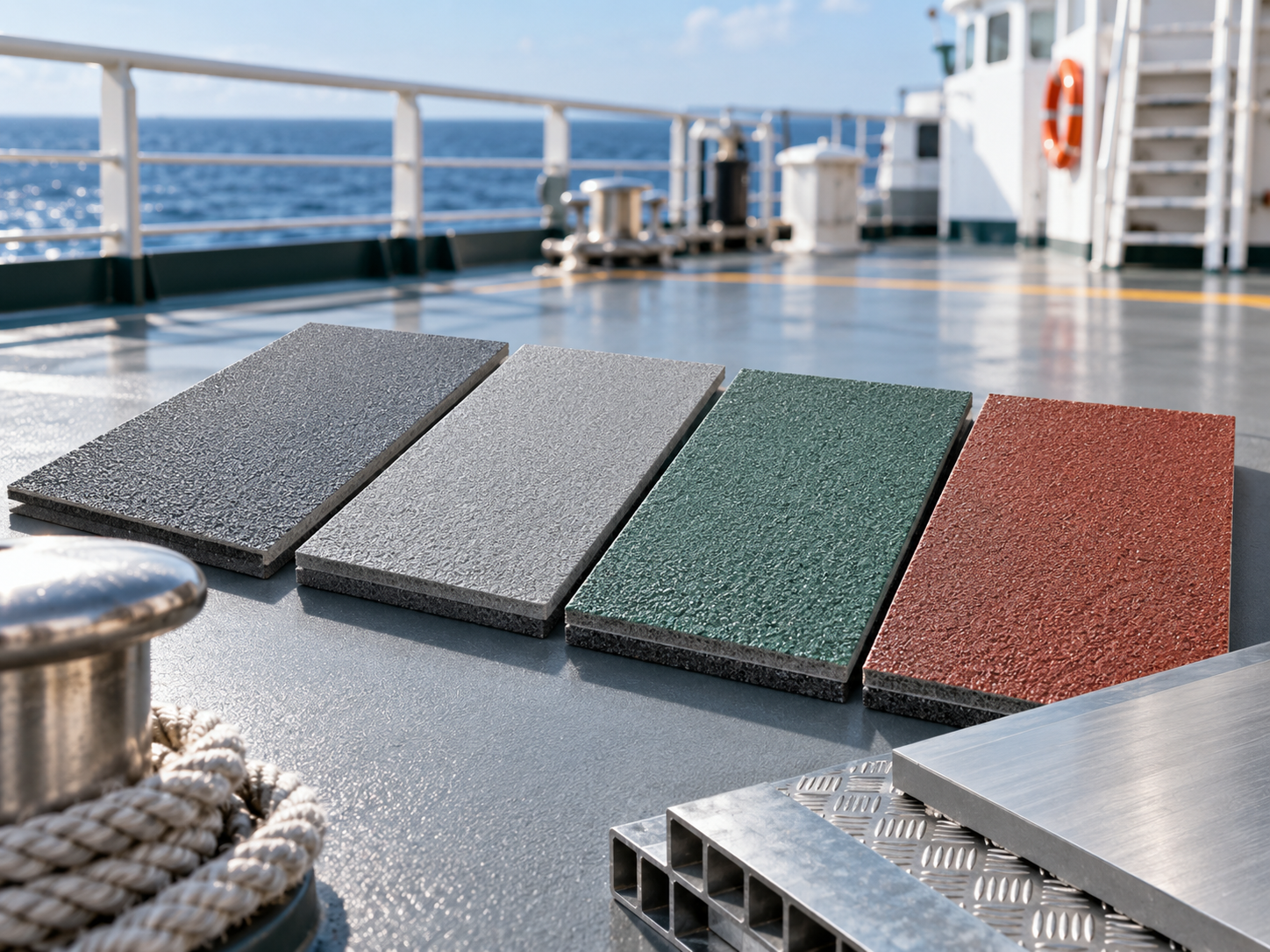
Yibo Marine Systems is a marine deck covering manufacturer that supplies primary coverings, levelling materials, screed underlays and resin floor systems. Refer to the layer of the vessel needed, the specific model specification and the accompanying documents pertaining to the desired assembly.

Deck schedules provide a suitable starting point for marine engineering, installation and shipyard procurement teams. Specify the vessel space, substrate, final surface and allowable thickness; those datapoints differentiate a useful material selection from an estimate that leaves interfaces undetermined.

  • Material families
  • Quotation inputs
  • Document review
  • Buyer questions
Marine Deck Covering Manufacturer for Commercial Vessel Projects
  • YB-1 and YB-4 Primary deck covering models
  • AC-J series Cement-based screed and levelling options
  • DP-SDI Damping layer in a specified build-up
  • YB-5 25 kg/bag levelling deck covering
  • YB-4 Technical-sheet density ≤800 kg/m³
  • YB-7 Technical-sheet compressive strength ≥15 MPa

Commercial-Vessel Deck Covering Capabilities

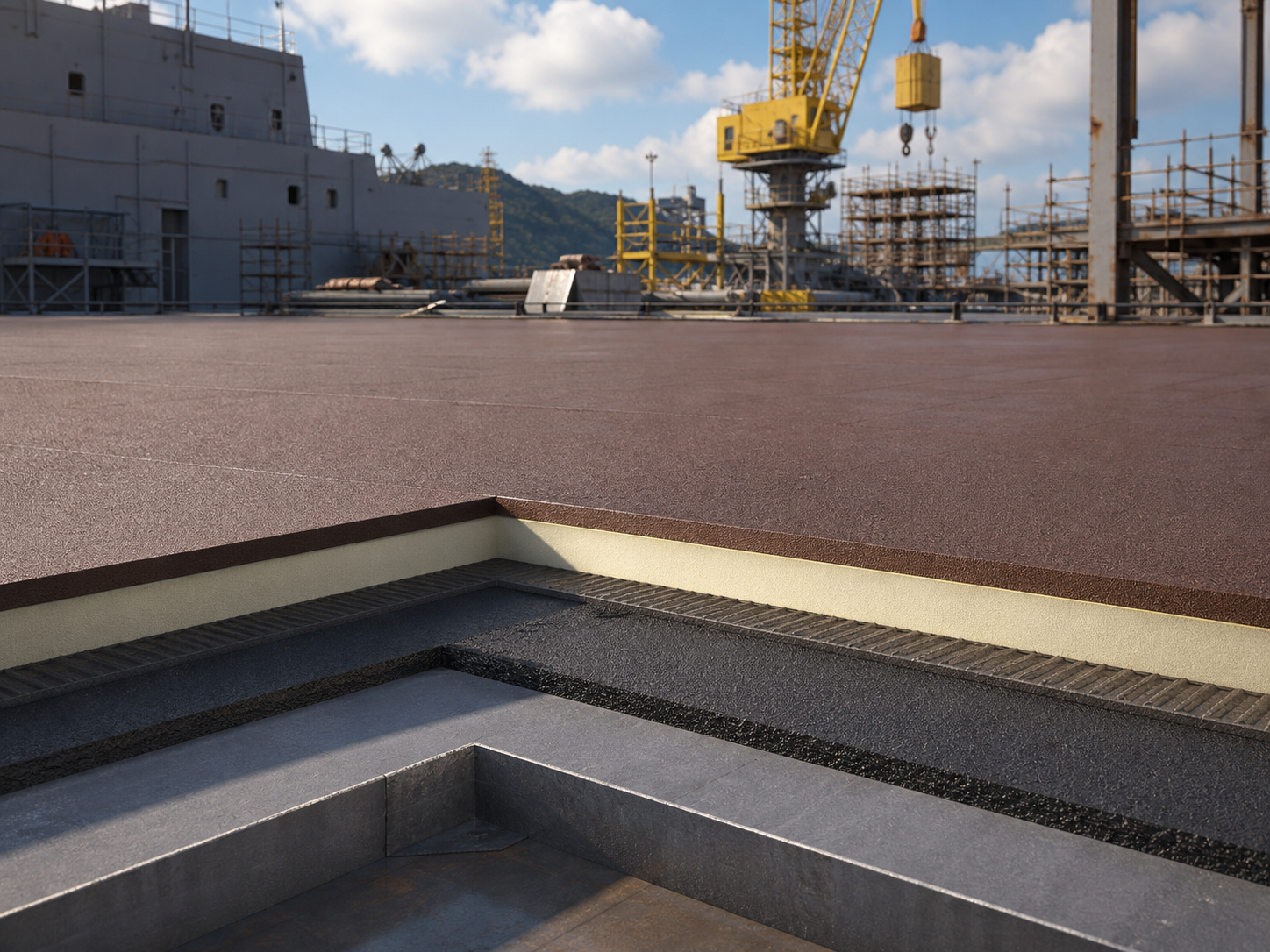
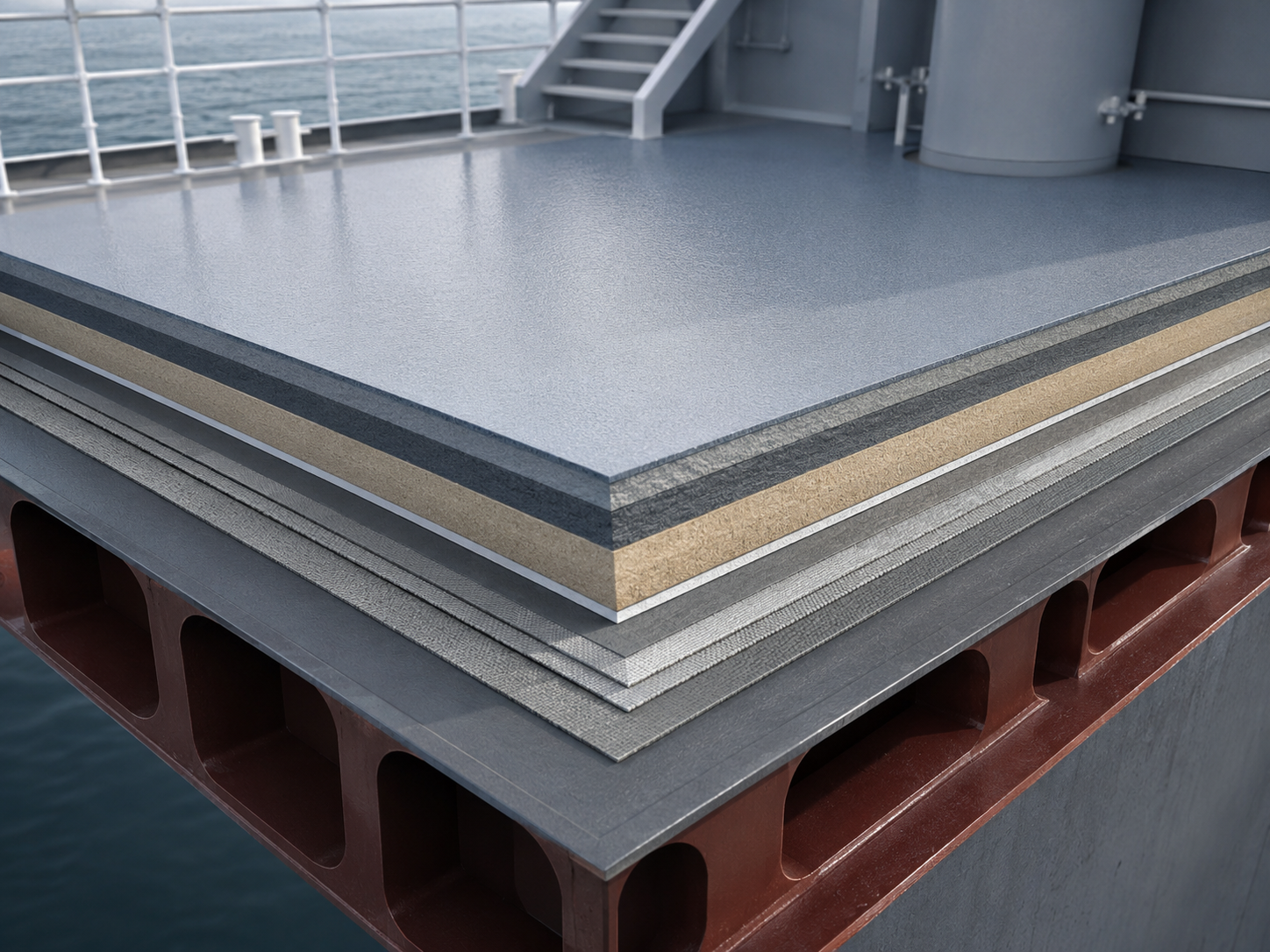
Yibo Marine Systems supplies deck covering systems through various product families. A primary covering system prepares the lower deck/screed for the upper layers, a screed establishes the required level and a resin system forms the exposed wearing surface. Buying the systems without checking their layer functions promotes a risk of inadequate material and/or incompatible interfaces.

SPEC // 01

Primary and ordinary coverings

YB models give the engineering team density, strength and pack-size options for a proposed deck assembly. YB-1 and YB-4 are primary-covering candidates; the broader YB range includes different strength and levelling roles.

Compare the primary covering family
Primary Deck Covering
Primary ↗
Ordinary Deck Covering
Ordinary ↗
Self Levelling Deck Covering
Self Levelling ↗
SPEC // 02

Levelling and screed underlays

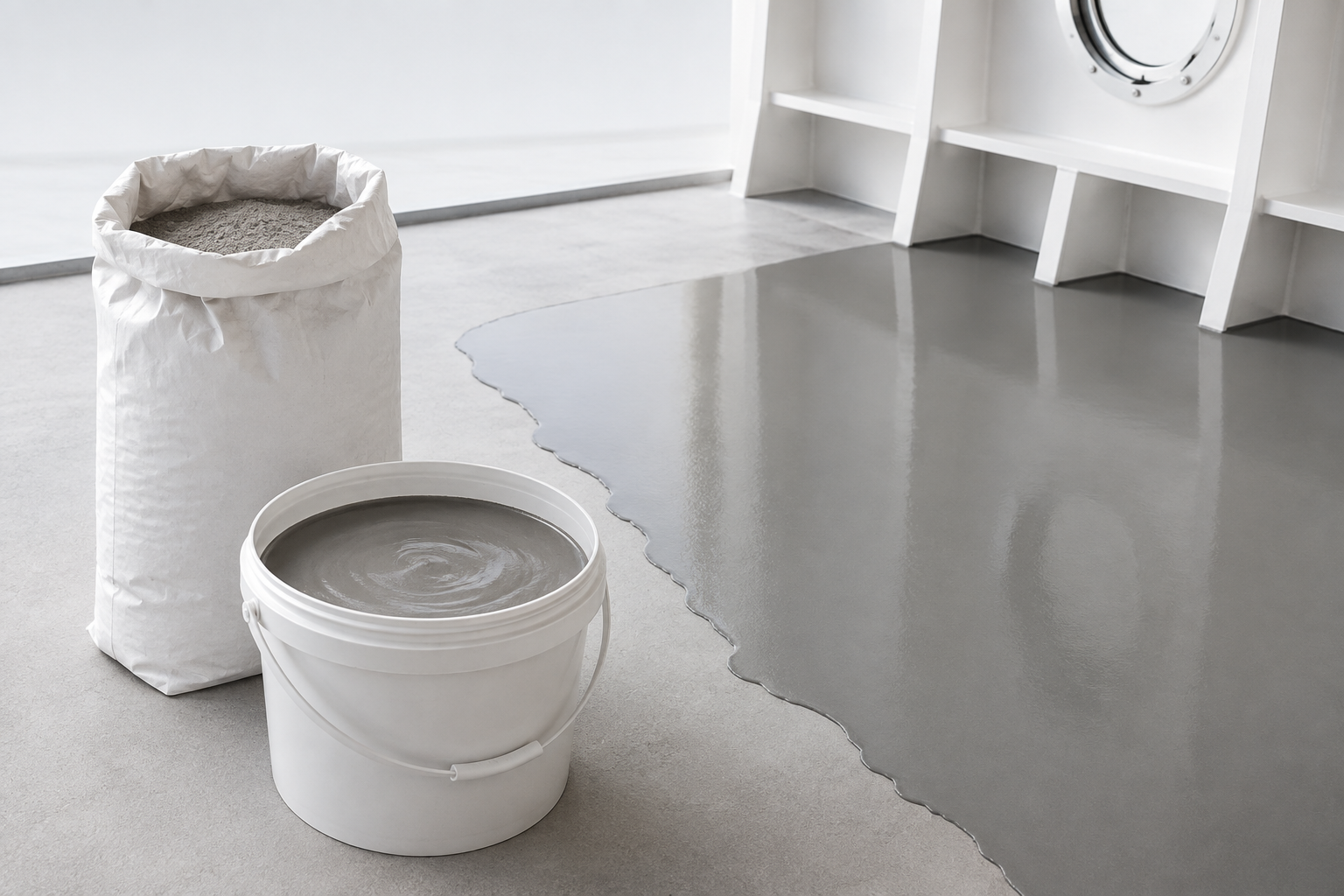
AC-J materials address substrate levelling before the next floor layer. The application needs the permitted thickness, substrate preparation and finish interface resolved together; a self-levelling material is not a substitute for a drainage design.

Review the AC-J screed range
Self-Levelling Screed Underlay
Screed Underlay ↗
SPEC // 03

Damping and floating-floor components

Our product catalogue includes DP-SDI damping material and floating-floor build-ups. Their role is within an assembly whose joints, edges, supports and penetrations affect the result. Select components against the complete drawing.

Check the assembly boundaries
SPEC // 04

Resin floor finishes

Our range includes epoxy floor material and polyurethane floor systems. Match the surface to cleaning, traffic and exposure conditions, then confirm the relevant application sheet. A decorative appearance alone does not establish slip resistance.

Review finish interfaces
Non-Self-Levelling Screed Underlay
Non-Self-Levelling ↗

Primary Deck Covering, Screed Mortar and Floor Materials

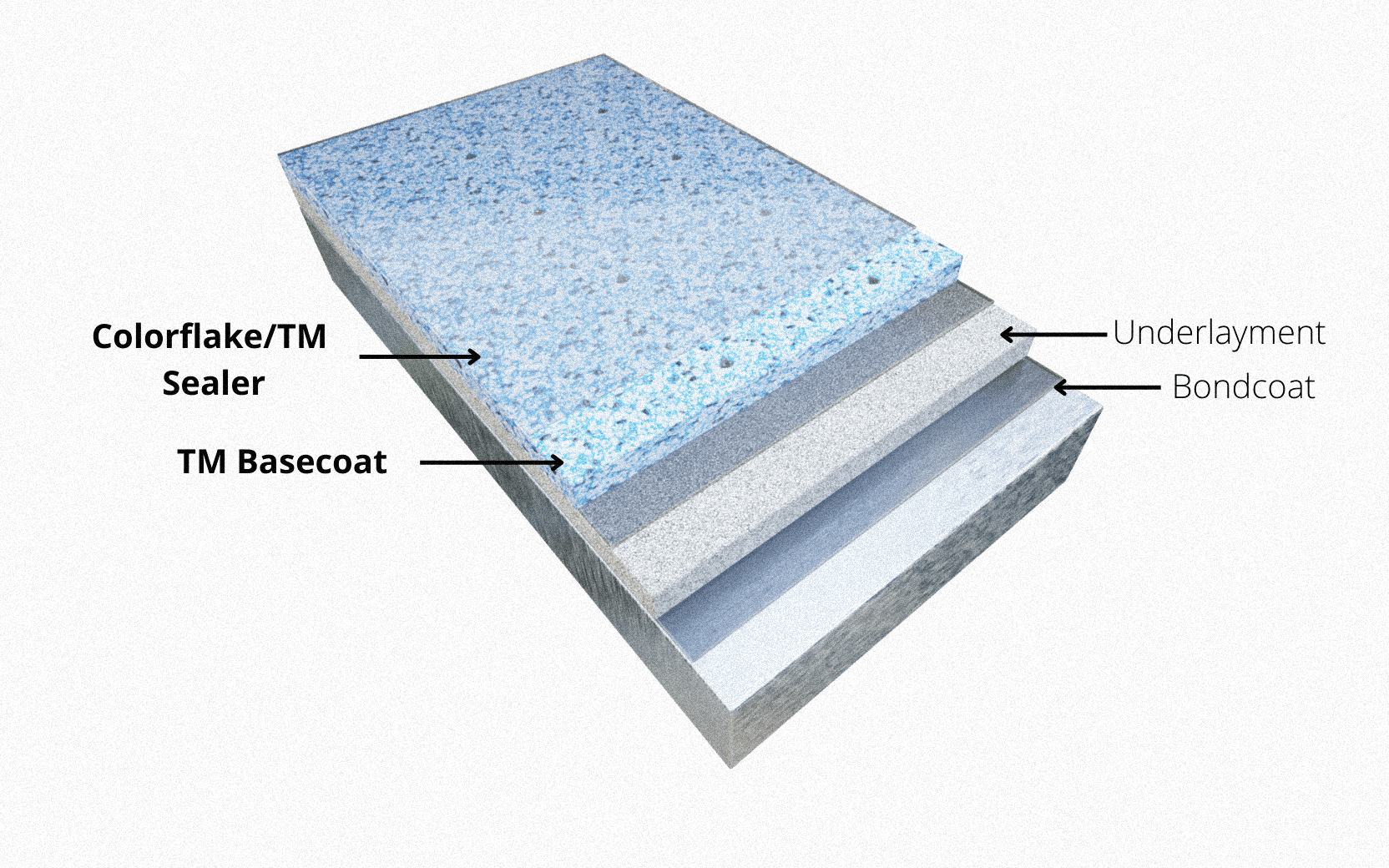
As a ship deck flooring manufacturer, we separate model selection from the completed floor description. Cement-based mortar, damping material and resin may all appear in a marine floor, but they serve different functions. The following material cards identify the function to maintain a procurement comparison relative to the deck drawing.

Marine Primary Deck Covering and Floor Materials
  • SPECIFICATIONS

    YB-1 marine primary deck covering

    We supply YB-1 as a light primary deck covering. Its technical sheet lists density ≤1300 kg/m³, breaking strength ≥3 MPa and compressive strength ≥8 MPa, with a 39 kg/set package.

    Use the model as a candidate for the specified primary layer. The upper finish, primer and permitted build-up remain part of the engineering review.

  • SPECIFICATIONS

    YB-4 lightweight primary deck covering

    We supply YB-4 with a technical-sheet density limit of ≤800 kg/m³ and a 19 kg/set package. The same sheet lists breaking strength ≥3 MPa and compressive strength ≥8 MPa.

    This is a lower density limit than YB-1, with the same stated strength minima. Compare the required thickness and density basis before turning those limits into a mass estimate.

  • SPECIFICATIONS

    YB-3 ordinary covering

    We supply YB-3 with density ≤1000 kg/m³ and a 38 kg/set package. Its strength minima are ≥3 MPa breaking and ≥8 MPa compressive.

    The catalogue also places YB-3 in a layered floor drawing. Treat that drawing as a combination to examine; the material name by itself does not establish the fire performance of a complete floor.

  • SPECIFICATIONS

    YB-5 levelling covering

    We supply YB-5 in 25 kg/bag packaging. The technical sheet gives density ≤1800 kg/m³, breaking strength ≥3.5 MPa and compressive strength ≥10 MPa.

    The catalogue illustrates a 2–3 mm (about 0.08–0.12 in) levelling layer. Confirm the proposed application against the model sheet; its flow-spread measurement is a separate property from the installed thickness.

  • SPECIFICATIONS

    YB-7 ordinary covering

    We supply YB-7 with a 50 kg/set package and density ≤2100 kg/m³. Its technical-sheet minima are ≥5 MPa breaking strength and ≥15 MPa compressive strength.

    These values provide a different starting point from the lighter YB models. Match the load and floor construction before choosing a stronger or heavier candidate.

  • SPECIFICATIONS

    AC-JI screed

    We supply AC-JI as a cement-based self-levelling screed, packaged at 25 kg/bag. Its technical sheet lists density ≤1700 kg/m³, breaking strength ≥8 MPa and compressive strength ≥30 MPa.

    For the installer, the next decision is the substrate and application sequence. Keep the specified primer and upper floor covering in the same work package.

  • SPECIFICATIONS

    AC-JII screed

    We supply AC-JII in 13 kg/bag packaging. The technical-sheet density limit is ≤800 kg/m³, with breaking strength ≥5 MPa and compressive strength ≥20 MPa.

    Review this lightweight screed candidate when floor mass is a design input. Confirm whether the density supplied for takeoff describes dry material, mixed product or the cured layer.

  • SPECIFICATIONS

    AC-J1200 screed

    We supply AC-J1200 in 18 kg/bag packaging, with technical-sheet density ≤1200 kg/m³. Breaking and compressive strength minima are ≥8 MPa and ≥30 MPa respectively.

    The grade offers another documented baseline within the AC-J family. Its name is not a replacement for a thickness limit, substrate instruction or project-approved layer schedule.

  • APPLICATIONS

    AC-JIII and AC-JIV combinations

    Our catalogue shows these screed materials with rock-wool layers in floating-floor constructions. They belong in a coordinated assembly review, including the supporting layers, perimeter details and penetrations.

    For a non-self-levelling requirement, compare the trowel-applied underlay options against the specified finish and level.

  • PROCESS

    DP-SDI and resin finishes

    DP-SDI is the damping-layer option in our catalogue; E60 is an epoxy flooring material. These are separate functions, even when both occur within a marine deck build-up.

    For a polyurethane or other resin finish, identify the exact system and its substrate interface. Send the required surface texture, cleaning regime and service exposure with the enquiry.

  • SPECIFICATIONS

    AC-J600 screed

    Our catalogue lists AC-J600 at density ≤600 kg/m³, with breaking strength ≥5 MPa, compressive strength ≥20 MPa and 5.4 kg/bag packaging. It adds a lower-density candidate to the AC-J comparison.

    Check the project thickness and approved combination before selecting the grade. A small powder bag is not a direct measure of the volume of cured underlay it will produce.

  • SPECIFICATIONS

    E60 epoxy floor material

    The E60 technical sheet lists compressive strength ≥50 MPa, flexural strength ≥35 MPa and adhesion ≥2 MPa. These address different properties of the resin flooring material.

    Durable exposed floors still need the specified preparation and application conditions. Use the model’s test details to evaluate a requirement rather than interpreting its compressive strength as an allowable deck load.


Marine Flooring Surface Finishes and Installation Interfaces

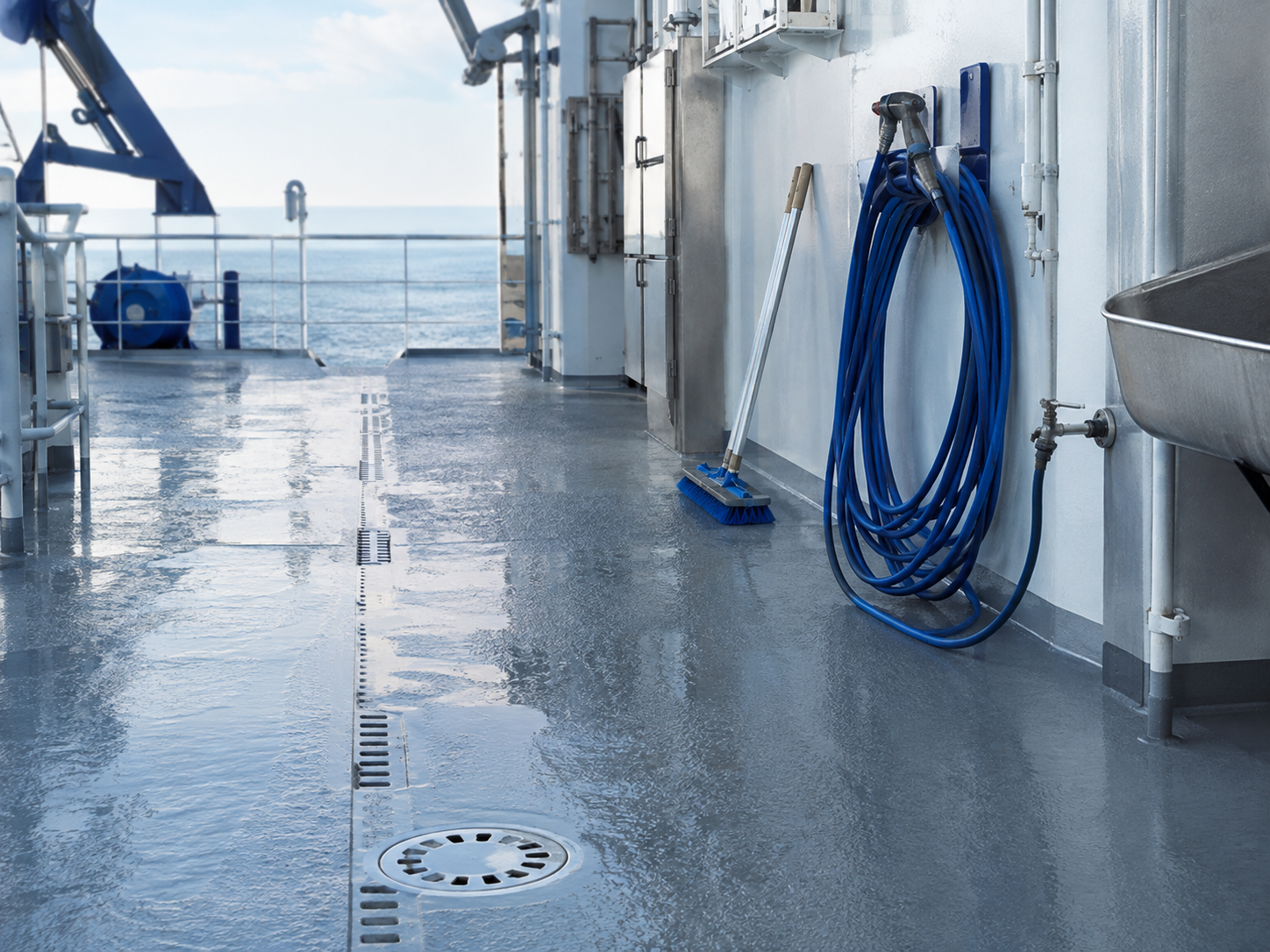
Standing water may conceal drainage or bonding issues beneath what looks like a serviceable floor surface. Address falls, drains, seams and penetrations in a wet space before selecting a finish. Adding a textured coating to an assembly with drainage issues will not correct the underlying issue.

SPEC REF: For coating product and procedure data-sheet fields used during interface review, see ASTM F718-22.
Interface or finish Input to specify Decision before installation
Steel substrate Surface condition, corrosion, existing primer and required preparation Match preparation and primer to the selected material sheet.
Galvanized steel or aluminium Substrate identification and surface treatment Confirm the particular bonding system; do not copy a bare-steel method.
Cement-based screed Level survey, thickness range and planned overlay Resolve the minimum and maximum layer thickness before material takeoff.
Epoxy floor Traffic, cleaning chemicals, wear and substrate movement Select the whole resin system and its application conditions.
Polyurethane floor Exact model, base layer and service environment Use that model’s sheet for mixing, curing and surface requirements.
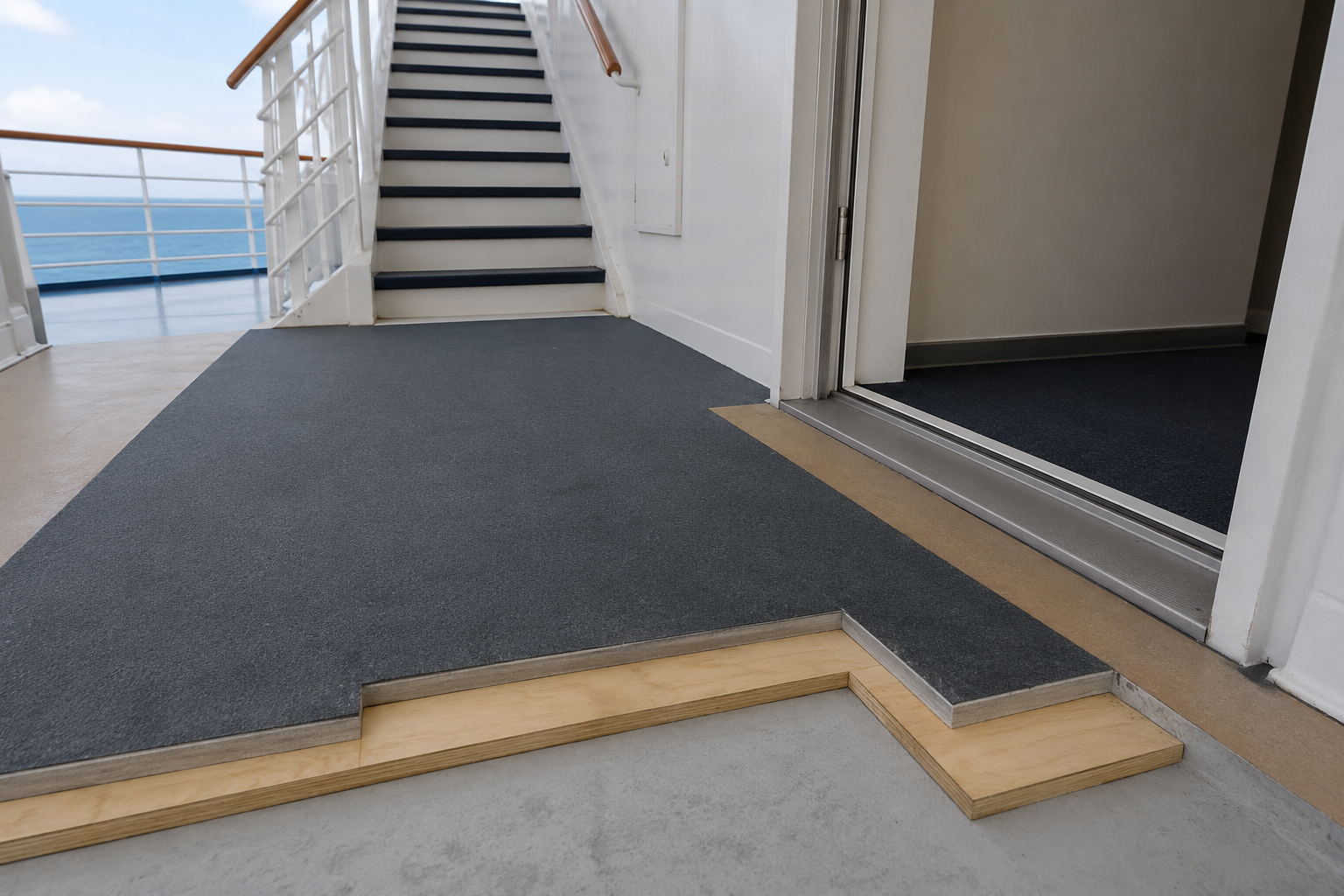
Vinyl, tile or carpet overlay Overlay type, adhesive and required fire-test route Check the underlay-to-adhesive-to-overlay combination.
Non-skid coating Wet or dry use, contaminant, footwear and test method Agree the tested surface condition and maintenance requirements.
Exposed deck coating UV exposure, weather, seawater and drainage Check outdoor suitability separately from an interior primary covering.
Surface texture is only a part of a non-skid deck specification. A sand-filled finish will still require the right binder, adhesion and cleaning method. Do not use a deck paint or boat deck paint in place of the approved marine flooring system.

Interior decks and mixed-material interfaces

Phase 01 / Assessment

For passenger vessels, merchant ships and offshore accommodation, identify each material already present in the specific deck build-up. Steel, a composite panel, a cork layer, thermal insulation and a PVC finish present different interfaces to the next trade. The naval architect’s weight and stability assessment needs the full layer schedule, including added finish and adhesive mass.

Phase 02 / Preparation

Polymer chemistry and component count also matter at installation. One-component products and multi-component sets need different mixing checks; use the exact product instructions. Damp substrates, unapproved primers and incomplete mixes can defeat an otherwise suitable material selection.

Phase 03 / Review

Bring the finish requirement into the first review. Send the substrate and proposed surface with the model enquiry.

Ordinary Marine Deck Covering Installation System

Deck Build-Up Specification Matrix

A low density limit is good for screening, but does not guarantee a fixed weight saving. The matrix maintains the technical sheet limits, minimum strength and package sizes in the same model row. Procurement and engineering can then evaluate the remaining installation parameters without comparing a powder package to a cured floor mass.

The trade-off is between layer mass, required strength and the actual build-up. Because the YB-1 and YB-4 sheets both list ≥8 MPa compressive strength, a buyer can compare those stated minima directly; the installed masses need additional inputs. Yibo Marine Systems’ model matrix makes that distinction visible before a density assumption creates a risk of takeoff error.

Primary Deck Covering Component Layout
Model Sheet density, kg/m³ Breaking strength Compressive strength Package
YB-1≤1300 kg/m³≥3 MPa≥8 MPa39 kg/set
YB-4≤800 kg/m³≥3 MPa≥8 MPa19 kg/set
YB-3≤1000 kg/m³≥3 MPa≥8 MPa38 kg/set
YB-5≤1800 kg/m³≥3.5 MPa≥10 MPa25 kg/bag
YB-7≤2100 kg/m³≥5 MPa≥15 MPa50 kg/set
AC-JI≤1700 kg/m³≥8 MPa≥30 MPa25 kg/bag
AC-JII≤800 kg/m³≥5 MPa≥20 MPa13 kg/bag
AC-J1200≤1200 kg/m³≥8 MPa≥30 MPa18 kg/bag
Deck selection rule used in this model comparison

The symbols are part of the specification: ≤ is a maximum; ≥ is a minimum. Density is specified in each technical sheet; this does not mean that all values share the same wet/dry test basis. Strength data by itself does not establish adhesion, allowable floor load or assembly performance. Sources: primary models, ordinary models and screed range.

Unlike an equal-thickness calculation using measured values, subtracting two specification maxima does not establish a real saving. A lighter candidate is not necessarily a lighter complete floor, and one density column is not a substitute for its test definition.

Compare equivalent layer functions. Hold the design thickness and density basis constant, then check the complete floor build-up.

Quotation Inputs and Project Schedule Drivers

Two similar looking quotations can actually cover very different work due to different layer schedules. The cost of marine deck covering systems is dependent on the selected materials, quantities, preparation, finish and delivery. Build the request around the complete deck schedule so the commercial comparison has a common basis.

Marine Deck Quotation Inputs and Layer Schedules

Area and thickness

Input: Space-by-space areas and the level survey

Material volume follows both; local depressions can alter takeoff.

Existing floor removal

Input: Removal boundary and condition photographs

Stopping at a sound layer differs from removal to the structural deck.

Layer combination

Input: Full layer schedule with responsible supplier for each item

Primer, screed, adhesive and finish are distinct supply items.

Wet-space detailing

Input: Detail drawings and cleaning/service conditions

Drains, coves and penetrations affect material and installation work.

Delivery scope

Input: Shipyard destination, delivery stages and required-on-site date

Destination, order sequence and handling constraints change the supply plan.

Schedule checkpoints

Separate consideration should be given to the availability of materials, shipment, acceptance of the substrate, application and release to service. The surface dryness does not confirm that a resin is ready for traffic, and an underlay’s setting time does not guarantee a delivery. Confirm the application window and return-to-service conditions from the selected product and from the site conditions.

For paints and coatings, ASTM F718-22 provides a material data-sheet along with details regarding preparation and application. This is helpful in viewing safety data. This does not provide a definitive cure-time spec for all Yibo materials.

Model Documents and Quality Traceability

Certificate scope must match the quoted model and the proposed installation. A name on a test result and a classification approval answer different questions. Look at them together so a material with the right name does not get used for the wrong substrate, thickness or vessel space.

SYSTEM LOGBOOK

Document Review Matrix (1/2)

Technical data sheet

Match to: Model, revision, density basis and strength values
Check: Are these the values used in the drawing and quote?

Safety data sheet

Match to: Each supplied component and its current identity
Check: Are handling, ventilation, storage and protective measures addressed?

Type approval or test report

Match to: Model, substrate, thickness, adjacent layers and intended use
Check: Does the proposed combination fall within the stated scope?

Regulatory Guidance (2/2)

The IMO 2010 FTP Code summary separates testing for fire-resistant divisions and surface flammability for surface materials and primary deck coverings. One scope’s result should not be used for the other. The applicable route will be determined by the vessel’s flag administration and classification.

USCG finishes approval guidance also separates primary coverings from floor finishes and addresses the substrate and bonding. The approval documents pertaining to the specific project should be used; the general approval guidance of the authority should not be construed as an approval for a Yibo model.

Document Review Matrix (2/2)

Works approval

Match to: Legal manufacturer, product scope and continuing conditions
Check: Is the complete, current document applicable to this supply?

Delivery identification

Match to: Model, component, batch and package information
Check: Can the delivered material be matched to the accepted order?

Installation & handover record

Match to: Substrate checks, mixing, environmental conditions and release criteria
Check: Does the installed floor follow the accepted material instructions?

Traceability Compliance (1/2)

As per the supplied document pack, Suzhou Yibo Industry & Trade Co., Ltd. is the manufacturer. Please review the entire model documents including attachments and continuing-validity conditions. Packaging artwork and a certification logo are not a substitute for a review in this regard.

For the incoming inspection and compliance review, verify that the delivery matches the accepted model and its component labels. The Yibo Marine Systems document pack includes CCS works-approval certificate SH25PWA00041 identifying the legal manufacturer and its deck-covering scope. Compared to a product photo, a certification document provides a defined scope and continuing conditions; possessing an older copy is not necessarily proof of its current validity.

To avoid a model mismatch, request the documents for the model you have chosen and include the relevant deck drawing.

Request Model Documents

Project Workflow from Build-Up Review to Handover

The best way to conduct a project review is to have procurement, engineering, and the installer work from the same layer schedule. For a vessel floor or a refit, missing details of interface draw a risk of rework, since the following trades may be working to a different floor level or material assumption. The sequence makes those interfaces clear.

SYS.REF Primary Deck Covering System

Review the current Yibo primary deck covering model range alongside the project layer schedule so the model identity and stated properties remain aligned.

The spaces of the vessel should be described. Cabins, passageways, service spaces and any exposed area should be described separately. The final floor finish and the specification of the project should be recorded.

Material families should be considered as candidates. Match the primary covering, screed, damping layer or resin finish to the job it should fulfill. The YB and AC-J specification rows should be used to restrict the model review.

The interfaces should be resolved. Primer, adhesive, upper finish, drainage, and edge should be analyzed in conjunction. A material substitution can change the interface even though the new strength value seems to be better.

Accept the quotation. Designate quantities, sets, bags, and locations, with material supply, preparation and installation listed separately.

Accept the existing site conditions. The installer follows the material instructions for substrate preparation, mixing, and environmental considerations. Document deviations prior to covering them to prevent inspection difficulty.

Close the document overview of the turnover. Retain the product identification and the installation checks agreed upon for the vessel project.

Yibo Product Evidence

The following images provided by the client show product packaging artwork and a packaging photograph. They provide product identification, not evidence of vessel operating results. For an acceptance review, verify the labels provided against the selected model and the complete package.

Cross-check the packaging shown here against the current Yibo primary deck covering model page before recording the selected product in the acceptance file.

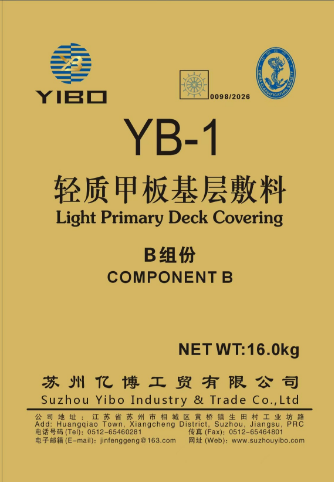
  • Yibo YB-1 component B packaging artwork
    PACKAGING ARTWORK

    Yibo YB-1 component B packaging artwork

    YB-1 component B. Packaging artwork identifies the model and component. Component mass is distinct from the complete set mass.

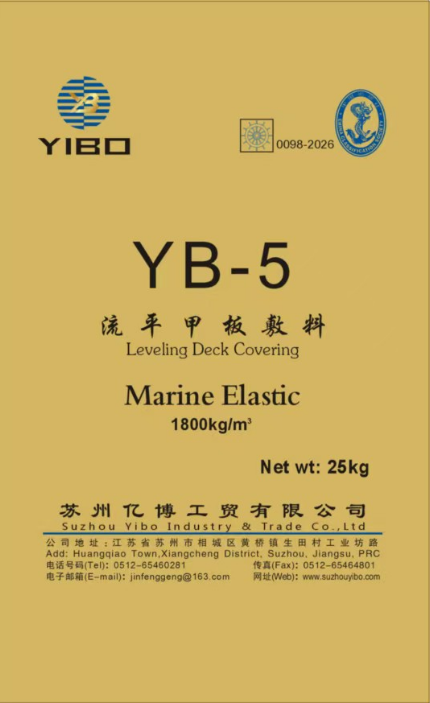
  • Yibo YB-5 levelling deck covering packaging artwork
    PACKAGING ARTWORK

    Yibo YB-5 levelling deck covering packaging artwork

    YB-5. The supplied artwork identifies a 25 kg bag. Use the current technical sheet for the specified maximum density.

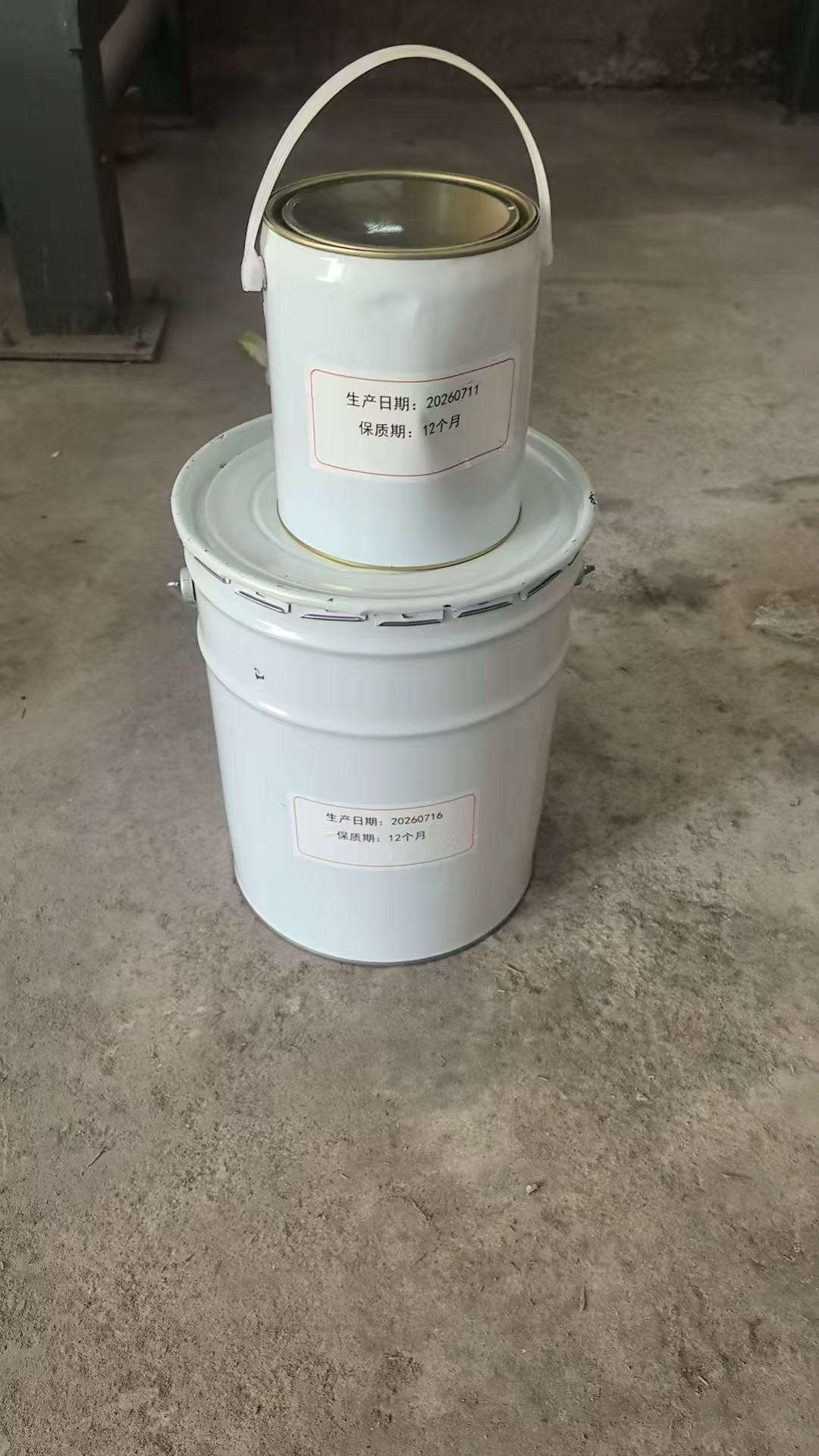
  • Client-supplied photograph of DP-SDI material containers
    CLIENT PHOTOGRAPH

    Client-supplied photograph of DP-SDI material containers

    DP-SDI packaging photograph. Keep component identification and batch records together when preparing the material receipt inspection.

Project Records and Supply Context Background

Application Boundaries and Alternative Deck Systems

Marine deck flooring extends to cover more than one service environment. An interior underlay on steel, a decorative boat deck and an exposed working deck have different surfaces and approvals. Define the space of the vessel and the full build-up before selecting a material family.
Vessel-space or floor task Candidate layer function Evidence needed before selection
Cabin or passageway below a finish Primary covering and levelling underlay Model data, layer thickness, substrate and overlay combination
Uneven deck before adhesive flooring Specified screed or levelling material Level survey, permitted thickness and adhesive compatibility
Noise-sensitive accommodation on cruise ships Damping or floating-floor assembly Assembly drawing, perimeter details and applicable acoustic assessment
Wet service area Coordinated base and surface system Drainage, cleaning conditions, waterproofing and tested surface properties
Exposed working deck Surface system selected for that exposure Weather, UV, wear and wet-slip requirements; separate from interior underlay data

Acoustic and Fire Boundaries

Acoustic flanking paths can carry sound around a treated floor through adjoining structures and connections. DNV’s marine noise-design guidance treats the source and transmission routes together. A floating floor or damping material requires an assembly-level evaluation before any vessel-level noise reduction is assigned.

A common assumption is that adding a damping layer eliminates cabin noise. It is not a substitute for checking the other transmission paths. The same boundary applies to fire performance: a primary covering and an A-60 division are not interchangeable approval categories.

ISO Standards for Underlays

ISO 5694:2023 addresses cement-type underlays for ships and marine structures; its scope excludes overlays such as tile, carpet and rubber. That distinction helps prevent an underlay requirement being used as if it also approved the exposed floor covering.

Consumer boat decking is a separate comparison

An EVA foam mat, marine vinyl flooring or other boat flooring can address a small boat’s surface needs. That does not make it interchangeable with a commercial vessel’s primary deck assembly. Compare appearance, comfort and durability only after the intended service and required evidence match.

Discuss an unusual deck application

In regard to exterior deck teak and synthetic teak, they should be considered as exposed-surface, and they should be individually assessed and used in conjunction with their specific adhesives and service requirements. Helicopter landing decks and other specialized working surfaces should be assessed in the same manner. Neither should gain approval from a marine underlay.

System Planning Tools

TOOL // 01

Layer Comparison

Access the layer comparison tool to review and compare interface parameters.

Open Layer Comparison ↗
TOOL // 02

Package Estimator

Access the package estimator tool to calculate material sets and system quantities.

Open Package Estimator ↗
TOOL // 03

Quote Input Check

Access the quote input check to verify project layers and specification inputs.

Open Quote Input Check ↗

FAQs on Marine Deck Covering

Technical specifications, application boundaries, and installation guidelines for commercial vessel flooring systems.

What does Yibo supply for a marine deck build-up?

Primary and ordinary deck coverings, AC-J screed materials, damping material, floating-floor constructions and resin floor systems. Start with the layer function, then identify the exact model.

How do YB-1 and YB-4 compare?

Both technical sheets list breaking strength ≥3 MPa and compressive strength ≥8 MPa. YB-1 lists density ≤1300 kg/m³ and 39 kg/set; YB-4 lists density ≤800 kg/m³ and 19 kg/set. Those are specification limits, not measured masses of two installed floors. Check thickness and density basis before calculating a difference.

Is self-levelling screed the final walking surface?

Not automatically. Specify the required overlay or surface finish and confirm the screed-to-finish interface.

Can a lower density model guarantee a lighter floor?

The whole assembly decides that. A lower density at an unchanged thickness reduces that layer’s calculated mass, but a different thickness or added upper layer can change the comparison. Use project-confirmed density values, not the difference between two upper limits, to estimate a saving.

What causes problems around a wet-space floor?

Review drainage, seams, penetrations, substrate condition and bond integrity together. Standing water or a loose area calls for investigation of the build-up; a fresh surface coating alone may leave the cause in place. Use the selected system’s preparation and application instructions to set the repair scope.

Does a component fire-test result approve an entire A-60 deck?

No. The complete division and the component have different test scopes. Match the proposed layers, substrate and thickness to the relevant approval and the vessel project’s requirements.

Can DP-SDI alone guarantee a cabin noise level?

The material name cannot determine a cabin’s final noise level. Sources, supports, junctions, penetrations and other transmission paths remain part of the acoustic design. Assess the installed assembly and vessel criteria together.

How is the material price established?

Send the selected models, area, layer schedule, quantities and destination. The quote must identify its supply and installation boundaries so comparable work is being priced.

Which inputs are needed for delivery and installation planning?

Separate the required-on-site date from the return-to-service date. Include delivery stages, substrate readiness, access constraints and the proposed finish. Cure and application windows belong to the chosen material instructions and site conditions; shipment timing belongs in the confirmed order.

Are marine deck coating colors and slip resistance the same decision?

No. Color and appearance address the visual brief. Slip resistance needs the relevant test method and surface condition, including wet use, contaminants and maintenance. Confirm each requirement separately for the proposed finish.

Can I replace boat deck paint with a primary covering?

A boat deck paint is a surface coating, while a primary covering serves a different layer function. For a boat refit, first identify the structural deck, current layers and intended finished surface. The replacement needs compatible preparation, adhesion and exposure performance, rather than a match based on the word “marine.”

Are these products the same as foam boat decking?

No. Foam boat decking and consumer boat flooring address a different product category. Tell us whether your boat or commercial vessel enquiry concerns a soft surface, a resin finish or a structural-deck underlay so the review starts with the correct scope.

How should I convert a package size into an order quantity?

Use the confirmed application rate and total area, add the project-agreed allowance, then round up to complete bags or sets. A set can contain several components. Dividing cured floor mass by a powder bag mass is not a valid substitute when water or other components change the yield.

What documents should accompany a model review?

The current technical sheet, applicable safety sheets, complete approval or test documents and the proposed deck drawing. Check model and component identity across the set.