Get in touch with Yibo Company

Marine Epoxy Floor Systems for Ship Decks
Documented YB-Epoxy Floor E60 type designation
SPEC: 5 mm nominal build in the certificate
Scope-led compatibility review
Built for a documented procurement conversation
Start with the deck space, base and required document set.
Yibo Marine supplies marine epoxy floor systems for shipyards, vessel owners and deck-equipment teams that require a traceable deck-covering specification. You start with the service space, substrate and required document set; the review then matches the proposed build to existing proof.
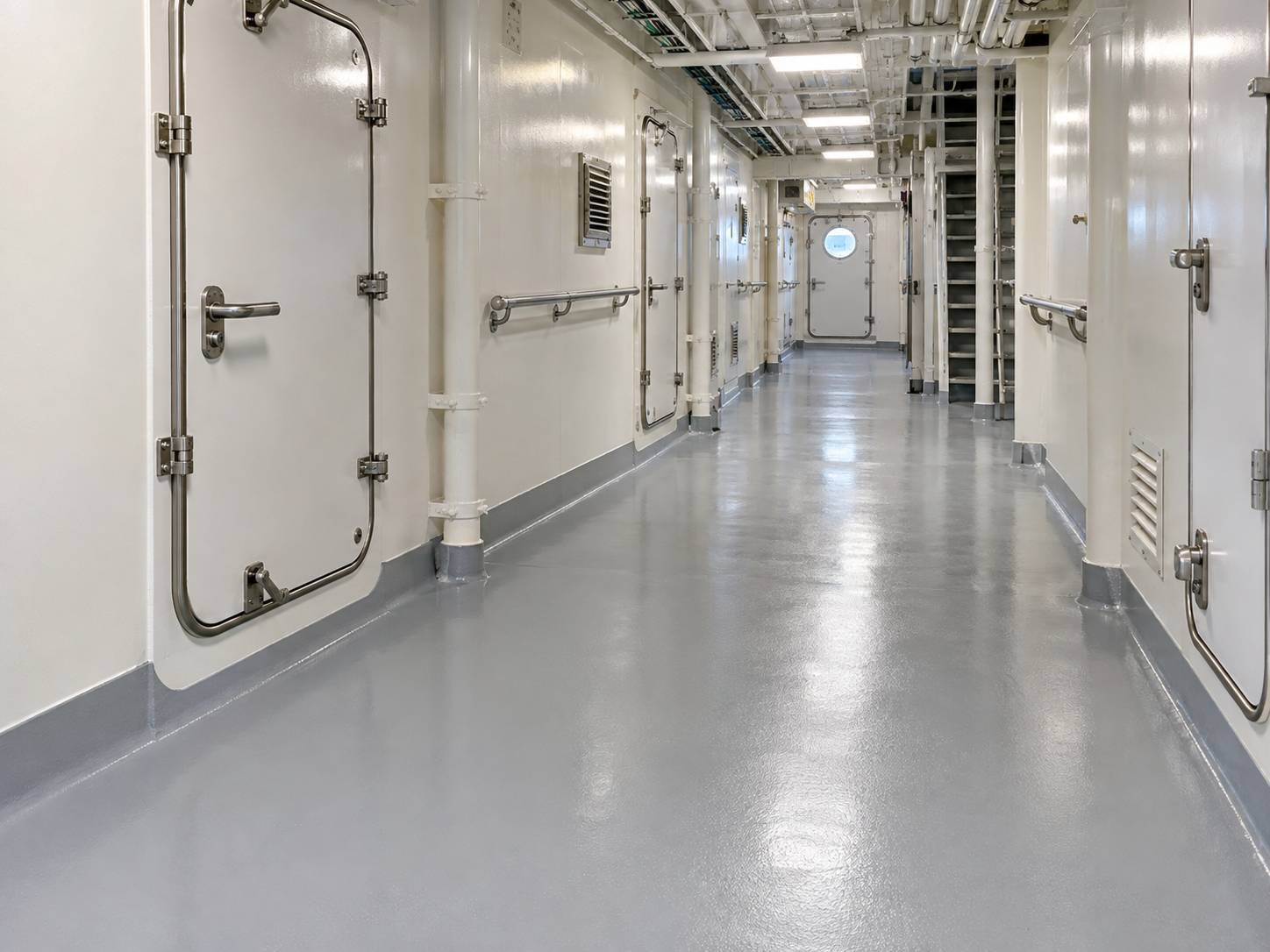
Send us the deck area, the base layer composition and your expected service zone as a first step. The product-scope review will follow without guessing a total vessel-system rating.
Founded
September 2001
Location
Huangqiao Street, Xiangcheng District, Suzhou
Facility
More than 6000 m²
Quality system
ISO 9001:2015 certified
Product type
YB-Epoxy Floor E60
Certificate
DNV MEDB00001WK Rev.2
Marine Epoxy Floor for Controlled Deck Protection
A marine epoxy floor is a multiphase Deckcovering choice, not a paint colour drawn up in isolation. The useful specification connects the surface needs to the base, glue, authorized layers, ship space and operating exposure; the MCA structural-fire warning shows why a label alone is not enough.
Deck surface protection
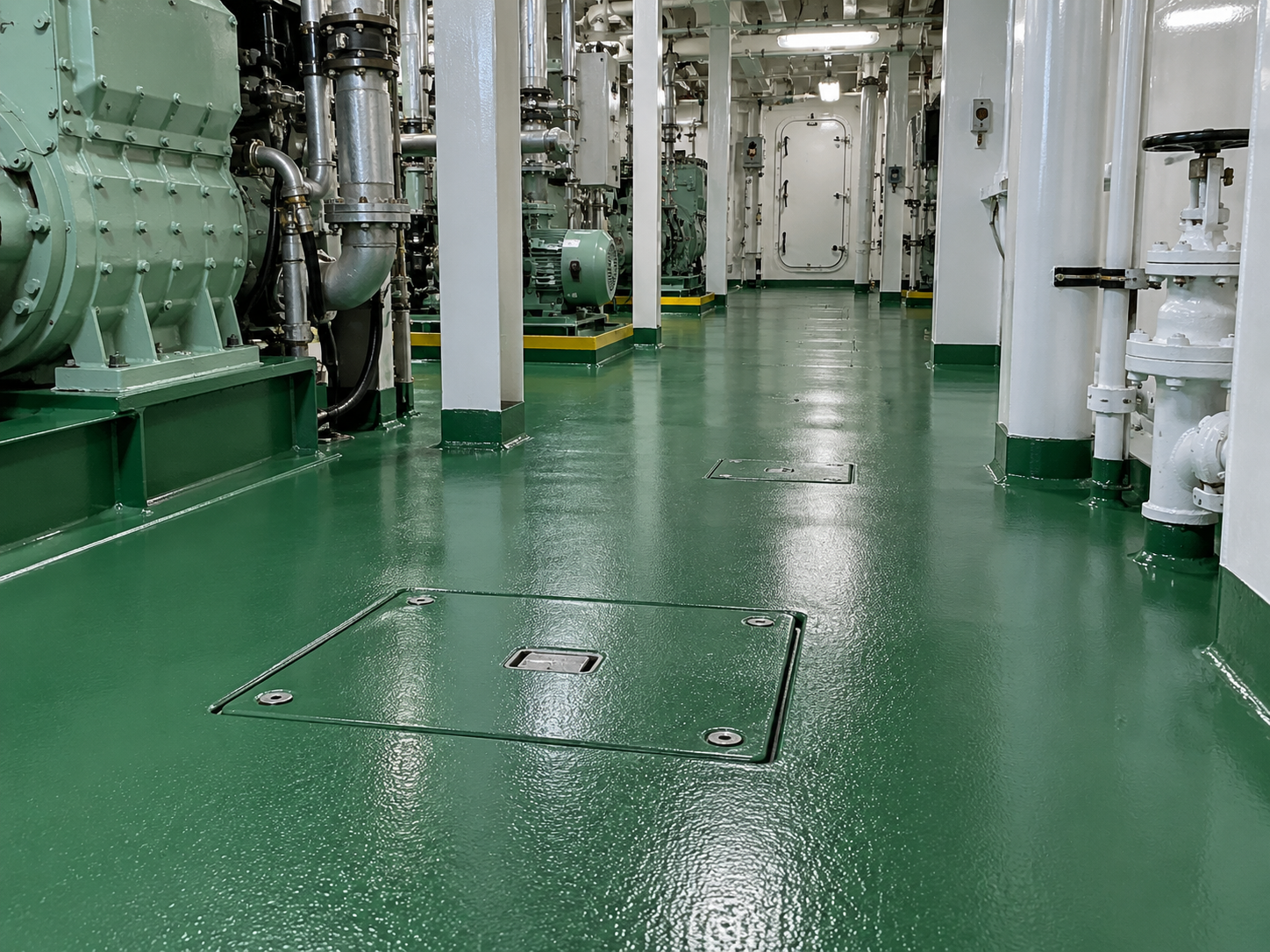
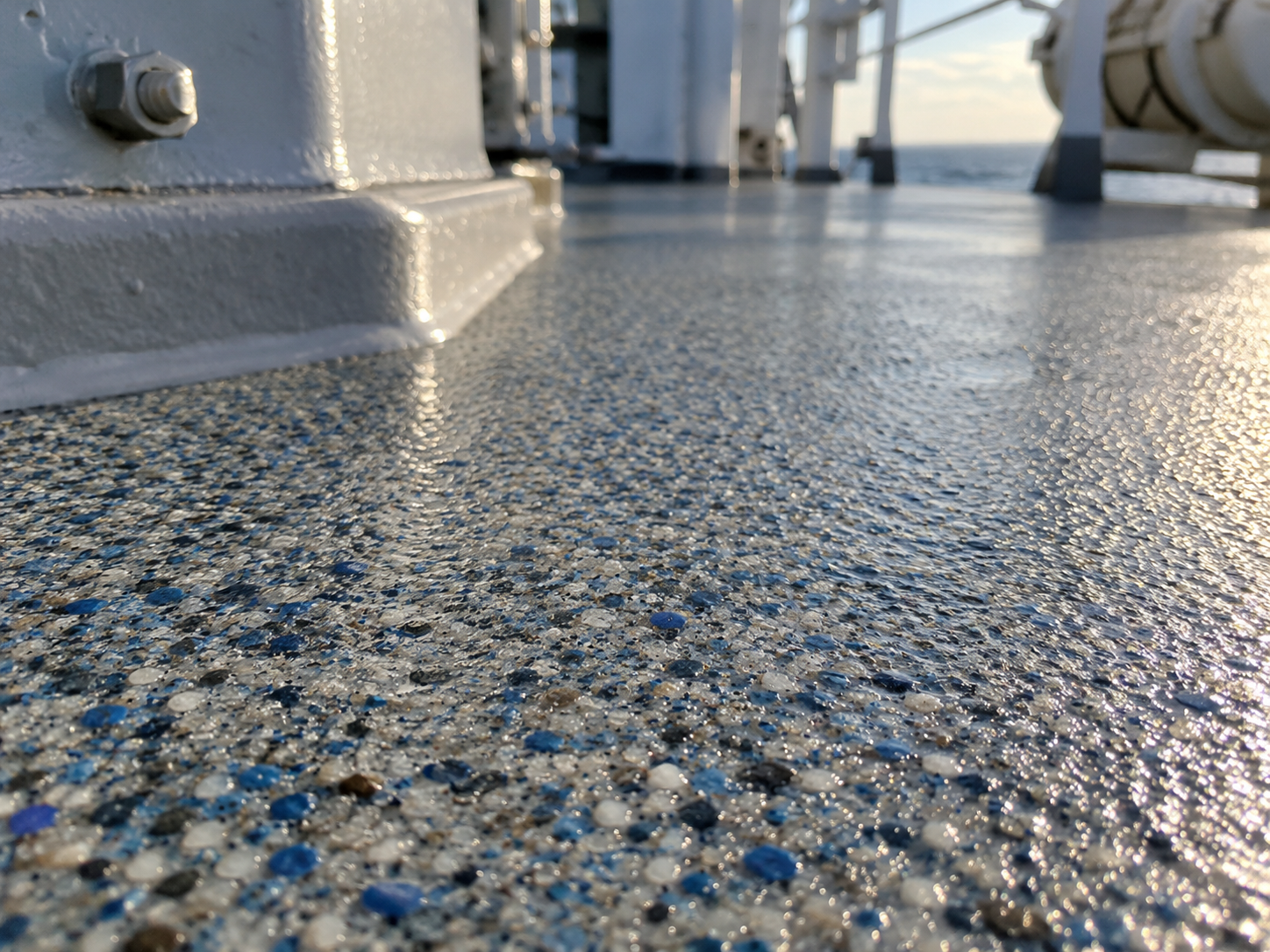
The E60 system is presented as a resin-and-coloured-sand floor with a polyurethane varnish surface, giving the procurement team a defined build to review.
Document-led selection
We organise the technical sheet, certificate details, installation manual and project inputs so the selected covering can be checked against the intended space.
Compatibility first
Before quotation, the team can review the substrate, existing covering, service conditions and requested finish instead of treating generic boat paint as an equivalent specification.
Marine product range
Yibo’s stated range also includes high sound-insulation floating floors, self-levelling and ordinary deck coverings, damping coatings, polyester primary coverings, PU levelling coverings and imitation teak floors.
The differentiator is a traceable build and document chain. Unlike generic boat paint, this route asks the buyer to confirm against the certificate, tested layers and service space before release.
Review Documentation & Build- Marine epoxy and flooring epoxy are not interchangeable, because a ship-deck system needs its own build and document check.
- A premium-priced epoxy needs a clear reason to be selected, so the evidence pack stays tied to the project.
- Preparation, fiberglass/plywood bonding and cure sequence are hard to judge before purchase.
- Non-slip aggregate and the timing of the next coat affect the result.
- An old vessel may not have time for full stripping before a repair.
- Steel or exterior suitability may be uncertain when repairing existing coatings.
- Absorbed cargo residues, ventilation and compatibility can cause blistering or detachment.
YB-Epoxy Floor E60: Documented Build and Performance
The following figures are transcribed from the Yibo technical data sheet for its E60 series products. They apply specifically to this documented product type and must not be adopted for other Yibo coverings without separate technical evidence; the MCA approval procedure keeps tested construction and limitations explicit.
Performance terms to keep with the test: abrasion resistance, slip-resistant finish, resin layer and surface hardness are reported together; waterproofing, crack bridging and primer compatibility still require project-specific confirmation.
-
Nominal density≤ 2200 kg/m³Check weight and build-up against the vessel calculation.
-
Compressive strength≥ 50 MPaReference the stated test value in the submittal.
-
Flexural strength≥ 35 MPaUse with the substrate and service-zone review.
-
Wear resistance≤ 0.03 g (750 g / 500 r)Keep the test condition with the value.
-
Adhesive strength≥ 2.0 MPaConfirm adhesive and substrate are the approved combination.
-
Skid resistance≥ 0.5Discuss the required walking or work-deck exposure.
-
Hardness≥ 76Retain the stated scale and test context in the file.
-
Nominal total thickness5 mmMatch the certified layer sequence before release.
Values are first party document based data for examination only and are not an assurance of performance in the field under another layer configuration or different type of adhesives / coatings substrates / environment or other operating conditions
Where the System Fits: Steel, Non-Combustible and Approved Floor Coverings
DNV Certificate Limits
Specifications & Data Point
Procurement Review
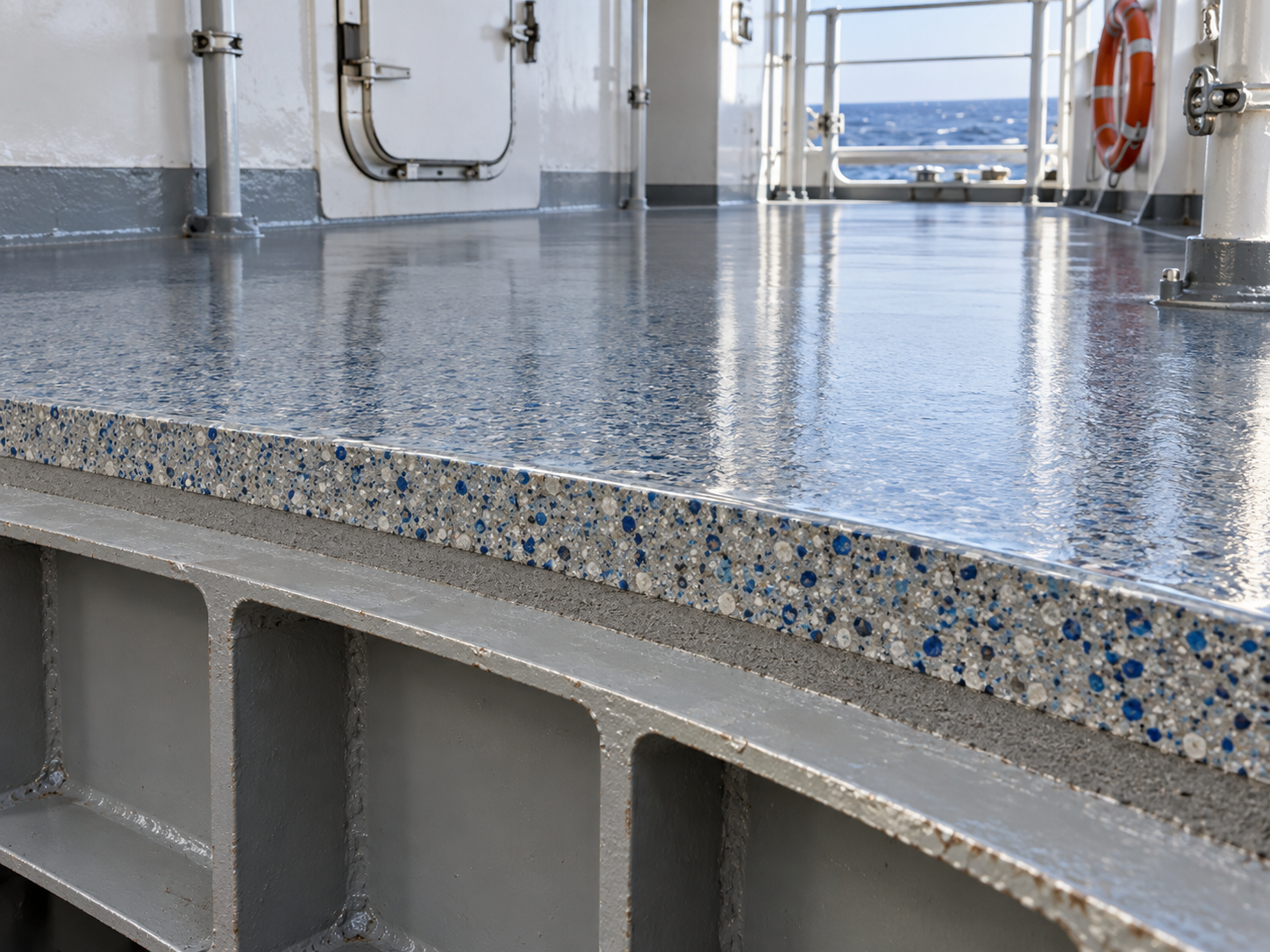
The DNV certificate describes the approved E60 covering within its stated construction and application limits. It identifies a 4.8 mm epoxy-resin and coloured-sand layer with a 0.2 mm polyurethane varnish surface, for a nominal 5 mm total thickness; MCA MGN 580 provides the related deck-covering fire-protection context.
Layer check: Keep the 4.8 mm resin-and-sand layer, 0.2 mm polyurethane varnish and 5 mm nominal total together when comparing a quotation.
Assuming that any marine epoxy automatically solves every deck can fail the procurement review. The reason is simple: official MCA guidance and the DNV record tie evidence to the tested assembly, substrate and service space.
When your design records specify the need, apply the DNV-approved floor according to its certificate. Ensure a suitable deck-steel or solid-base structure under your class and MCA requirements, and match the DNV-tested composition and specified top coat for the intended low-flame-spread property.
Maintain each layer in the tested or separately approved condition. Replacing a material or laminate changes the evidence and requires a new compatibility review.
Verify the vessel flag, classification society, deck-space code, existing covering and operating procedure before accepting the build as equivalent to the tested specimen.
Compliance Package for Marine Procurement
The YB-Epoxy Floor E60 designation appears on DNV Type Examination Certificate EC Module B MEDB00001WK Rev.2. The supplied certificate states validity to 25 September 2027 and lists its application, tested construction and limitations; it does not turn every deck covering into a structural A-60 division. Because the official page and certificate describe a specific structural assembly, procurement risk is controlled by using this documentation with the vessel-space application record and selecting only the material and build specified on the certificate.
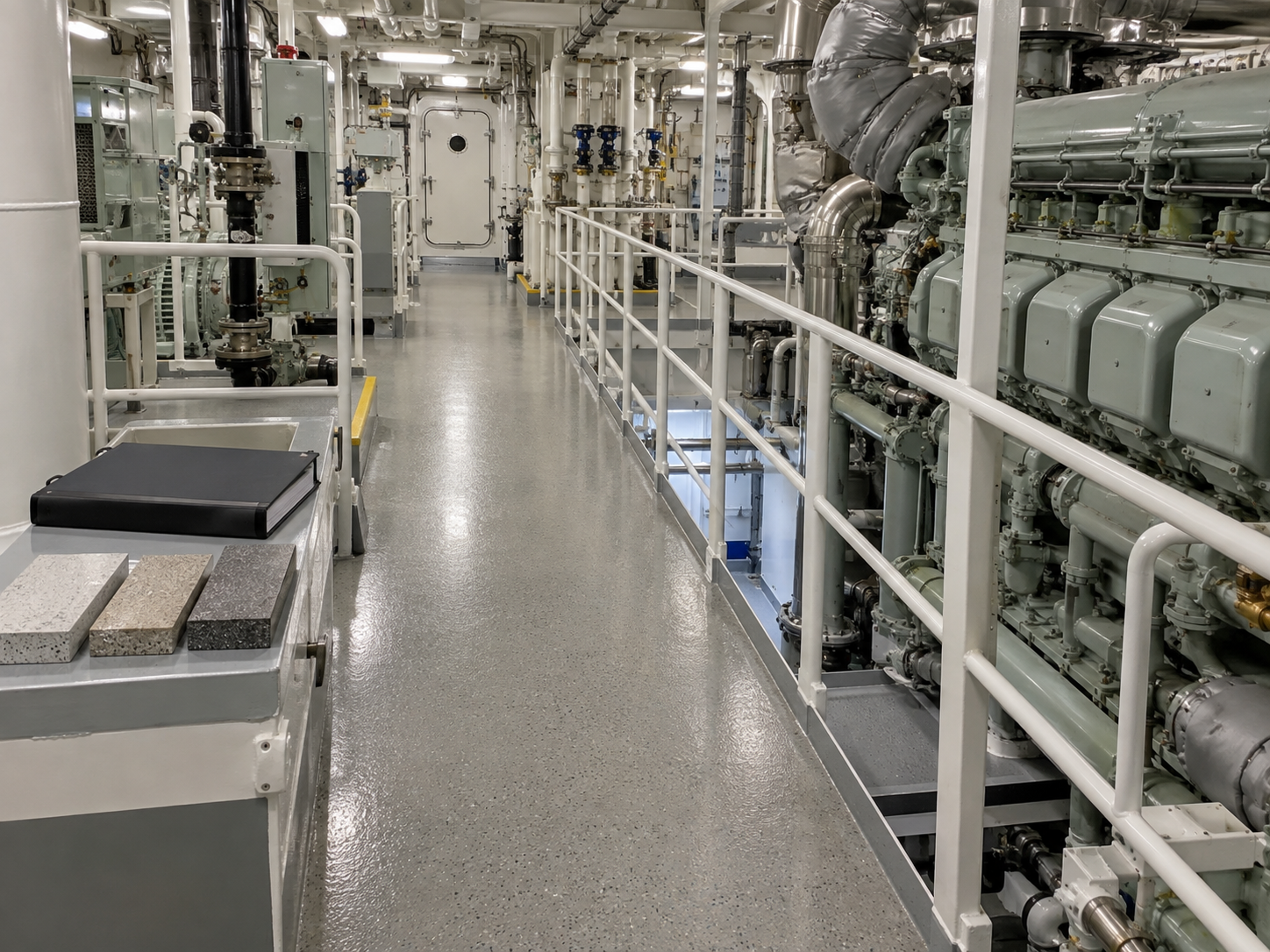
- YB-Epoxy Floor E60 technical sheet
- DNV MEDB00001WK Rev.2
- Installation and use manual
- Project drawing and layer schedule
- IMO 2010 FTP Code Part 5 surface flammability
- IMO 2010 FTP Code Part 2 smoke and toxicity
- SOLAS 74 Chapter II-2 references listed in the certificate
- Flag and class rules for the specific vessel space
The MCA MGN 580 guidance and its approval procedure keep the tested assembly, composition and vessel-space scope in the procurement file. The MCA Safety Bulletin 33 warns against reading a product approval as proof of structural fire protection.
The E60 label is a product type designation, not a universal structural fire class. The type designation is not a substitute for a project-specific structural fire review. Confirm against the official certificate, ISO 9001:2015 quality context and the vessel’s approved arrangement.
Installation Inputs We Need Before Quotation
There is no one-line shortcut for specifying a marine epoxy floor construction because the proof must match the project context. Send the inputs below so the corresponding documents and construction sequence can be checked against the MCA approval procedure.

Input
What to send
Why it matters
Vessel identity
Flag, class and vessel type
Approval route and required records can differ by jurisdiction and class.
Service space
Accommodation, service, control, work or cargo area
Space use changes the relevant fire, slip, cleaning and exposure review.
Base and existing layers
Steel or non-combustible base, current covering, epoxy primer and adhesive
The certified build cannot be assumed over an unknown layer.
Geometry and exposure
Deck area, thickness, drains, traffic and water/oil exposure
Surface preparation and finish selection depend on the operating condition.
Required submittal
Certificate, technical sheet, manual and inspection records
We can assemble the document response around the buyer’s review checklist.
How We Support Shipyards and Equipment Teams
Suzhou Yibo Industry & Trade Co., Ltd. states that it was founded in September 2001 in Suzhou and operates a facility of more than 6000 m². The company also states ISO 9001:2015 certification and cooperation with Guangzhou Shipyard International, CSSC Huangpu Wenchong, Jiangsu New Yangzi, Dalian Shipbuilding Industry and Shanghai Waigaoqiao Shipbuilding and Offshore.
“Quality first, service first” is Yibo’s stated service purpose.
Procurement risk grows when a supplier’s product family, quality context and certificate scope are mixed into one generic claim. The differentiator is a documented response that lets your team request a specific technical pack and confirm against its own class and vessel requirements.
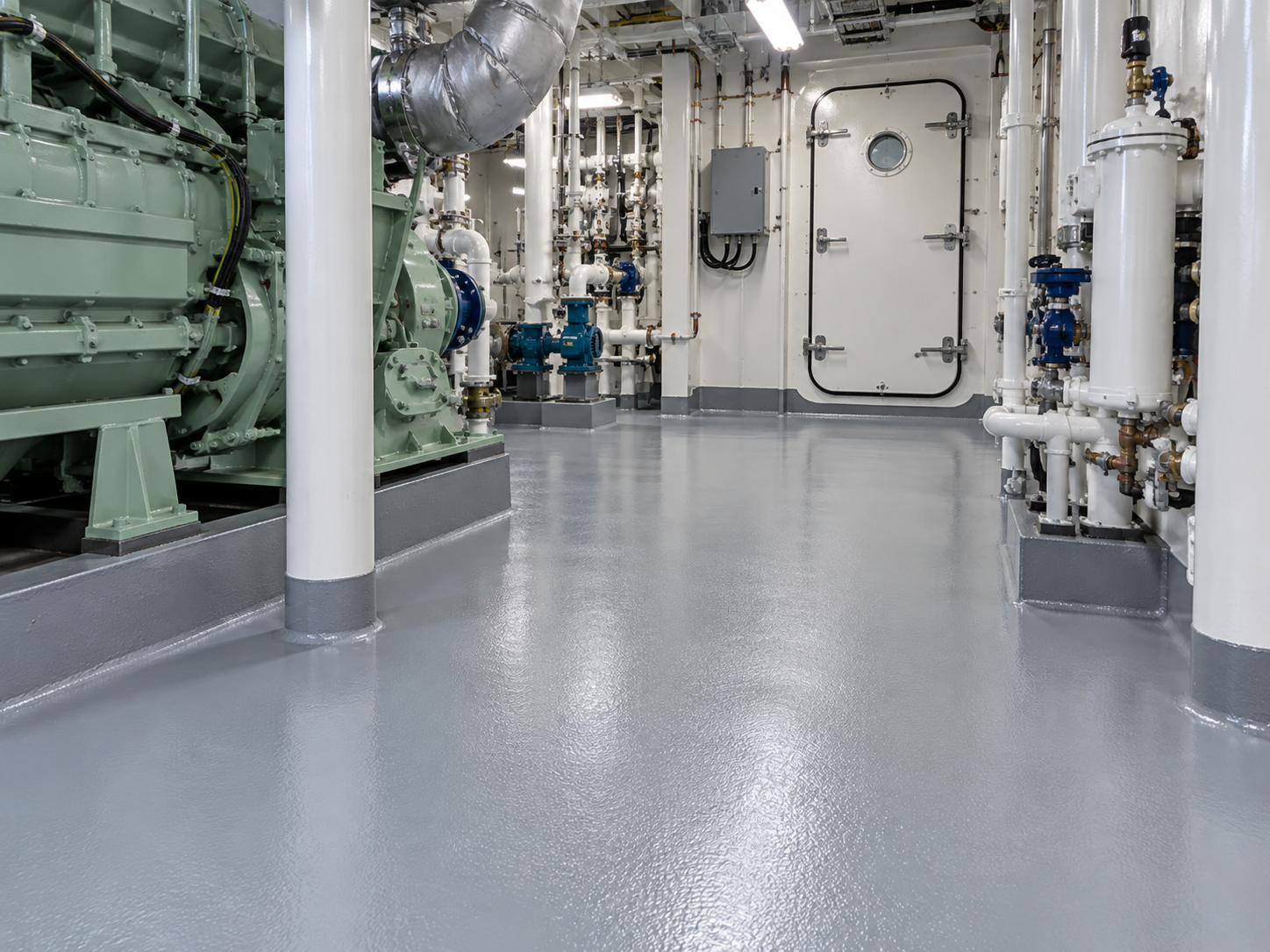
We map the requested deck condition to the available product document, certificate scope and installation information.
If an epoxy system is not the right fit, the wider marine flooring range provides a clear route to discuss floating, damping, self-levelling or imitation-teak alternatives.
Shipyard and equipment teams receive a concise list of open inputs instead of a generic “marine grade” label with no assembly context.

Technical Data and Document Request
The review is ordered so the buyer is able to recognize what is known, what still needs to be verified and which document controls the following decision.
-
Process / Step
Email the project details: vessel identity, required area, deck area, substrate type, previous finishes and requested surface finish.
-
Process / Step
Match the product type to the application. You can reference the YB-Epoxy Floor E60 build or another marine flooring family.
-
Process / Step
Verify the evidence scope. We match certificate limits, application standards, adhesive details and installation-manual requirements.
-
Process / Step
Compile and present the response package. The technical specification and a list of items still awaiting flag, class or shipyard confirmation are delivered in the agreed format.

Product Gallery and Marine Flooring Scope
The provided images document surface aspects of epoxy floor; they serve as context ONLY and do not substitute for your certificate, technical specification sheet, or project specific install review.
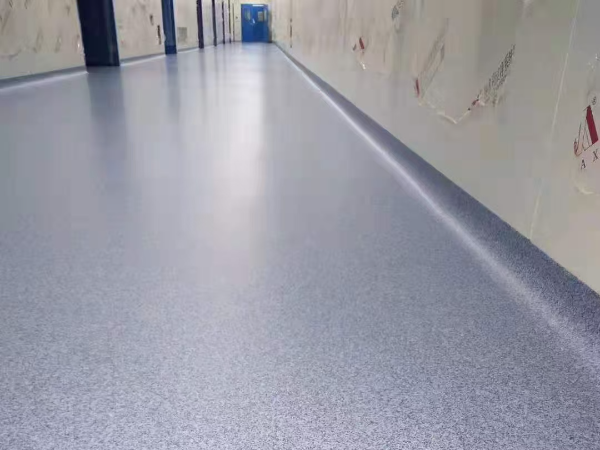
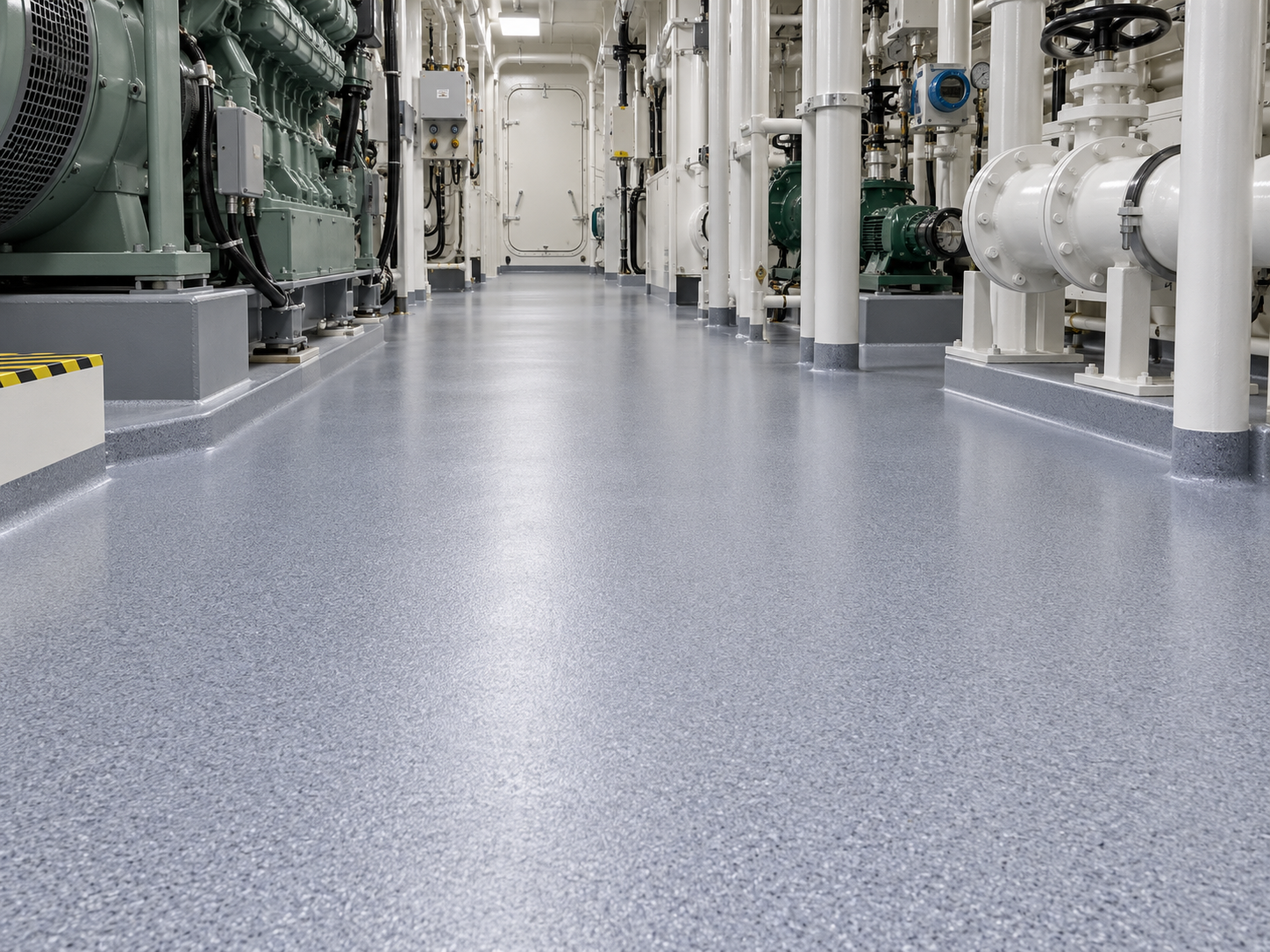
Marine high sound-insulation floating floors
Self-levelling, ordinary and polyester primary deck coverings
Damping coatings, PU levelling coverings and imitation teak floors
Where This System Needs a Different Project Decision
Even when the epoxy floor is correctly documented, another project requirement may make it the wrong choice because a space rule or a different assembly or exposure is dominant. A label-only selection costs you traceability when the build, substrate or service zone changes. Adjust the decision inputs instead of stretching the certificate wording.
| Situation | Why the E60 route may not fit | Better next step |
|---|---|---|
| Structural A-60 division is required | A floor-covering type designation is not a structural division rating. | Ask the naval architect, flag and class authority to define the approved structural assembly. |
| Existing layers are unknown | The tested adhesive and layer sequence cannot be assumed over an unverified base. | Expose, identify and document the substrate and existing covering before selection. |
| Severe cargo or chemical exposure | Service compatibility, absorption, crack repair and detachment risks need a product-specific review. | Provide the cargo, cleaning agent, temperature and traffic profile for compatibility screening. |
Guidance / Standard
The Safety4Sea marine-coating guidance highlights moisture, ventilation, cargo compatibility, blistering and detachment as practical review points.
Marine Epoxy Floor FAQs
Is marine epoxy floor the same as generic boat paint?
No. A ship-deck system is reviewed as a build-up with substrate, adhesive, service space and documents; a colour or resin label alone does not establish that scope, as the MCA Safety Bulletin 33 cautions.
What is the YB-Epoxy Floor E60 build?
The supplied DNV certificate describes a nominal 5 mm build: 4.8 mm epoxy resin and coloured sand with a 0.2 mm polyurethane varnish surface.
Does E60 mean a structural A-60 deck?
No. E60 is the product type designation shown in the certificate. Structural fire divisions and vessel-space approvals must be confirmed against the project’s flag, class and tested assembly.
Which technical values can we request?
The Yibo sheet lists density ≤2200 kg/m³, compressive strength ≥50 MPa, flexural strength ≥35 MPa, wear resistance ≤0.03 g, adhesive strength ≥2.0 MPa, skid resistance ≥0.5 and hardness ≥76.
What must be checked before installation?
Confirm the base, existing layers, adhesive, approved sequence, service space, surface preparation and installation manual before work is released.
Can Yibo review a shipyard specification?
Yes. Send the vessel identity, deck area, substrate, space and requested document list through the review request so the response can stay tied to the evidence available for your project.
Where is Yibo Marine based?
Suzhou Yibo Industry & Trade Co., Ltd. states that it is located in Huangqiao Street, Xiangcheng District, Suzhou City, and was founded in September 2001.
![Marine PU Floor: Selection & Installation [Guide]](https://yibomarine.com/wp-content/uploads/2026/09/marine-pu-floor-blog-featured-150x150.png)