Get in touch with Yibo Company

Offshore Platform Flooring Systems for Marine and Energy Projects
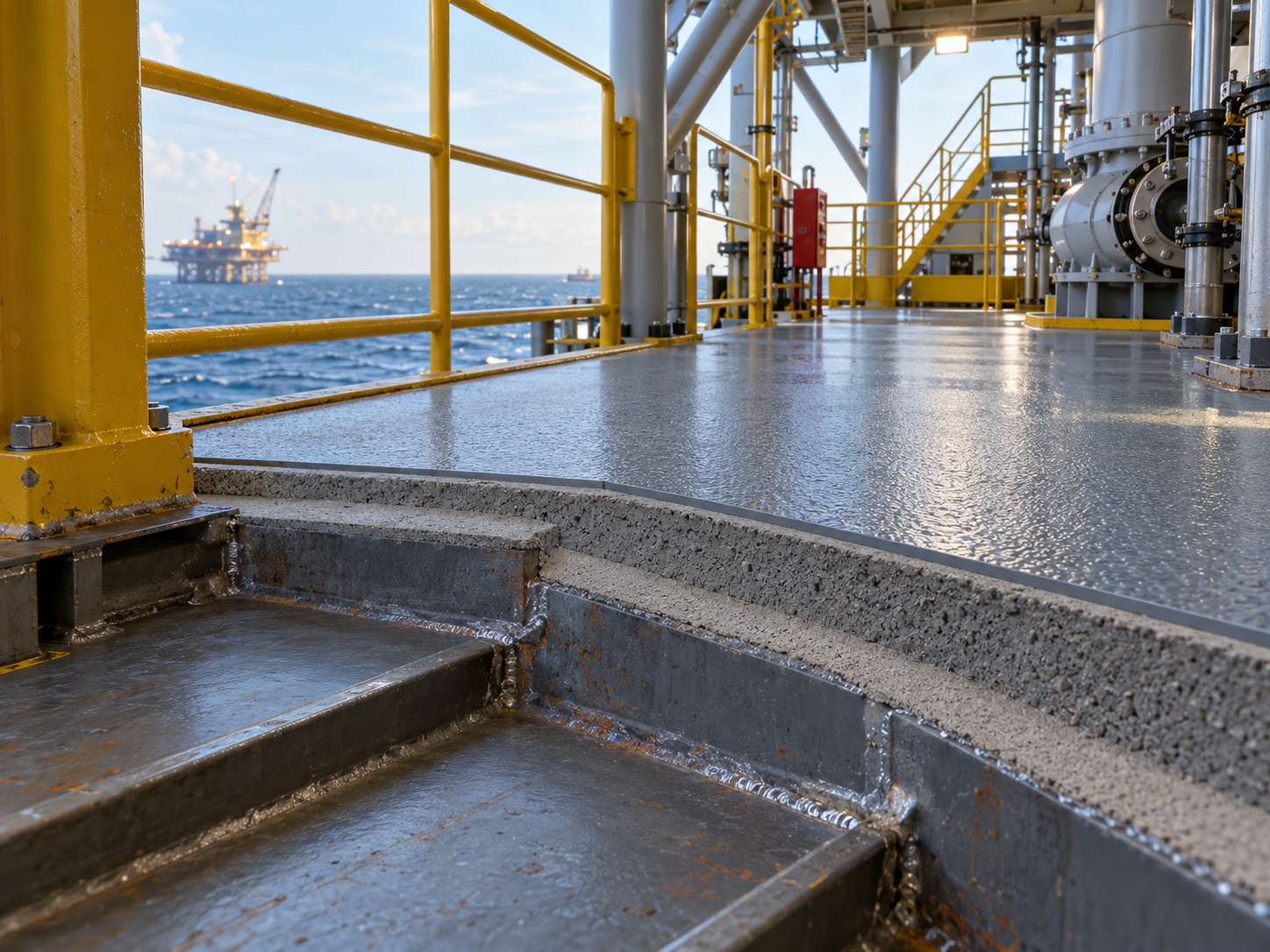
Offshore platform floors must be defined as a described buildup and not a standard deck paint specification. Yibo Marine assist shipyards, module manufacturers and offshore contractors in appraising floating floors, primary deck toppings and PU leveling and epoxies based on asset class, substrate, function type and project specifications.
Start with the project record
Send the platform or module type, flooring zone, area, steel or non-combustible substrate, target build-up and classification requirement. We will tell you which data still needs approval before a quotation scope is frozen.

A-60
Floating and fire-resistant floor assemblies in supplied data
56 dB
YB-A60FIII-1 supplied sound-insulation index
≥50 MPa
YB-Epoxy Floor E60 supplied compressive strength
2001
Year shown in company information for Suzhou Yibo
Zone-Based Deck Build-Up for Offshore Assets
The same platform can include accommodation modules, plant room and mechanical areas, exposed services as well as areas with a range of differing load, drainage, noise, fire and maintenance considerations. Use the cards below to help you scope requirements but they don’t mean that 1 material will cover all zones.
Quiet, level interior decks
Accommodation / living modules
Review a floating floor or self-levelling primary deck covering where acoustic separation, a controlled finish height and a non-combustible deck base matter. Confirm the tested assembly, final floor covering, adhesive and available equipment clearance.
Wear, liquids and service access
Utility and machinery areas
Start with the steel or approved deck covering, expected equipment load, liquid exposure, cleaning method and required slip profile. YB-S22 PU levelling and YB-Epoxy Floor E60 are listed as named systems for review, subject to project documents.
Traffic and housekeeping controls
Walkways / service routes
Slip performance is affected by contamination, footwear, cleaning and environment, not only a laboratory skid value. Check openings, edges, toe boards, escape routes, fasteners and inspection ownership before treating a route as complete.
Load and fire scenario first
Exposed or structural deck
Grating, checker plate, primary deck covering and a floor covering above the deck are different layers. Define distributed and concentrated loads, span and deflection, weight and centre-of-gravity effects, fire scenario and jurisdiction before comparing products.
- Missing, open or fragile grating shifts attention from surface finish to fall-through prevention and inspection.
- Contamination, cleaning, footwear and weather conditions can change the slip outcome of a walking route.
- A service route that touches stairs, openings or a helideck edge needs an interface drawing, not just a flooring sample.
On a fixed platform, the definition of deck can also vary for an FPSO, jack up or semi sub. A floor in a photo looks fine for marketing reasons; however a system for your design would then require, a drawing reference, a layer number, a load case, and an owner/inspector.
- Define the asset: production platform, drilling rig, offshore module, vessel or floating unit.
- Define the surface: steel plate, non-combustible primary deck covering, resin floor or grating.
- Define the exposure: saltwater, oil spills, chemicals, UV, impact, traffic and cleaning routine.
- Define the interface: openings, penetrations, stairs, catwalks, guardrails, toe boards and helideck edges.

Review access routes, production-deck loads, corrosion exposure and the relationship between a primary deck covering and any finish above it. A drawing mark-up should show where the proposed system stops at openings or structural boundaries.
For FPSOs, FLNG units, drillships, jack-ups and semi-submersibles, add tow, jacking, motion, ballast or conversion assumptions to the design record. These operating modes can change load cases, inspection timing and the responsible approving party.
The common problem is a false match between a sample and the project because the zone, load case or substrate record is incomplete. Yibo Marine engineers can map the risk to the IOGP S-631-04 interface questions, the supplied 56 dB assembly data and the relevant IMO layer.
IOGP S-631-04 treats grating as a location-specific engineering decision covering loads, deflection, residual strength, skid, chemical and ultraviolet exposure, fixing details and penetrations. Its escape-route limitation is a reminder to keep structural and access interfaces visible in the project brief.
Scope check
That review covers an offshore deck flooring request, an offshore oil platform flooring enquiry or a marine offshore flooring package without assuming identical service conditions.
System Selector for Marine Deck Flooring
Make a preliminary shortlist based on the matrix. The figures are obtained direct from the supplied Yibo datasheets, therefore linked to a specific named assembly or model – these do not relate to a generic overall offshore figure.
| System Type & Model | Key Specifications | Technical Notes |
|---|---|---|
| A-60 floating floor YB-A60FIII-1 |
|
Damping coating, rock wool, deck covering and galvanized steel sheet must be reviewed as the complete assembly, including weight and interface details. |
| A-60 fireproof deck YB-A60-7 |
|
Confirm the project’s A-60 construction, mesh, steel/non-combustible base, total weight and classification survey requirements. |
| Self-levelling primary deck covering AC-J1200 |
|
Supplied DNV MEDB00008VR describes a 45 mm primary deck covering within stated steel/non-combustible and IMO Part 5 limits. Confirm the exact thickness and certificate conditions. |
| Self-levelling primary deck coverings AC-JI / AC-JII |
|
DNV MEDB00005WR Rev.1 and MEDB00005WM Rev.1 name their respective Gecko types and limits; select by thickness, mass, substrate and document scope. |
| PU levelling deck covering YB-S22 |
|
Confirm the required levelling depth, fluid exposure, adhesive, smoke/toxicity documentation and approved installation method. |
| Epoxy resin floor YB-Epoxy Floor E60 |
|
Keep E60 values with the E60 designation and complete layer build-up. A product data sheet is not a universal structural A-60 approval. |

Primary deck covering versus floor covering
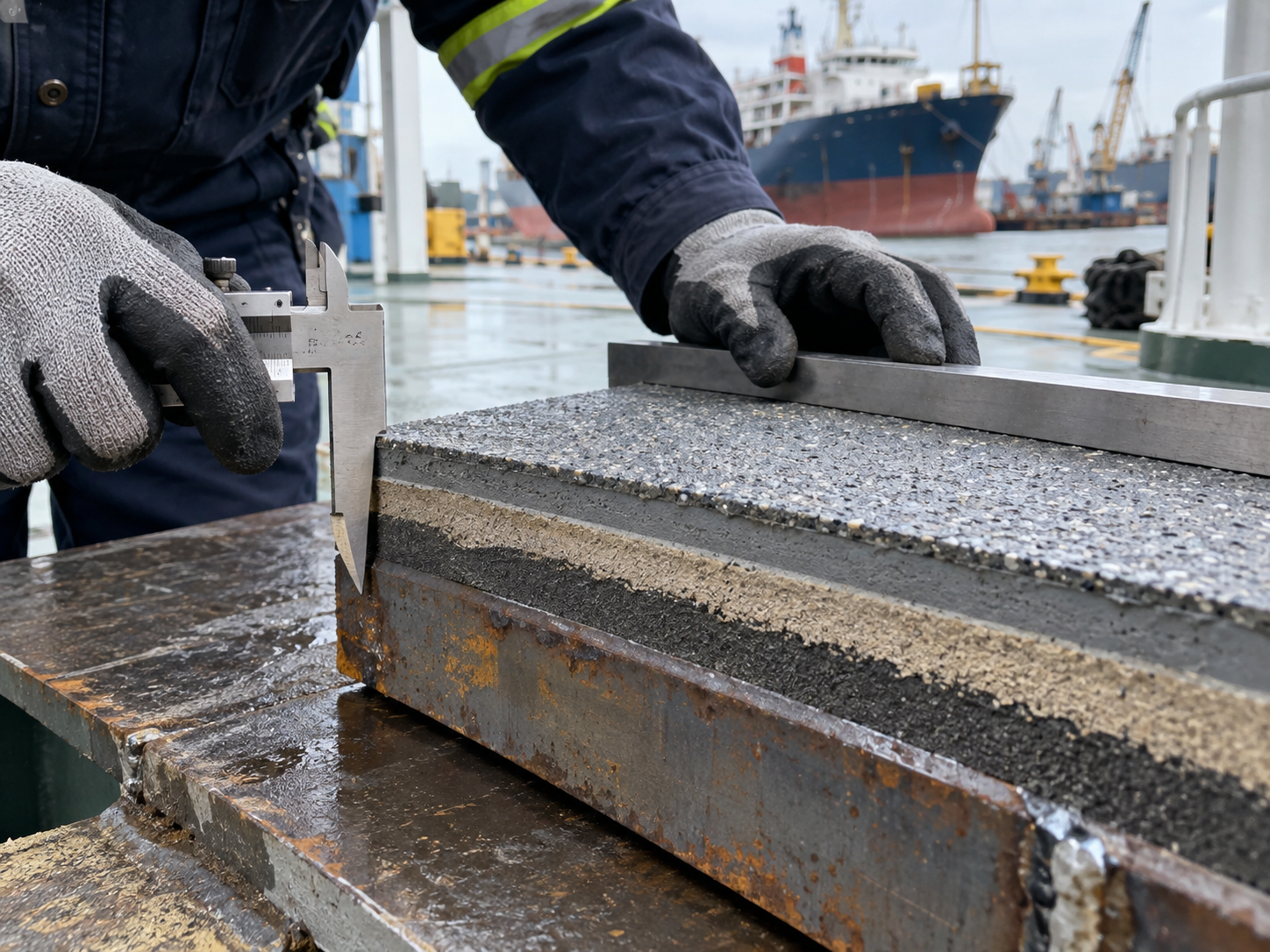
USCG finishes guidance distinguishes the first layer applied directly to deck plating from floor coverings installed above it, and describes test reports, factory follow-up, plans and installation instructions in approval packages. That distinction helps prevent a specification from mixing a levelling layer with the final walking surface.
How to compare the numbers
Density and unit weight are relevant for equipment clearance, deck loading and center-of-gravity review, while the compressive or flexural strength is related to a test method, not to all service loads. Wear, adhesion and skid values are valid only if the substrate, preparation, test specimen and maintenance assumptions are equivalent.
Shortlist rule
Keep the exact model, certificate revision, total thickness, layer order, adhesive and substrate on the same comparison line. If one of those fields is unknown, mark the item for confirmation rather than replacing it with a generic “heavy duty” label.
Decision record
Write down why the chosen marine flooring system fits the zone, what evidence supports the choice and which assumptions remain open. This record helps engineering, procurement, quality and the installer work from the same version of the project brief. It also creates a clear handoff when the vessel moves from fabrication to commissioning or service, including future repair planning and inspection intervals across the operating life.
Fire, Classification and Document Boundaries
The IMO 2010 FTP Code Parts 2, 3 and 5 address separate issues namely: smoke and toxicity; fire-resisting divisions; surface flammability for paints, floor coverings and coverings for main or other floors. The tests families have been clarified in reports by DMT and Intertek and the model and/or assembly covered by any statement in the Yibo reports is identified within them.

IMO Part 2
Smoke / toxicity context
IMO Part 3
Division or assembly context
IMO Part 5
Surface flammability context
DNV / CCS / NK
Model documents to be checked

How to read the supplied certificates
AC-J1200
DNV MEDB00008VR is described for a 45 mm primary deck covering on steel or non-combustible material, with an IMO 2010 FTP Part 5 reference and a supplied validity date of 2029-03-06.
AC-JI and AC-JII
MEDB00005WR Rev.1 and MEDB00005WM Rev.1 name their own Gecko types, maximum dry film thickness and nominal density limits.
A-60 systems
YB-A60FIII-1 and YB-A60-7 are complete assemblies in the supplied sheets; do not shorten their component data into a promise that an epoxy or grating alone is A-60.
The risk is not a missing logo; it is a mismatch between the fire scenario, layer position and approval package. Because IMO 2010 FTP Part 5, DMT and Intertek describe test families rather than a universal offshore installation, keep the exact certificate, substrate and thickness with the drawing.
This is a counter-intuitive but practical distinction for an offshore oil platform flooring RFQ: a named model can be technically useful while still needing flag-State, class and project acceptance.
Request a certificate reviewAlways retain the certificate number, revision, test method, substrate and thickness next to the model name in your submittals and drawings. If you are covering a primary deck covering with a final floor covering, record both layers rather than documenting the finish in the upper part as tested primary layer.
SOLAS, DNV GL, EC, CCS and NK references in the company introduction are company-stated information. Every project still needs the flag State, vessel or asset class, classification society, tested assembly, substrate, adhesive and installation documents checked together.
Fire-scenario decision point
The honest version is to confirm the fire scenario and layer position before making a promise. A certificate for one named assembly is not a substitute for the project’s flag-State, class and installation review.
Request a scope reviewInstallation Inputs Before Quotation
A meaningful request allows the engineers to reject a wrongful application match early. As marine deck levelling guidelines consider the same parameters – density, physical properties, curing – as part of the application, product name cannot be a specification in itself. Ship deck flooring installation details should name the offshore zone, access plan and class hold points; a generic method statement is not enough.
- Asset class: fixed platform, FPSO, FLNG, jack-up, semi-submersible, drillship or offshore module.
- Jurisdiction, flag State, project specification and classification society.
- Operating mode: fabrication, tow-out, jacking, moored operation, conversion or in-service repair.
- Zone, deck elevation, area, geometry, penetrations, openings, edges, stairs and escape routes.
- Steel or non-combustible substrate, primer, existing covering, moisture condition and surface preparation.
- Target thickness, equipment clearance, distributed/concentrated loads and expected impact.
- Unit weight, centre-of-gravity or deck-load constraints and any vibration/acoustic target.
- Wet/dry condition, contamination, cleaning method, footwear, colour, texture and slip objective.
- Adhesive, fastener or OEM installation requirement, inspection hold points and maintenance owner.
- Required certificate format, drawings, test reports, samples and handover records.
Why the substrate record matters
Any retained moisture, loose mill scale, deteriorated primer coat or undesirable Weld shape can also influence overall adhesion or finish level. Compatibility and thorough substrate preparation is paramount for ensuring adherence and consistent flatness of a subsequent layer. Detail on the surface preparation, including sign-off by both installation personnel and client upon layer acceptance.
Practical handover question
Can the installer show the approved drawing, product batch, mixing or placement record, inspection hold point and repair instruction for this exact zone? If not, the quotation is not yet a complete offshore flooring package.
Support and preparation signal
A surface problem may be an adhesive or substrate-preparation problem, not a defective floor. Keep that distinction in the non-conformance record before changing the product specification.
What we will not guess
Coverage, cure time, application temperature, packaging consumption, warranty, lead time, minimum order, payment and price depend on the approved system and commercial scope. We confirm them only after the project inputs and installation documents are reviewed.
Compatibility checkpoint
Do not assume a familiar adhesive, fastener or primer is interchangeable with the supplied build-up. Send the drawing, substrate record and OEM or installer requirement so the engineering review can resolve the root cause before a quotation is frozen.
Project Records and Supply Context
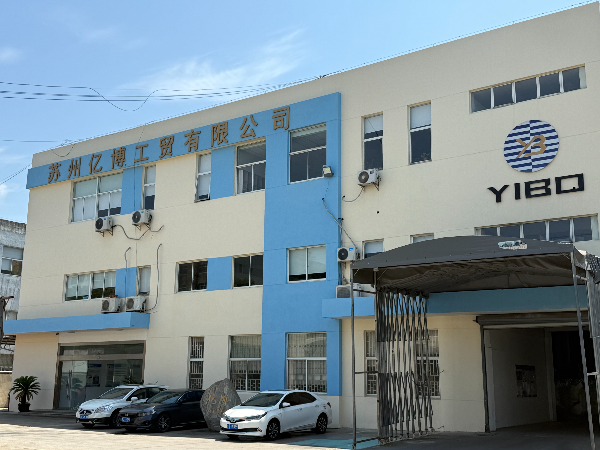
Company information states that Suzhou Yibo Industry & Trade Co., Ltd was founded in September 2001 in Huangqiao Street, Xiangcheng District, Suzhou City. The same information describes a site of more than 6,000 square metres, ISO 9001:2015 certification and a marine flooring product range that includes floating floors, deck coverings, damping coatings, PU levelling and imitation teak floors.
FPSO H1498-1500
The supplied performance workbook records Shanghai Waigaoqiao Shipbuilding Co., Ltd, the combination YB-A60FIII-1 + DP-SDI + AC-JI and shipowner SBM. Treat this as a supplied project record for document and system discussion, not as an independently verified performance guarantee.
01
ARCTIC LNG 2 PROJECT
The workbook records BOMESC Offshore Engineering Company Limited with YB-Epoxy Floor E60 + YB-S22 and shipowner Novatek, Russia. The record helps explain why a project may combine levelling and final floor systems; it does not establish a universal LNG or offshore approval.
02
A new supplier review can stall when a project row is mistaken for a current certificate or an endorsement. The supplied company record and ISO 9001:2015 statement are useful context, but the right call is to request the revision, drawing and inspection record for the actual offshore module or FPSO zone while comparing ferries and workboats, cruise and passenger vessels, naval vessels and self-levelling deck coverings; each route has its own vessel, zone and approval inputs.
Request project evidenceProject names, company relationships and certificates are shown as supplied or company-stated facts. Ask for the relevant drawing, certificate, revision and installation file when your procurement process requires independent verification.
The supplied rows show where named Yibo systems were recorded in a shipyard or offshore-engineering context; they do not prove every load case, fire duty or maintenance outcome. Use the record to start a document review, then confirm the current certificate and scope with the responsible approving party.
Review a project recordTechnical Submittal and Handover Path
Offshore flooring decisions carry on even after material made it into shortlisted. DNV guidance for Design approval, construction & installation survey, certification, commissioning, class transfer and in-service inspection; a solid handover pathway may need to left room for that.
01 / Scope
Receive zone, asset class, substrate, loads, operating mode and target standard.
02 / Match
Map the proposed system, layer definition, certificate, adhesive and required drawings.
03 / Review
Resolve fire scenario, weight, interfaces, fasteners, inspection points and responsibilities.
04 / Handover
Confirm quotation scope, approved installation files, inspection records and maintenance pack.
Records that keep a project moving
For a new build your documentation should arrive with your design review and installation survey rather than as a last-minute bunch of certificates. For repairs and conversions, the photographs, deck plan mark-ups, moisture records and prior layers should be every bit as important to you as the product data sheet.
- Approved material designation and certificate revision.
- Assembly drawing with layer order, thickness and interfaces.
- Substrate release, preparation and environmental records.
- Batch or lot traceability, inspection points and non-conformance route.
- Cleaning, repair, replacement and in-service inspection instructions.
- Final handover index showing what was submitted to the project or class surveyor.

Maintenance signals to record
Agree how the operator will recognise wear, debonding, loose fasteners, damaged edges, blocked drainage or contamination before walking surface performance degrades. A simple repair criteria and decision tree protects the intended performance better than a one-time materials comparison.
Handover question set
Who owns housekeeping, who signs the installation release, which records go to the class surveyor, and where is the approved repair method stored? Put the answers beside the drawing and certificate revision so the next shift can find them.
The sequence listed below indicates a project planning framework rather than a contractual promise of Yibo performing your shipyard survey, classes approval or offshore works installation. Refer to your project documents for the named accountable owner and approving procedure.
Handover evidence checkpoint
Bring the IMO 2010 FTP Code reference, IOGP S-631-04 interface notes, ISO 9001:2015 supplier record and the approved drawing into one review trail. If a file is missing, mark the gap and request the document pack before the installation window is fixed.
Request handover reviewCost Drivers and Lifecycle Review
Economic Evaluation Context
No publicly searchable, qualified study or comparable range of data for offshore industrial payback can be found in the search results. Using data for Yacht deck-cost calculators and broad market trends to promise a return is no basis for an offshore return. Thus the figure used here is that of a qualified cost driver card rather than a full economic evaluation or financial study.
Bronze
Qualified TCO view. Compare preparation, build-up thickness, access, installation responsibility, inspection, cleaning, repair and replacement exposure alongside the material price. Ask for a project-specific analysis when the area, operating mode and maintenance plan are known.
No price, payback period, MOQ, payment term or delivery time is implied.
Material and layer quantity at the approved thickness.
Surface preparation, moisture control and access equipment.
Downtime, inspection hold points and handover documentation.
Cleaning, contamination control, wear monitoring and repair strategy.
Question what exactly either quotation includes regarding substrate preparation, primimg layer application, edging details, access equipment, on-site survey attendance and handing over. Buying materials in a hurry creates procurement risk: compressed lead times and fixed installation windows can lock in a scope while the approved drawing is still open. Any seemingly low material cost can push cost on in the form of downtime, rework, inspection or long-term maintenance where the supply and installation are not closely specified and aligned with the works performed.
Record area, thickness, unit weight, installation window, crew responsibility, inspection points, cleaning plan and expected repair route. Keep unknowns visible so a later price revision can be explained rather than treated as a surprise.
Technical Document Request
Let your documentation request be a lead in to continuing dialogue regarding commercial matter backed up with evidence. Use our team model as your template to create a shortlist of approved products then see the relevant Yibo product datasheet and or test certificate reference for comparison against your project specification. Include the IMO 2010 FTP Code context when the fire-scope question is part of the review.
Share the asset class, zone, area, substrate, build-up and load assumptions. The first response should identify open questions rather than force a premature product match.
Ask for the shortlistRequest the relevant AC-J, A-60, YB-S22 or E60 file references, then confirm revision, thickness, substrate and installation conditions with the approving party.
Request the document packA fully useful document includes selected product data sheet reference number and issue date, class and or company registered document certificate number, and issues date plus associated assembly drawings. Substrate conditions we have modelled, adhesive/fastener advice details and information on our supplied test samples; additionally we include any points still open to your project. Clear documentation will show which are internal, class or laboratory documents and which still await your approval; Supplier due diligence checks certificate number, expiry, certifying bodies and exact facility/process scope rather than accepting a logo alone, including for ships’ deck-flooring.
If the risk is an unknown substrate, load, contamination or fire duty, send the asset class, zone, drawing reference and required standard with the RFQ. The response can then identify the relevant AC-J, A-60, YB-S22 or E60 file, explain the layer position and flag what still needs the approving party.
That is a more defensible route than treating generic marine deck flooring or marine deck paint non slip as interchangeable evidence.
Send the technical brief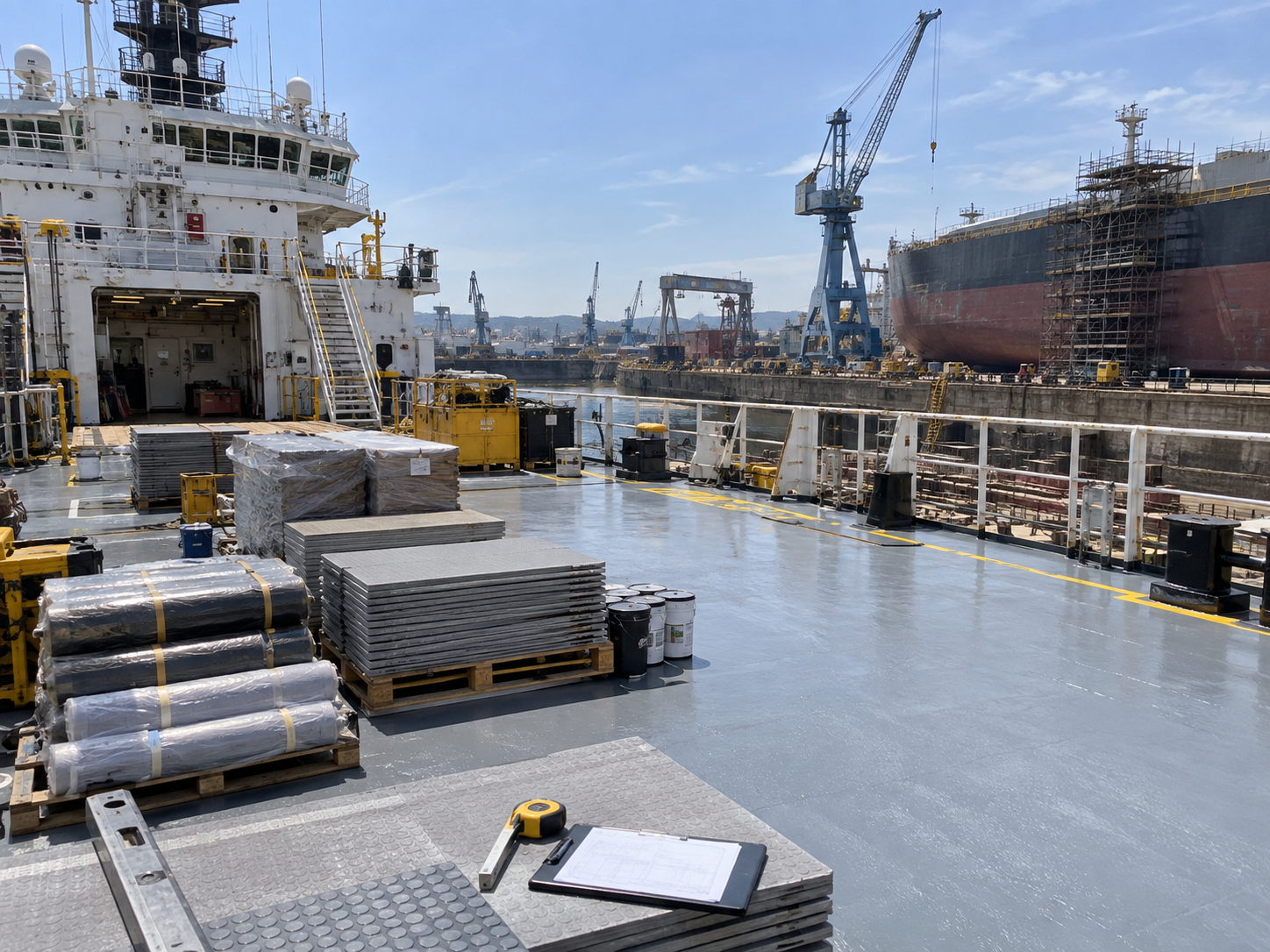
Application Review Principle
A floor that fits the drawing can still fail the project if its mass, fasteners, fire scenario or inspection boundary is unknown.
Offshore Platform Flooring FAQs
Is offshore platform flooring the same as generic marine paint?
No. It is a documented build-up review, not a paint-name comparison.
Which Yibo systems can be reviewed for steel or non-combustible decks?
AC-J1200, AC-JI, AC-JII, YB-A60FIII-1, YB-A60-7, YB-S22 and YB-Epoxy Floor E60 appear in the supplied product records. The applicable model, complete assembly, substrate, thickness and certificate conditions must be checked for the actual fixed platform, FPSO, jack-up, semi-submersible or offshore module.
Does a DNV document approve every offshore platform installation?
No. It covers only its named type and stated limits.
What should we send before asking for a quotation?
Send the asset class and operating mode, zone and area, substrate, existing layers, target thickness, loads, weight limits, fire and slip requirements, adhesive or fastener details, classification society and required documents. Include the drawing reference and installation window when those are known.
Can one system cover an accommodation module and an exposed service route?
Do not assume that. Acoustic interiors, machinery spaces, walkways and exposed gratings can differ in drainage, layer order, load, contamination, edge protection and inspection ownership.
How should we compare a primary deck covering with a floor covering?
Identify whether the material sits directly on deck plating or above another layer. Then compare the approval package, tested substrate, thickness, adhesive and installation instructions for that exact position.
Do the supplied project records prove offshore performance?
They document model combinations and named projects supplied by the client, including an FPSO record and an Arctic LNG 2 record. Those rows provide traceable context for a document discussion, but they are not independent test results, customer endorsements or proof that every zone shares the same loads, fire duty, maintenance outcome or class acceptance.
Can Yibo confirm price and delivery before reviewing the brief?
Commercial terms follow the approved scope; request a review first.

![Marine PU Floor: Selection & Installation [Guide]](https://yibomarine.com/wp-content/uploads/2026/09/marine-pu-floor-blog-featured-150x150.png)