Get in touch with Yibo Company


SPECIFICATIONS & APPLICATION
Non-Self-Levelling Screed Underlay for Marine Deck Build-Ups
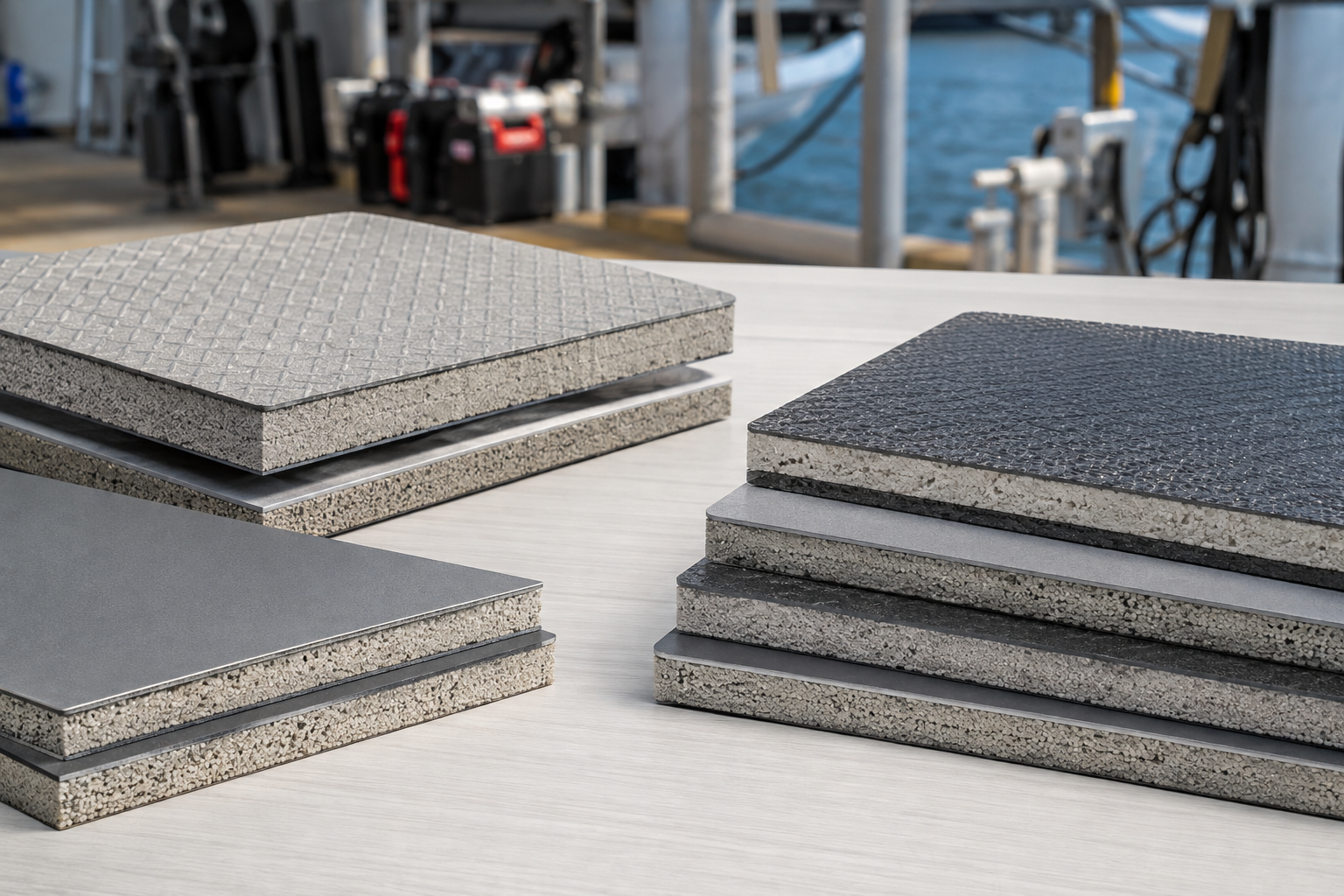
A non-self-levelling screed underlay from Yibo Marine Systems gives shipyards and marine flooring teams two catalogue-defined primary deck-covering choices: YB-1 and YB-4. We supply these cement-based, three-component materials for project review against the deck substrate, required build-up, specified finish and document scope.
- YB-1 and YB-4 comparison
- Steel-deck build-up review
- Catalogue data made clear
- Project-input quotation
2
primary deck-covering grades: YB-1 and YB-4
≤1,300 kg/m³
YB-1 catalogue density
≥3.0 MPa
breaking strength listed for both grades
A+B+C
three components listed for each product
≤800 kg/m³
YB-4 catalogue density
≥8.0 MPa
compressive strength listed for both grades
Non-Self-Levelling Primary Deck Covering for Steel Deck Build-Ups
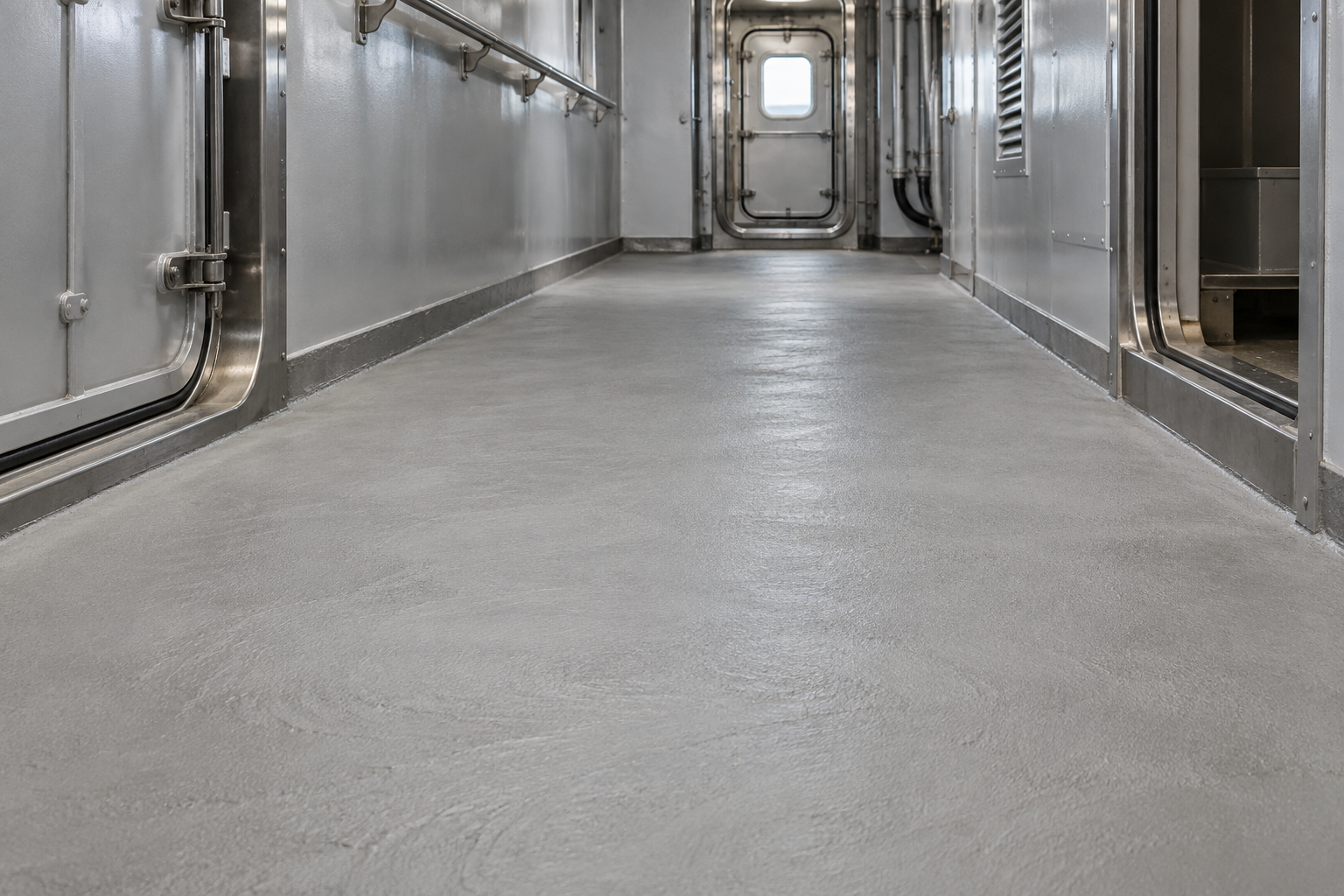
YB-1 and YB-4 are positioned in the Yibo catalogue as lightweight primary deck-covering materials for steel, galvanized-steel and aluminium deck surfaces. Our review starts with the installed construction because cementitious deck screeds such as these form only one layer in the floor system.
01
02
03
04
05
06
07
P-01
Shape the deck surface
A non-flowing compound is placed and worked where the project needs a controlled surface rather than a self-spreading layer. The target level, fall and local geometry belong in the work instruction.
P-02
Support the specified finish
The primary deck covering forms a subfloor or underlay beneath the selected interior finish. Finish type and interface requirements need to be identified before the material route is fixed.
P-03
Keep the system boundary visible
Surface preparation, anti-corrosive coating, primer, adhesive or isolation layers are separate decisions. Our technical review keeps those inputs with the product grade instead of treating a bagged mix as the whole deck system.
P-04
Installed-construction note
U.S. Coast Guard guidance describes a primary deck covering as the first layer applied directly to deck plating, inclusive of a necessary primary coat, anti-corrosive product or adhesive. That category language is why the substrate and interface route stay on the RFQ, even when the enquiry begins with a single mortar or screed name.
P-05
Welds and local geometry
Weld seams, depressions, drains and transitions change what “smooth” means on the job. A level datum, a designed fall and a locally faired surface are different outcomes, so the drawing should show which one the installation must deliver.
P-06
Area duty
Accommodation, wet-service and machinery zones do not create one automatic product answer. The zone tells the team which exposure, finish and handover requirements belong beside the primary deck material.
P-07
Layer ownership
The shipyard, coating team, screed applicator and finish supplier may touch adjacent layers. Recording who prepares, applies and accepts each layer reduces gaps at the interfaces.
Specifications / Scope
- Commercial vessels and ship interiors, not domestic concrete-floor repair
- Primary deck underlay, not a decorative tile, vinyl or imitation-teak finish
- Project-defined application, not a universal thickness or coverage claim
YB-1 and YB-4 Product Selection
The two grades share the same listed strength thresholds, organic-content limit and A/B/C package format. Their clear catalogue difference is density, so the choice begins with the project weight objective and continues through the installed build-up review.
SYS // YB-1
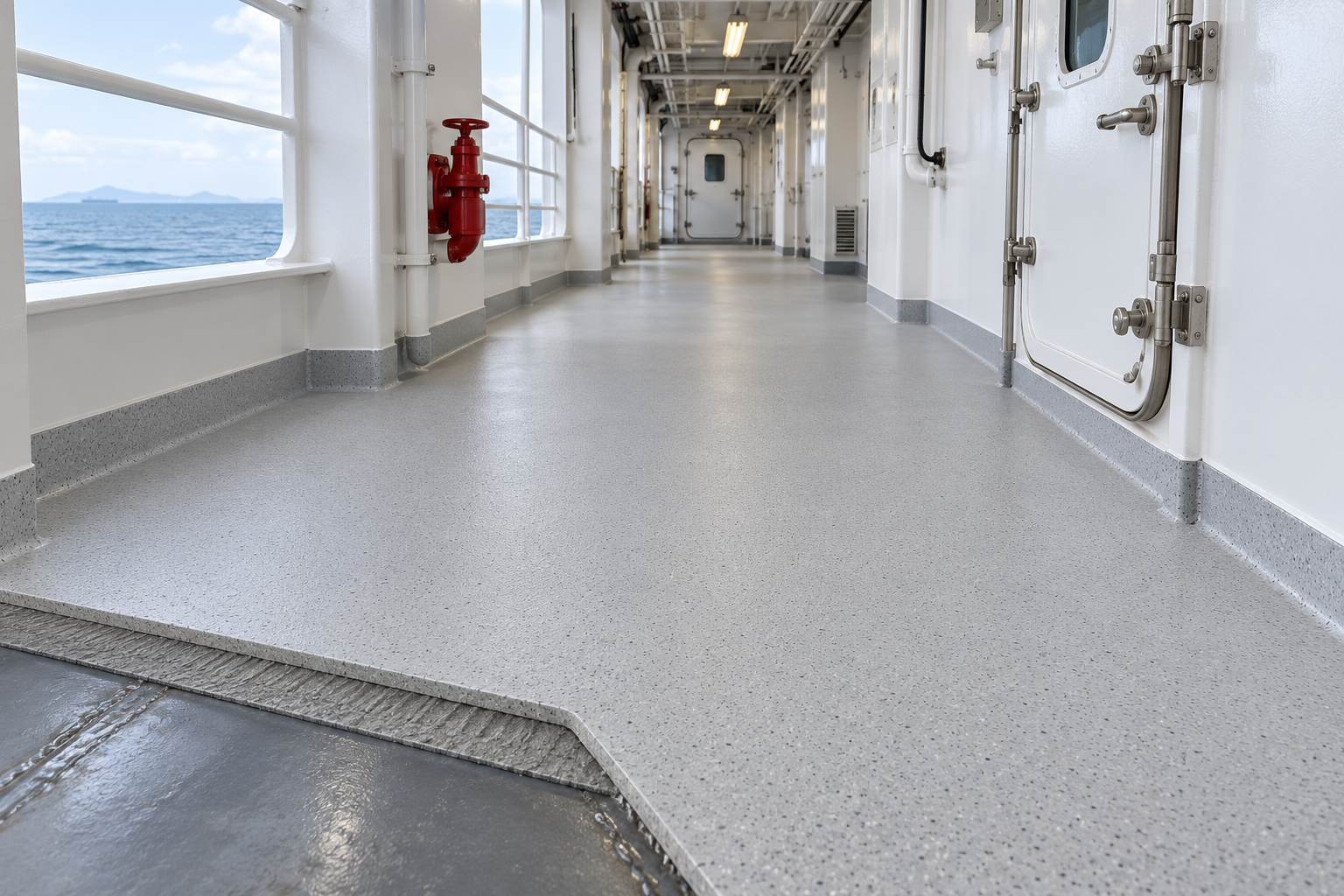
YB-1 Light Primary Deck Covering
- Catalogue density ≤ 1,300 kg/m³
- Breaking strength ≥ 3.0 MPa
- Compressive strength ≥ 8.0 MPa
- Organic content ≤ 10%
- Package Components A, B and C
SYS // YB-4
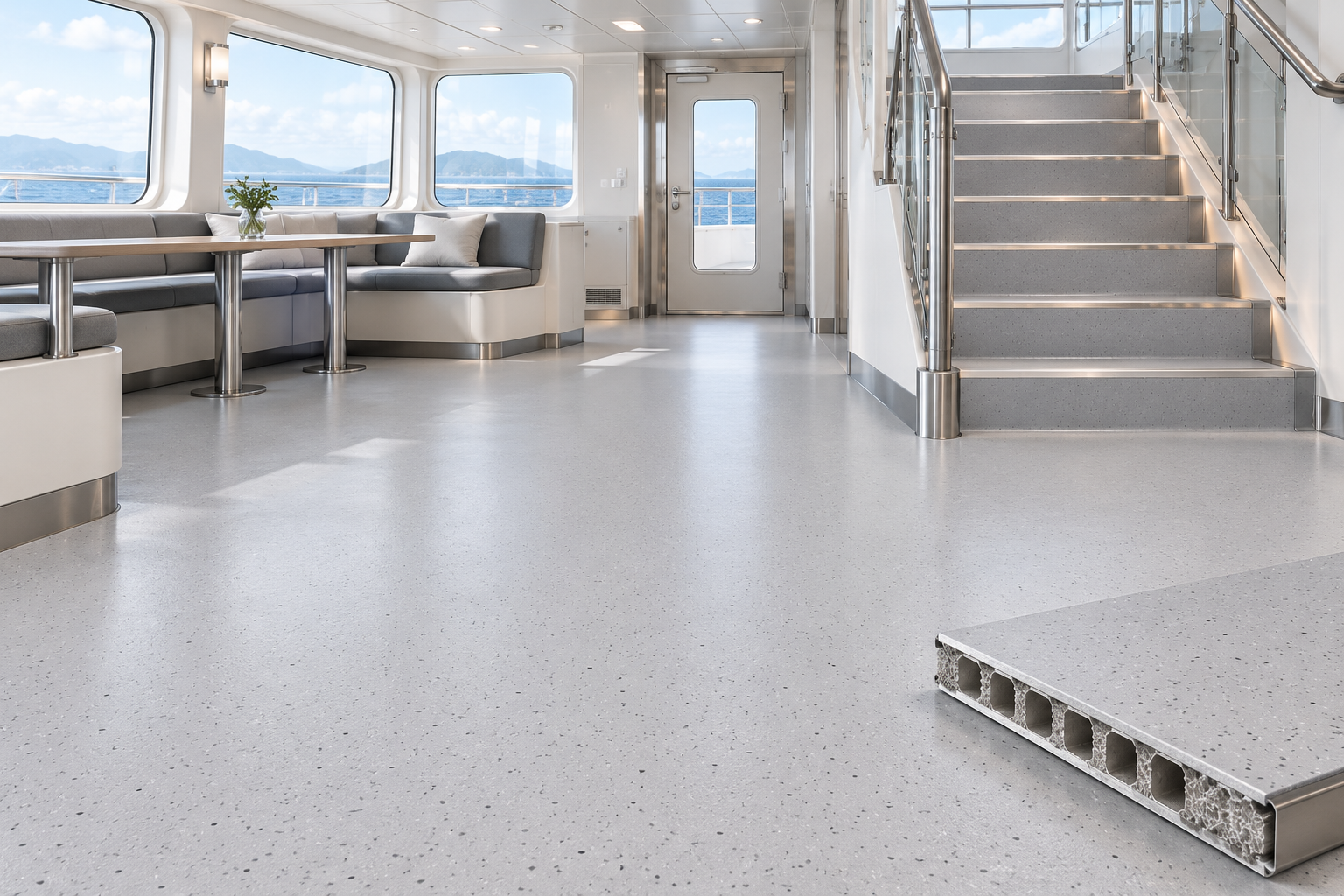
YB-4 Super-Light Primary Deck Covering
- Catalogue density ≤ 800 kg/m³
- Breaking strength ≥ 3.0 MPa
- Compressive strength ≥ 8.0 MPa
- Organic content ≤ 10%
- Package Components A, B and C
Selection rule that survives review
Choose YB-4 for review when the lower listed density is material to the deck build-up; keep YB-1 in the comparison when the project does not need that lighter catalogue limit. The final call still needs thickness, substrate, finish and application-zone inputs because equal bulk-property rows do not make two installed systems interchangeable.
Lower density is not always the only target
The trade-off sits in the complete deck build-up, not in one catalogue cell. Compare the required material volume, local fairing, interface layers and finish before treating the 500 kg/m³ difference between the listed upper limits as a project result.
Deck Build-Up Inputs and Finish Interfaces
A complete specification identifies the underlay, primers or overlay products, work surfaces and finish interface. Our review uses that layer sequence without assigning one primer or thickness to every vessel.
Build-up position
Input to provide
Decision it controls
Deck substrate
Steel, galvanized steel or aluminium
Preparation and interface review
Existing surface
New plate, retained coating, corrosion, welds or repaired zones
Removal, cleaning and inspection scope
Interface layer
Specified primer, anti-corrosive coat, adhesive or isolation layer
Compatibility and sequence
Primary underlay
YB-1 or YB-4, target build-up and local geometry
Material comparison and placement plan
Final covering
Named finish supplier and finish type
Surface handover and interface requirements
Marine Screed RFQ Input Matrix
Send eight inputs: substrate; existing surface condition; primer, anti-corrosive, adhesive or isolation requirement; application zone; target build-up or thickness; specified finish; area or quantity; and flag-state, destination-market or technical-document scope. This is Yibo’s intake framework for a project review, not an engineering approval or a universal marine standard.
Interface release check
Before the screed is released, confirm that the surface-preparation record, coating or primer instruction, mortar placement method and finish supplier’s substrate requirement describe the same build-up. A mismatch here can force rework even when every individual product row looks acceptable.
The important trade-off is simple: naming only “cement screed” leaves the interfaces open. Naming the full layer sequence gives the shipyard, applicator and finish supplier a common starting point.
YB-1 and YB-4 Technical Specifications
The table below reproduces the product values shown in the Yibo catalogue. Each figure stays beside its model name so a lower density limit cannot be detached from the correct grade.
| Catalogue field | YB-1 | YB-4 |
|---|---|---|
| Product designation | YB-1: light primary deck covering | YB-4: super-light primary deck covering |
| Density | YB-1: ≤ 1,300 kg/m³ | YB-4: ≤ 800 kg/m³ |
| Breaking strength | YB-1: ≥ 3.0 MPa | YB-4: ≥ 3.0 MPa |
| Compressive strength | YB-1: ≥ 8.0 MPa | YB-4: ≥ 8.0 MPa |
| Organic content | YB-1: ≤ 10% | YB-4: ≤ 10% |
| Package format | YB-1: Components A, B and C | YB-4: Components A, B and C |
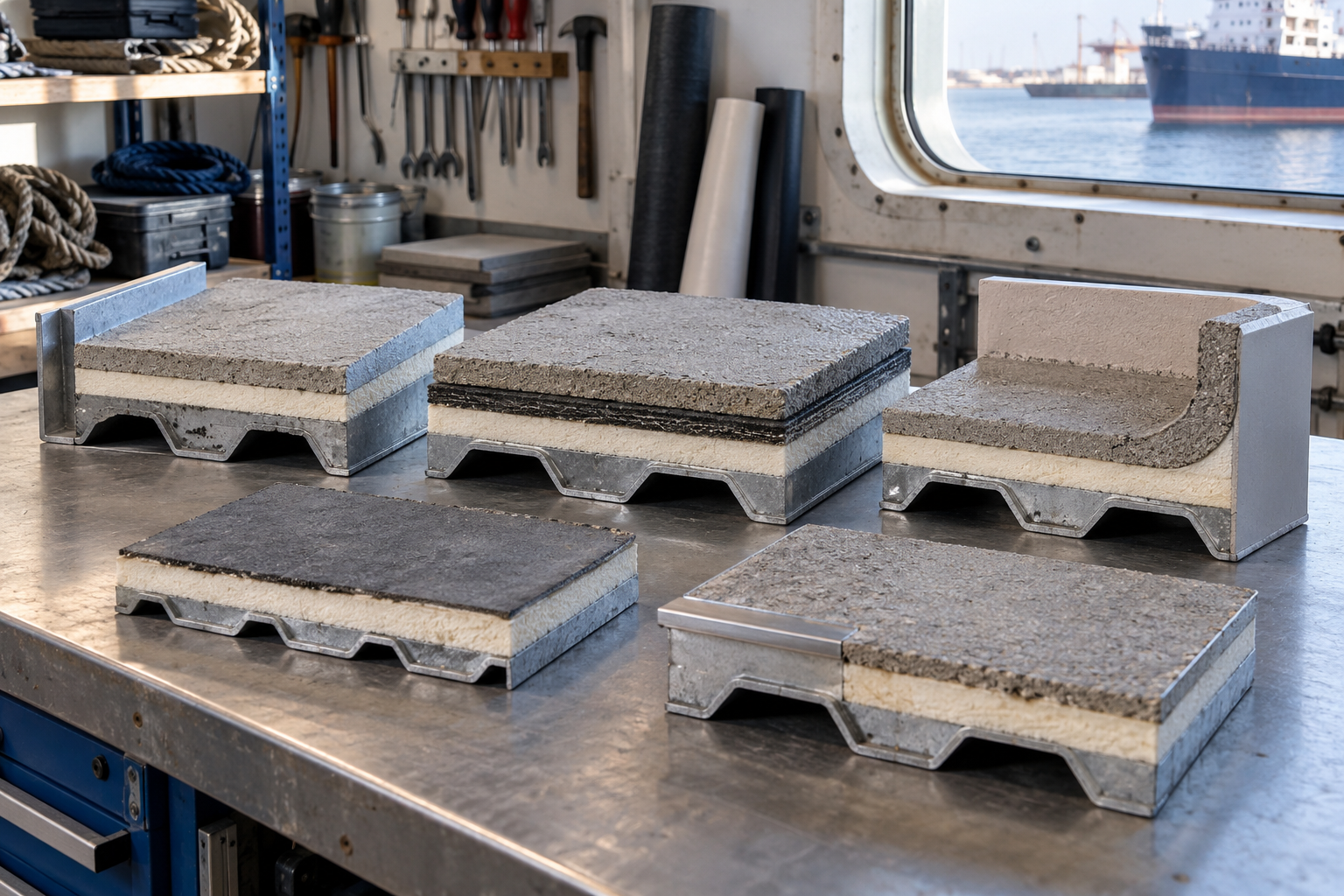
What the density row does—and does not—decide
The difference between the two listed upper limits is 500 kg/m³. It is a bulk-product comparison, not a promise of installed weight saved, because installed mass also depends on the approved layer sequence, actual thickness, area and site consumption.
YB Density Reference
Compare the catalogue density limits over an equal reference volume without turning the result into an installed-coverage claim.
RFQ Readiness Checklist
Check which of the eight build-up inputs are ready before sending the enquiry.
YB Model Comparison
View YB-1 and YB-4 side by side and route the next technical question.
Project Pricing and Schedule Inputs
Price is derived from the selected grade, required quantity, deck area, specified build-up, work zone and requested technical documents. A full offer follows once those inputs are aligned; no fixed unit rate can describe every installed construction.
Cost-driver view
Bronze evidence level: use this card to prepare a quotation, not to estimate a payback period. No transferable price, coverage, labour rate, lead time or service-life figure is applied to YB-1 or YB-4.
Why it moves the quotation
YB-1 and YB-4 have different listed density limits.
What to send
Preferred grade or weight objective
Why it moves the quotation
Quantity cannot be reviewed without the deck area and target layer.
What to send
Drawing, area schedule and thickness call-out
Why it moves the quotation
New, coated, corroded and repaired surfaces lead to different preparation questions.
What to send
Deck material, condition notes and photographs
Why it moves the quotation
Primer, isolation and final covering affect the system sequence.
What to send
Named products or supplier specifications
Why it moves the quotation
Wet, dry, drain, machinery and accommodation areas can carry different design requirements.
What to send
Vessel space and service description
Why it moves the quotation
The exact product, installed construction and destination requirements need to be matched.
What to send
Flag state, market, vessel and requested records
Schedule starts with a releasable scope
A date cannot be set from product name alone. First, our team resolves material choice, quantity basis, interface questions and the document package, then places the agreed supply and application responsibilities into the quotation.
A quote-ready project pack
- Shows the deck boundaries and separates full-area work from local repair.
- States whether quantity is a net design area, procurement quantity or another agreed basis.
- Names the existing coating and surface condition where known.
- Identifies the final covering and the supplier responsible for its acceptance.
- Lists the requested product, batch, test or approval records without using a society name as a substitute for scope.
Technical Documents and Quality Review
Our team matches the requested data to the named product and project scope. Product data, installed construction, vessel requirements and flag-state acceptance remain distinct questions that the enquiry must address.
One document should not be asked to answer four questions
A document mismatch can delay release because a product sheet, an installed construction and flag acceptance serve different decisions. Yibo Marine Systems resolves the intake by naming the grade, layer sequence, vessel and market before the technical pack is assembled.
Product identity
Confirm YB-1 or YB-4, the revision of the product data, the batch or order reference and the catalogue properties that matter to the specification.
Installed construction
Record the substrate, surface preparation, coating or primer, underlay, isolation step where specified and final floor covering as one ordered layer sequence.
Vessel and application
Name the ship, project stage, room or deck zone, exposure conditions and the party that will apply each layer.
Flag and market route
State the flag administration, destination market, owner specification and any named technical-document requirement before release.
Standards context for the document request
ISO 5694:2023 covers shipbuilding deck-covering underlay of the cement type, while the 2010 Fire Test Procedures Code provides an international framework for fire-test and type-approval procedures under SOLAS. Those references help name the review route; the current records for the exact product and construction are what the project team must match.
- Request the current product technical data for the named YB grade.
- Identify the proposed layer sequence and specified finish.
- Match the document request to the vessel, flag state and destination market.
- Record questions and accepted documents before material release.
Project Review and Application Handover
Our team turns the project data into an agreed set of supply, interface and handover inputs. We act as material-system reviewers, not as the shipyard’s design authority or the applicator’s work planner.
PROCESS // DETAILS
Supply the deck scope.
Provide the vessel or project reference, application zone, substrate, area and target build-up.
Compare the material route.
Our team places YB-1 and YB-4 catalogue data beside the project’s weight and strength requirements.
List the interfaces.
Name the surface preparation, coating, primer or isolation requirements and final covering.
Coordinate the technical records.
Map the requested documents to the exact product, construction, vessel and market scope.
Define the quotation basis.
Record the quantity, supply scope and schedule basis for review.
Set the handover basis.
Put the agreed material, layer sequence, responsibilities and hold points into the job file.
Application note:
Do not let a smooth top surface hide an unresolved substrate interface. On metal decks, the condition below the screed and the layer above it are both part of the acceptance path.
Yibo Marine Systems Manufacturing Context
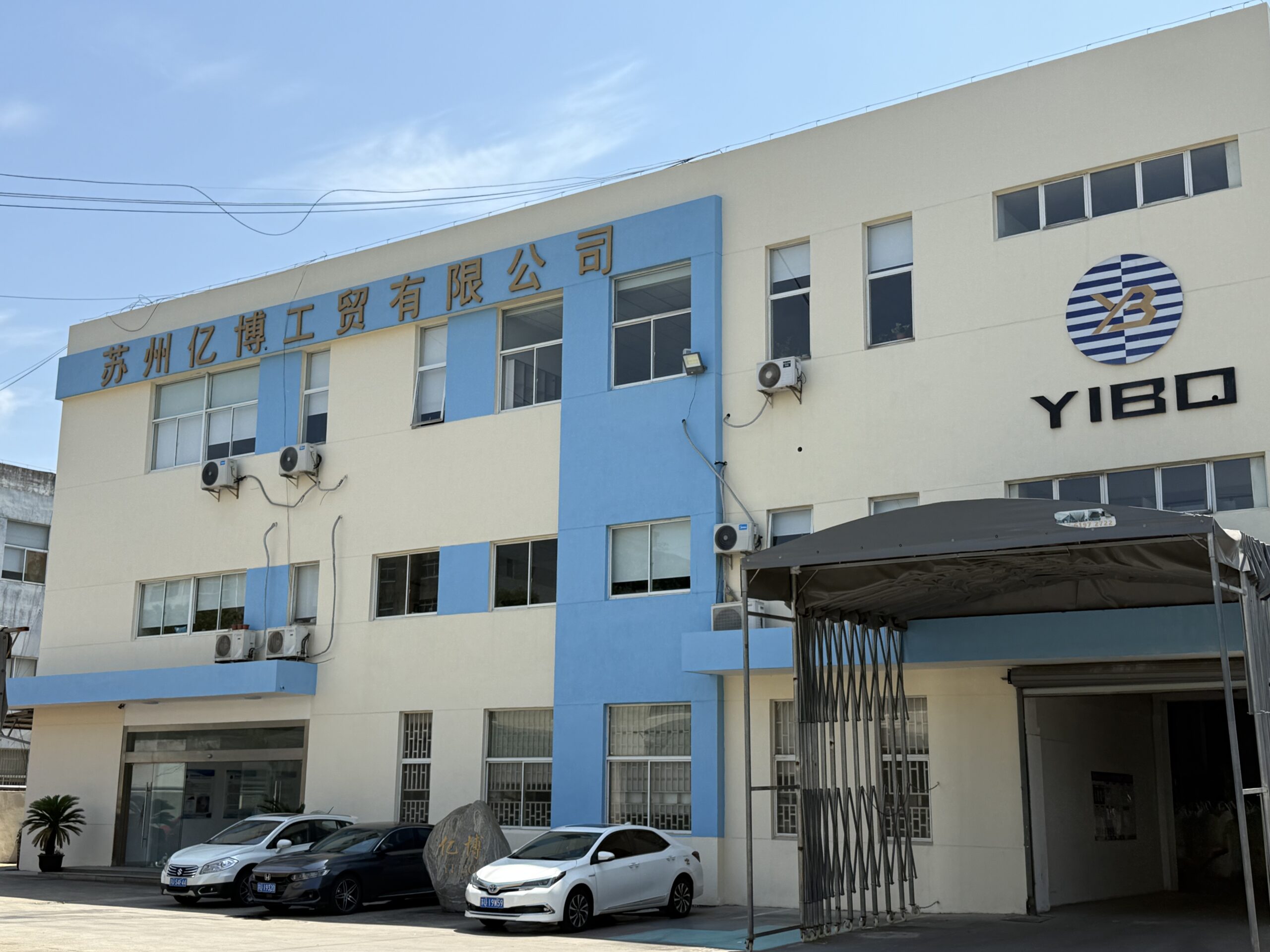
Yibo Marine Systems is the commercial name used here for Suzhou Yibo Industry & Trade Co., Ltd., founded in September 2001. The company manufactures marine flooring materials at its Suzhou factory, and Yibo Marine Systems operates from a site covering more than 6,000 m².
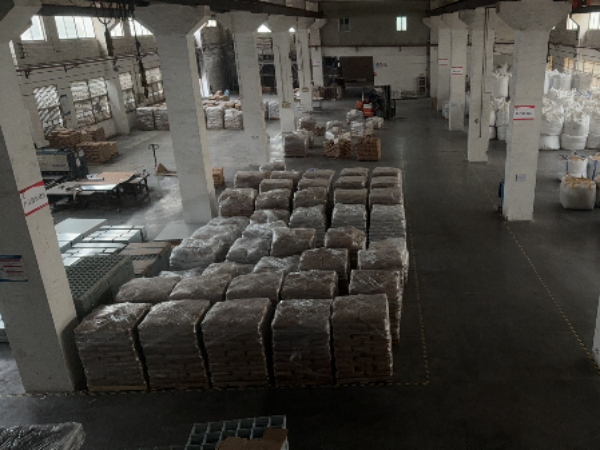
Yibo material storage area at the Suzhou facility. The image is reproduced from the company-supplied photo without scene generation.
Product-line context
Yibo Marine Systems supplies YB-1 and YB-4 within a wider marine deck-covering portfolio, which keeps the discussion connected to the layers around the primary underlay.
Model-level data
The Yibo Marine Systems comparison uses the density, breaking-strength, compressive-strength, organic-content and package rows assigned to each named grade.
Project intake
Yibo Marine Systems asks for the deck and finish inputs needed to move from a catalogue compound to a project quotation.
What the manufacturing facts add to the decision
Company age and floor area do not select a product, but they identify the organization behind the catalogue and the material-storage image. Product release still returns to the named YB grade, project inputs and current technical records.
When a Self-Levelling Layer or Another System Fits Better
Non-self-levelling marine screed is the wrong call when the job requires a flowing levelling layer, a finished decorative surface or a system function outside the YB-1/YB-4 primary-underlay role. The better route is to identify the missing function and review the product family built for it.
The lower-density grade is not always the right call
The trade-off depends on the complete construction and the function assigned to each layer. If a flowing surface is required, a trowel-worked primary underlay is the wrong choice even before density enters the comparison.
A self-spreading levelling layer is specified
YB-1 and YB-4 are the non-self-levelling primary grades in this comparison.
Route to review
Review the self-levelling screed underlay solution and its AC-J model route against the required build-up.
The enquiry is for the visible floor finish
A primary underlayment sits below the decorative or service surface.
Route to review
Name the tile, vinyl, resin, imitation-teak or other finish and check its interface.
The deck is aluminium or galvanized steel
A substrate name alone does not establish the preparation, primer or isolation route.
Route to review
Submit the substrate specification and proposed layer sequence for project review.
A single certificate name is being used to release the job
Product, installed construction, vessel and flag-market scope are not interchangeable.
Route to review
Match the current records to the exact product and intended application.
Engineering & Project Evaluation Tools
Utilize our dedicated online tools to compare specifications, verify technical references, and prepare comprehensive RFQ data for your marine deck covering project.
YB Model Comparison
View YB-1 and YB-4 side by side and route the next technical question.
RFQ Readiness Checklist
Check which of the eight build-up inputs are ready before sending the enquiry.
YB Density Reference
Compare the catalogue density limits over an equal reference volume without turning the result into an installed-coverage claim.
Frequently Asked Questions About Non-Self-Levelling Marine Screed
No. This page covers YB-1 and YB-4 as commercial-marine primary deck-covering materials for ship and vessel build-ups. The exact search phrase can surface building-floor products, but those applications are outside this product page.
The non-self-levelling mix is worked into the required deck geometry instead of flowing to level by itself. A self-leveling compound belongs in the discussion when a flowing levelling layer is the specified function; Yibo lists YB-5 separately from YB-1 and YB-4.
Not in the scope shown here. YB-1 and YB-4 are primary deck-covering underlay materials, while the final floor finish and its interface are separate specification inputs.
YB-1 lists density ≤ 1,300 kg/m³ and YB-4 lists ≤ 800 kg/m³. Both list breaking strength ≥ 3.0 MPa, compressive strength ≥ 8.0 MPa, organic content ≤ 10% and Components A, B and C.
Density supports an equal-volume product comparison, but installed weight also needs the approved thickness, covered area, layer sequence and actual consumption basis. Use the density reference tool for a bounded comparison, then send the build-up for review.
The catalogue describes use on steel, galvanized-steel and aluminium deck surfaces. Preparation and interface instructions still need to be selected for the actual substrate and existing surface condition.
Name YB-1 or YB-4, the proposed installed construction, vessel, application zone, flag state and destination market. Then request the current product data and the project-specific records needed for that scope.
The quotation uses the selected grade, area or quantity, target build-up, substrate condition, interface layers, final covering, work zone and technical-document scope. Send those eight inputs through the project form for review.
Start with a deck or area drawing, substrate, surface condition, application zone, target thickness, specified finish, estimated area and the required vessel or market document scope. Photographs help when the existing coating, weld profile or repaired surface affects the discussion.

![Marine PU Floor: Selection & Installation [Guide]](https://yibomarine.com/wp-content/uploads/2026/09/marine-pu-floor-blog-featured-150x150.png)