Get in touch with Yibo Company


Ferry Flooring Systems for Ferries & Workboats
Yibo Marine supplies ferry flooring, marine deck coverings and floating-floor underlays for passenger, crew, cabin and working spaces. A quote process starts with the vessel type, deck build-up, desired thickness, acoustic requirement and the fire-rating or approval route.
Send the deck information once and our team can map the right product family, documents and sample review to the spaces on your vessel.
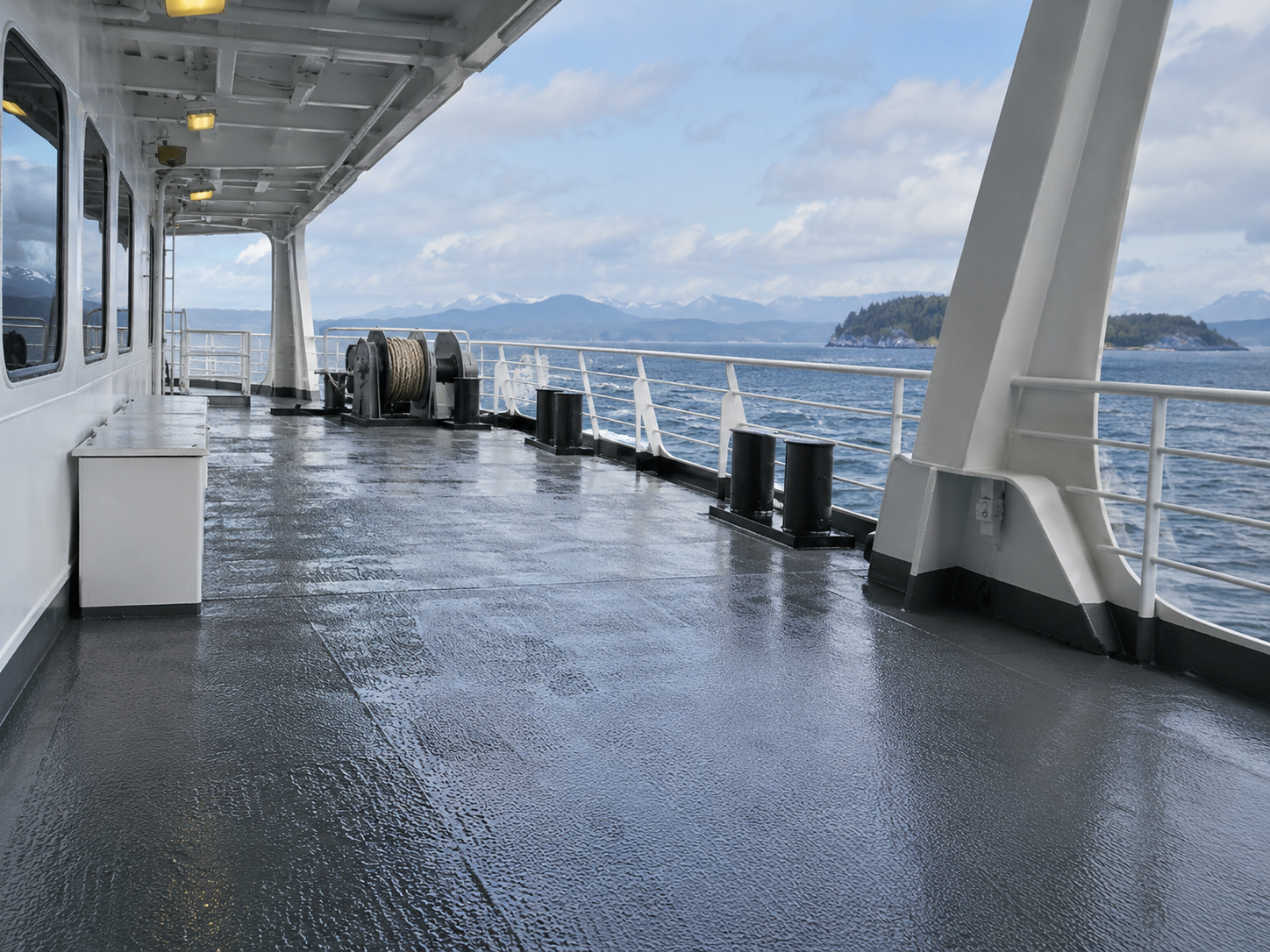
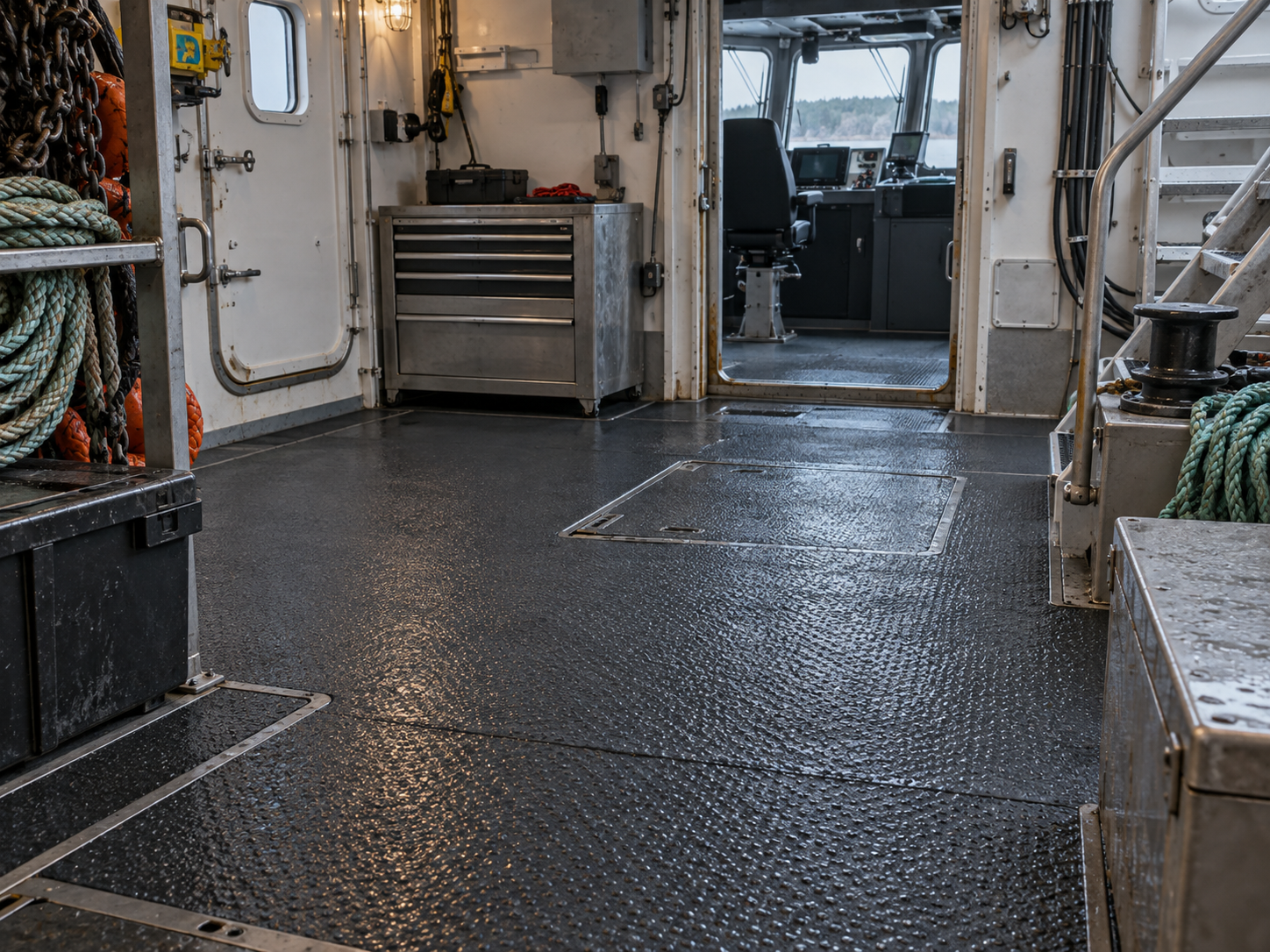
Noise and vibration control
Coordinate a floating floor, resilient layer and finish instead of treating a surface as an isolated product.
Fire and class coordination
Review the complete substrate, adhesive, thickness and layer combination against the applicable SOLAS, IMO FTP and class-society path.
Shipyard-ready product families
Compare lightweight deck coverings, PU leveling, epoxy wear surfaces, damping layers and imitation teak finishes.
Marine Flooring Fit by Vessel Space
A single surface finish is rarely right throughout a ferry or workboat. Passenger routes, crew areas, machinery-adjacent decks and exposed working decks impose different performance requirements, so a one-solution coating creates a clear rework risk. Yibo Marine engineers reduce that risk because a passenger ferry and a workboat may need different MPa, load and slip targets in the shipyard RFQ.
Area Specification
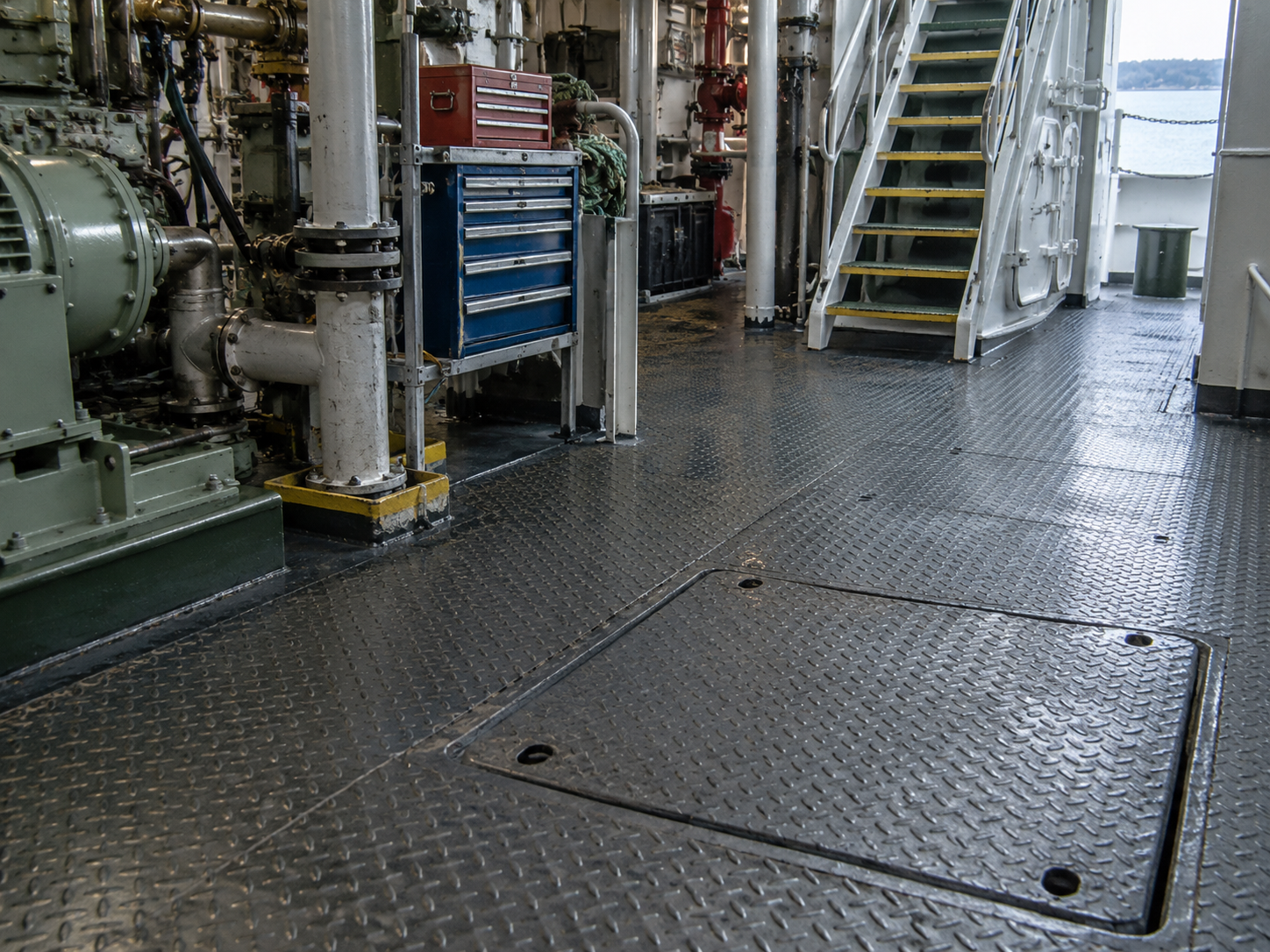
Passenger and crew areas
Confirm stable, firm and slip-resistant walking surfaces, cleaning method, footfall and the required finish appearance. A fire document does not replace the operational slip-resistance review.
Area Specification
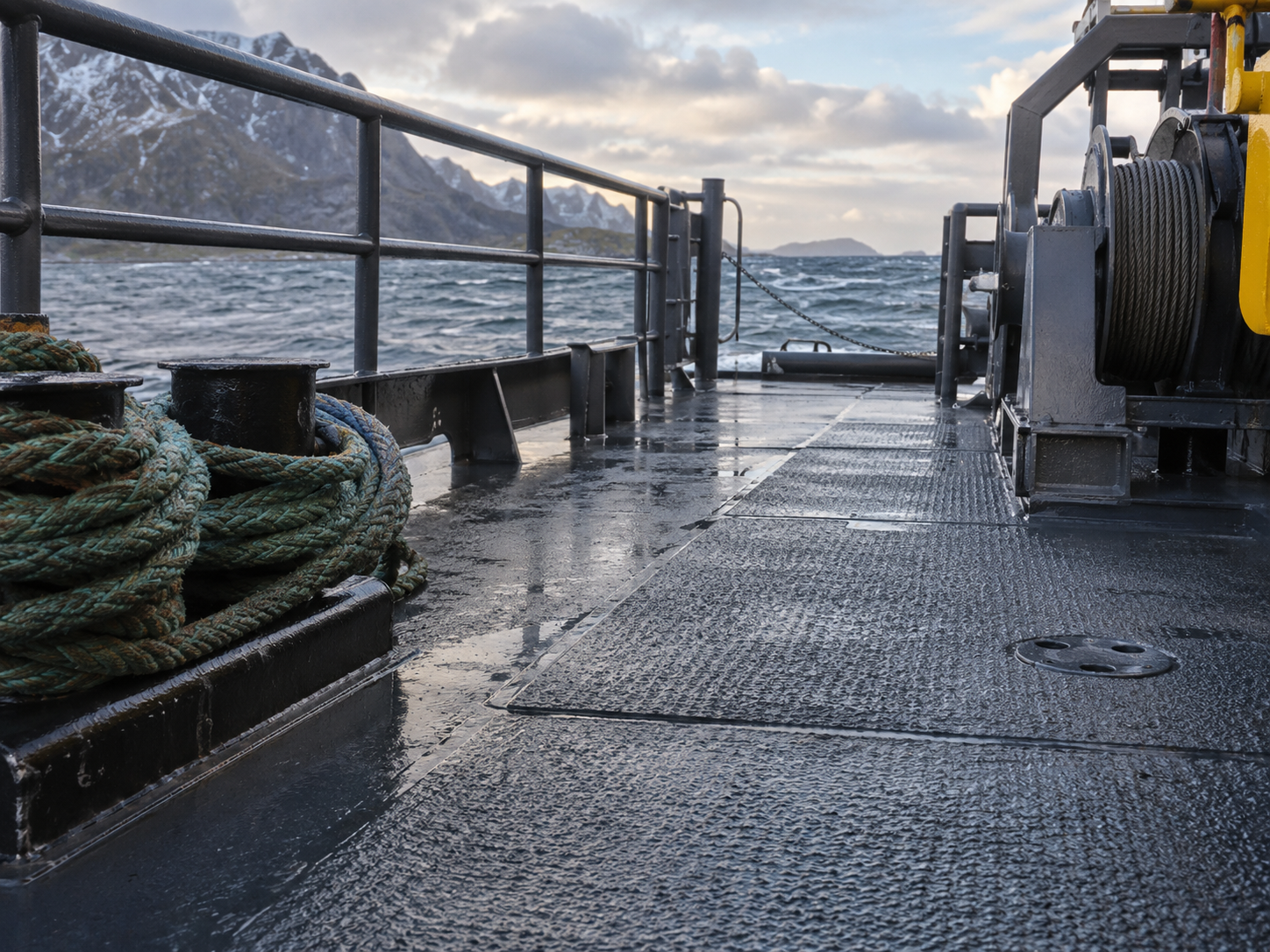
Workboat working decks
Record equipment movement, point loads, oil or fuel exposure, wash-down practice and repair access before choosing a covering or coating.
Area Specification
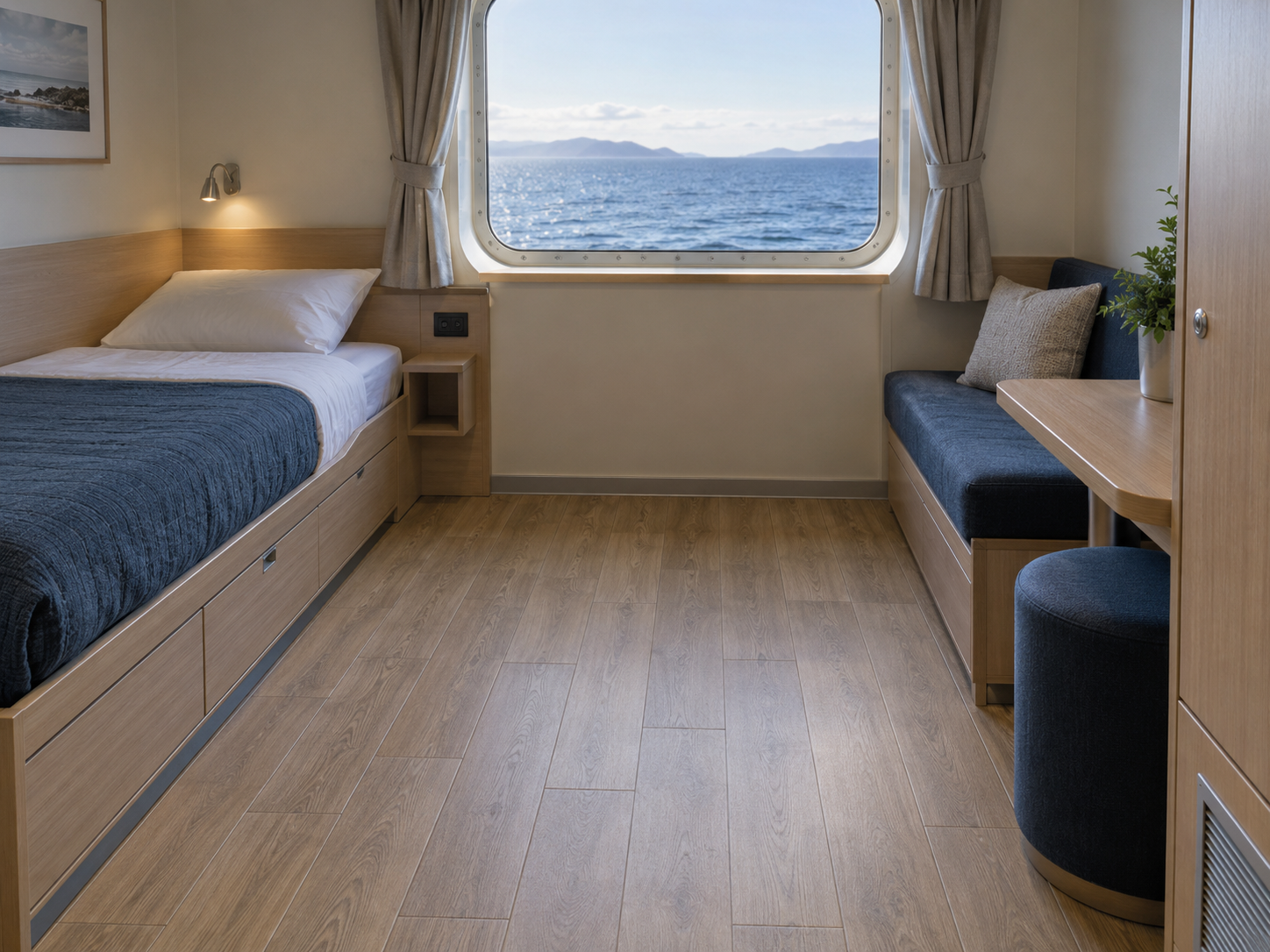
Accommodation and service spaces
Use leveling and acoustic layers where the deck needs a controlled datum, reduced structure-borne noise or a compatible finish system.
Process Specification
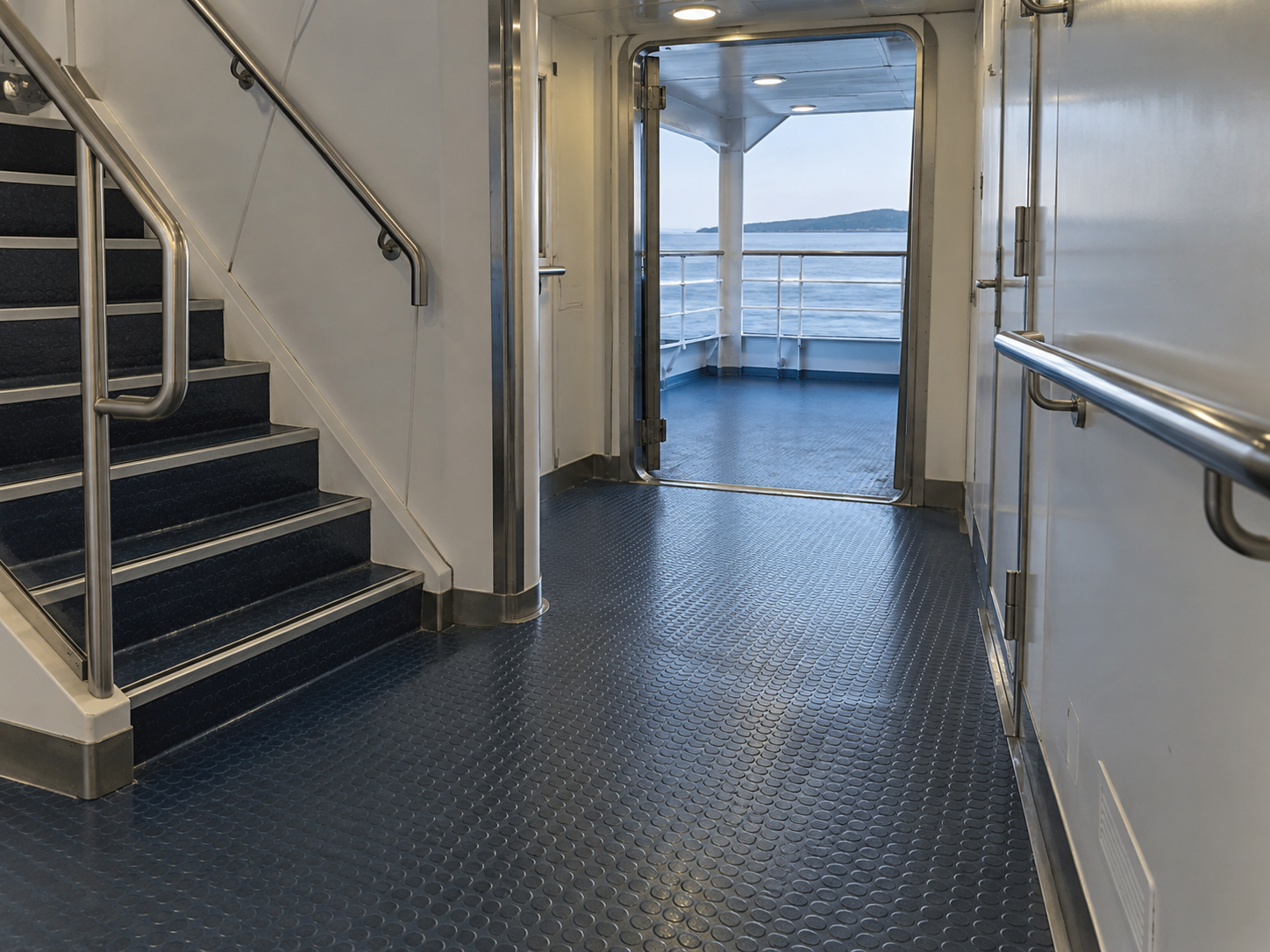
Newbuild and refit packages
Newbuild work can freeze the full build-up early; refit work needs a measured substrate, removal plan, moisture check and a practical installation window.
The wrong choice can create a height mismatch or rework risk because a passenger ferry, crew room and workboat deck carry different loads. A common assumption is that one familiar surface solves every room; the wrong material can cost you approval time, so Yibo Marine engineers pair a documented product family with the vessel drawing, procurement review and current certificate, and the layers are not interchangeable.
Request a flooring review with the room list
Regulatory Reference
Where a regulated interior finish is involved, treat 46 CFR 164.117 as a project-specific fire reference alongside the passenger-surface review.
Choose the Flooring Layer by Vessel Need
The useful question is not “which marine flooring looks best?” It is “which layer solves this space’s structural, acoustic, fire, wear and maintenance constraints without breaking the approved build-up?” The reason is practical: Yibo Marine engineers must match the product evidence, ISO 9001:2015 company context and measured MPa, kg/m³ and mm values to the shipyard RFQ.
| Layer or family | What it contributes | Decision input | Do not infer |
|---|---|---|---|
| Sound-insulation floating floor | Separates the walking surface from the steel deck through a documented resilient build-up. | Target noise path, available height, deck flatness, load and approved layers. | One floating-floor certificate proves every thickness, adhesive or substrate. |
| Primary deck covering | Creates a durable, levelable base for a finish or direct-use deck surface. | Density, compressive and flexural requirements, room use and finish compatibility. | Density alone predicts installed acoustic or fire performance. |
| PU leveling covering | Helps establish a controlled level where the deck or overlay needs a fluid, workable layer. | Depth, moisture, fluidity, curing conditions, water or oil exposure. | Every PU formulation is suitable for every wet or machinery space. |
| Damping coating | Adds a vibration-control layer when the steel deck and operating profile call for it. | Panel geometry, excitation source, coating thickness and approved system. | A coating by itself replaces a floating floor or structural isolation design. |
| Epoxy wear surface | Provides a hard, cleanable surface where wear, adhesion and skid performance are central. | Point load, abrasion, chemical contact, skid target and finish repair method. | Wear data automatically covers a ferry’s complete service profile. |
| Imitation teak finish | Provides a passenger-facing appearance when the surface system and slip requirements are agreed. | Layout, joint detail, cleaning, wet slip review and substrate preparation. | Appearance or plank format is evidence of marine approval. |
Build the Ferry Flooring System as an Assembly
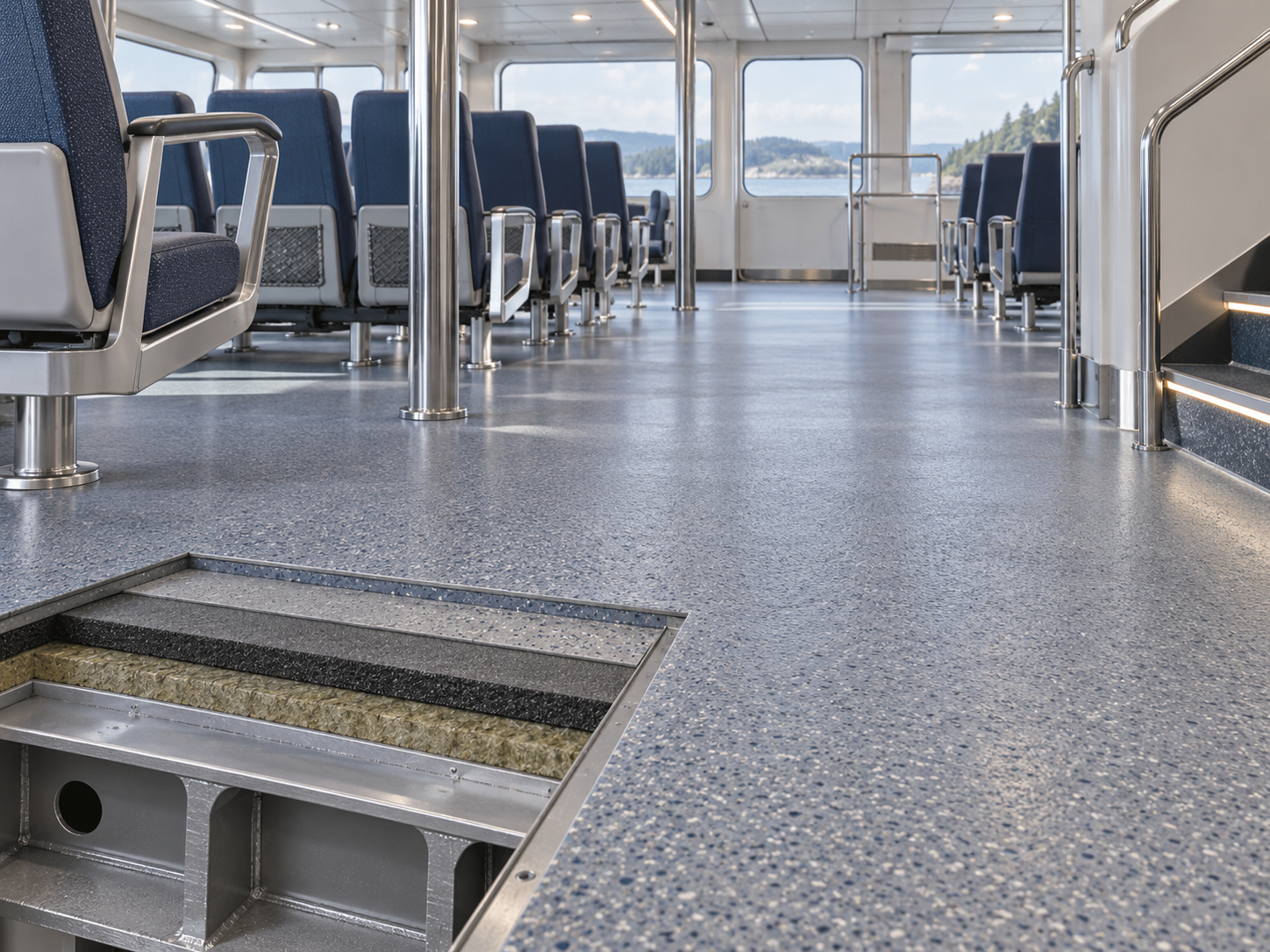
A Marine Floating Floor system comprises multiple layers that make contact and interact in sequence: steel deck, insulating or resilient pad, boards, deck covering or leveling material, marine adhesive and the final floor surface. The sound and fire outcome should be based on the complete system, not on the trade name alone.
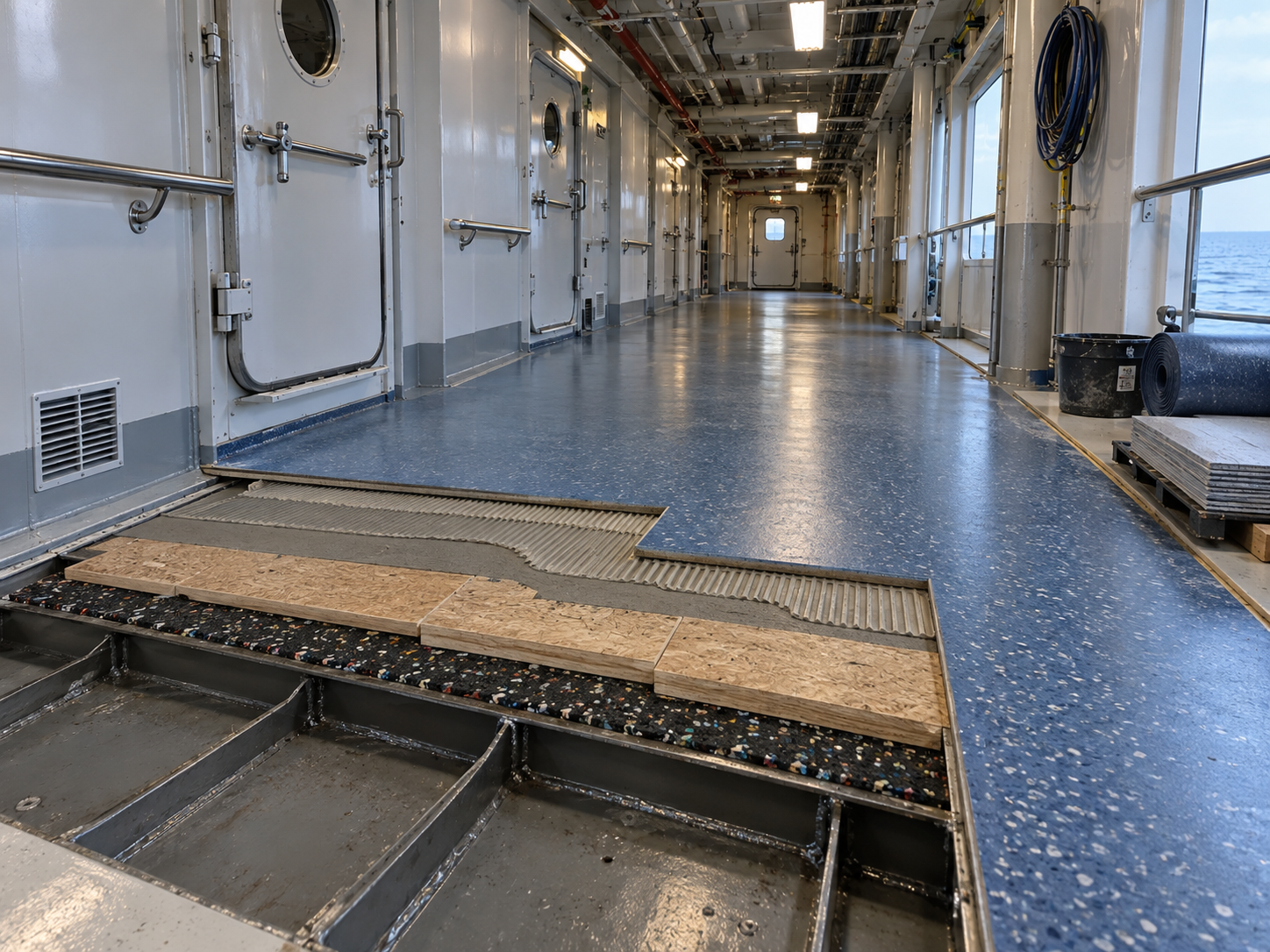
Yibo’s supplied A-60 system record illustrates the level of detail a shipyard review needs: a 71.5 mm six-layer floating floor using DP-SDI layers, 15 mm fireproof deck covering, 50 mm ABM-SR rock wool and galvanized plates on a stiffened steel deck. The record is an example of one tested construction and is not a blanket approval for other substrates, adhesives or thicknesses.
Engineering boundary: US Coast Guard acceptance and IMO/SOLAS fire performance can depend on the full assembly, including substrate, adhesive, layer order and production consistency. Confirm the flag, route and class-society authority before treating a certificate as applicable.
The structural reason for an assembly review is simple: the wrong adhesive or layer order can invalidate an otherwise suitable product. Yibo Marine can map the tested 71.5 mm example to a shipyard drawing, while a workboat RFQ should request the exact scope and a current certificate before approval.
-
01
Steel deck and stiffeners: measured flatness, weld condition and available height.
-
02
Resilient and insulation layers: selected for the documented acoustic or fire build-up.
-
03
Boards, plates and deck covering: fixed to the approved thickness and layer order.
-
04
Finish surface: coordinated with cleaning, walking comfort, wet slip and repair needs.
Control Workboat Durability and Maintenance Inputs
Workboat flooring is exposed to the operating routine of the vessel, not only to a laboratory test. A correct selection makes those routines visible before production and installation.
Wet cleaning, hose-down pressure and drainage direction.
Contact with a specific fuel, oil, hydraulic fluid or chemical that is identified for use on this selected system to be tested.
Equipment wheels, pallet movement, point loads and edge impact.
The temperature, humidity, ventilation and moisture condition of substrate while setting up.
Passenger comfort, texture, glare and wet slip where people walk.
Access for repair, spare-finish matching and a scheduled maintenance window.
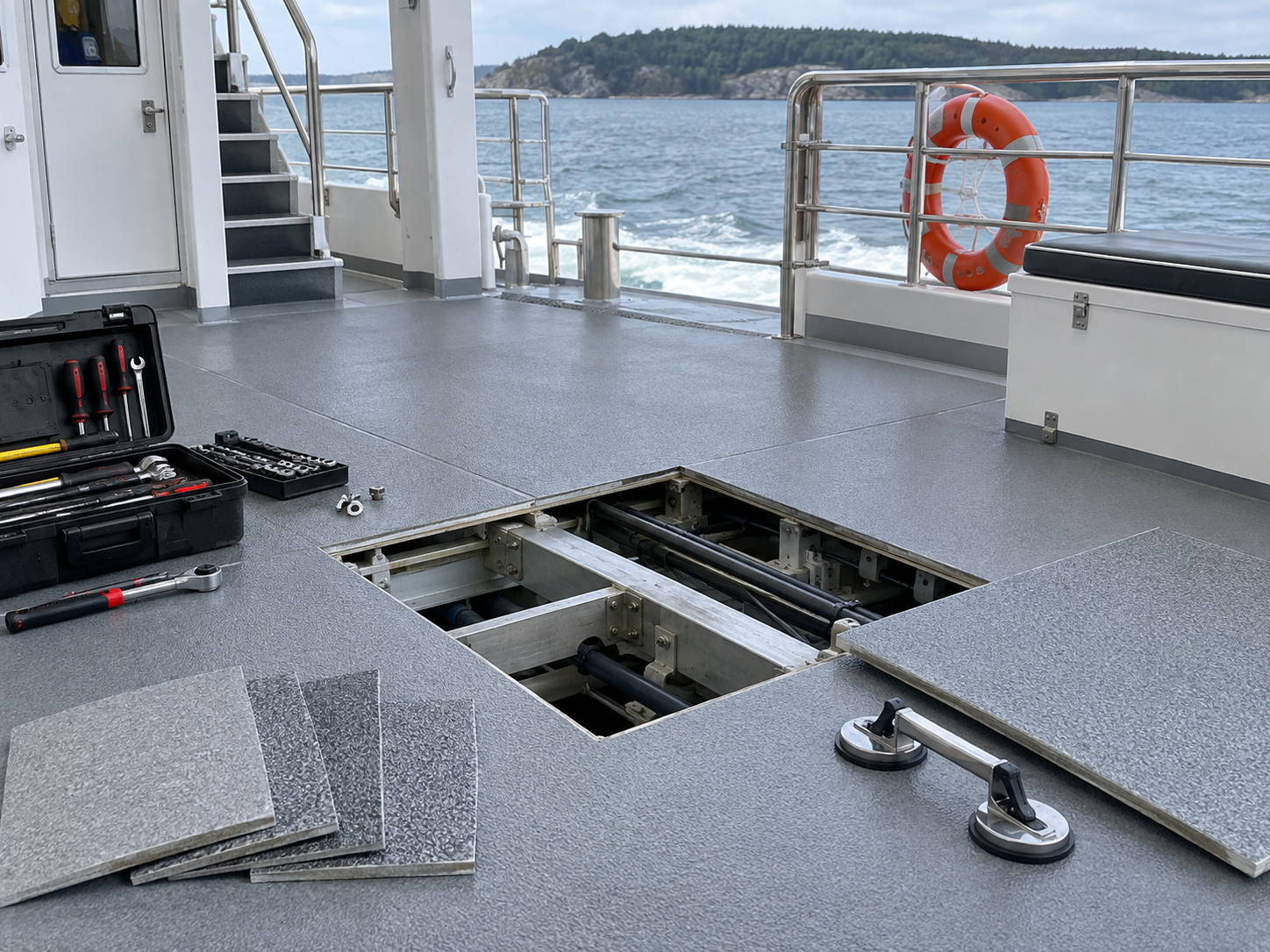
Cheapest is not always best when an additional, thinner layer can produce height mismatch, a repair problem or an approval rework. On the other hand, extra layers without load and clearance analysis can provide additional weight and complexity that the ship cannot use.
What the site team should record
- Photograph the deck, mark drains and penetrations, measure the highest and lowest points, and identify the areas where equipment or passengers create different load patterns.
- For a regulated workboat space, record the applicable 46 CFR 164.117 fire criteria separately from the chemical, load and maintenance inputs.
Yibo Marine Product Families for Ferry Flooring
The matrix below uses values transcribed from Yibo product sheets and certificates supplied for this project. For a shipyard procurement RFQ on a passenger ferry or workboat, these values are selection references; the current data sheet, certificate scope and approved installation drawing control the final specification, because similar-looking layers are not interchangeable.
| Product family | Performance | Role | Approval |
|---|---|---|---|
| AC-JI primary deck covering | Density ≤1700 kg/m³; flexural ≥8 MPa; compressive ≥30 MPa; fluidity ≥130 mm; organic content ≤10%. | Primary or leveling layer where the specified build-up needs a high-strength cementitious covering. | Match the current DNV GL, CCS or NK document to the exact layer and thickness. |
| AC-J1200 lightweight covering | Density ≤1200 kg/m³; flexural ≥8 MPa; compressive ≥30 MPa; fluidity ≥130 mm; 18 kg bag example. | Weight-sensitive deck areas where the approved system allows a lighter covering. | Certificate MEDB00008VR is a document reference; verify validity and scope at quotation. |
| AC-JII super-light covering | Density ≤800 kg/m³; flexural ≥5 MPa; compressive ≥20 MPa; fluidity ≥130 mm; 13 kg bag example. | Lightweight leveling or covering option when height and load limits are known. | Do not substitute a density class for an approved assembly. |
| YB-3 / YB-4 light fireproof coverings | YB-3 example: density ≤1000 kg/m³, flexural ≥3 MPa, compressive ≥8 MPa. YB-4 example: density ≤800 kg/m³ with same examples. |
Lightweight fireproof deck-covering options for a documented construction. | Older validity dates in supplied files require current certificate confirmation. |
| YB-5 leveling covering | Density ≤1800 kg/m³; flexural ≥3.5 MPa; compressive ≥10 MPa; fluidity 250–300 mm. | Level correction where the deck datum and finish tolerances have been agreed. | Confirm depth, curing and finish compatibility with the site method. |
| YB-Epoxy Floor E60 | Compressive ≥50 MPa; flexural ≥35 MPa; wear ≤0.03 g; adhesive ≥2.0 MPa; skid ≥0.5; hardness ≥76. | Hard, cleanable wear surface for spaces needing a defined epoxy system. | Supplied documents reference IMO 2010 FTP Part 5 and Part 2; verify the approved use. |
| YB-S22 PU leveling | Density ≤1400 kg/m³; flexural ≥3.5 MPa; compressive ≥10 MPa; fluidity 250–300 mm; water absorption ≤10%. | PU leveling layer where water, oil, asbestos and curing inputs are controlled. | Certificate MEDB00007R9 and the current CCS/DNV GL scope must match the project. |
| YB-A60FIII-1 system record | 71.5 mm six-layer A-60 floating-floor construction on stiffened steel deck. | Reference build-up for drawing review, not a standalone product specification. | Use the complete certificate, drawing, substrate, adhesive and layer order. |
Keep SOLAS, Class and Flag Requirements Separate
46 CFR 164.117 and the IMO 2010 FTP framework define fire, smoke and toxicity tests, and class-society documents define a product or assembly within their defined scope. Such pathways guide the review, and the danger of error in scope is real, but they do not convert every Yibo product into a universal approval. The wrong material can cost approval time because Yibo Marine engineers must match the standard, thickness and tested assembly to the ferry or workboat RFQ.
DNV GL, CCS, NK, EC or other references must be checked by product model, certificate number, revision, thickness, substrate and intended room. A US-flag passenger vessel, a domestic ferry and a workboat under another authority may require different evidence or additional operational checks.
Document scope
Read the exact product, system drawing, layer order, thickness and test method named in the certificate.
Jurisdiction
Record flag, route, authority and class-society requirements before the quotation is frozen.
Passenger operation
Review stable, firm and slip-resistant walking surfaces separately from fire or smoke evidence.
Production consistency
Keep batch, substrate preparation, adhesive and installation records aligned with the accepted build-up.
It is a common assumption that one SOLAS reference settles every room; it does not. The wrong material can cost approval time because a 46 CFR 164.117 or IMO FTP reference still has to match the product, thickness, tested assembly, flag and class route. Yibo Marine engineers trace that evidence to the drawing and inspection record; request the review before a purchase order.
There is a useful nuance in the IMO 2010 FTP framework: its annexes identify some products that may be installed without testing and/or approval. That exception is product- and use-specific, so it is a reason to check the annex and authority—not a reason to skip the document review.
Yibo’s supplied company profile states that its marine flooring products are made to meet SOLAS specifications and requirements stipulated by DNV GL, EC, CCS, NK and other classification societies. That is a company-provided statement, not a universal approval: the flag state, recognized organization, product model, thickness and tested construction still have to be confirmed for the project. The applicable certificate and design documentation govern the quoted scope; this page does not create a warranty or extend any certificate beyond its stated terms.
Use a Ten-Field Technical Selection Checklist
With this checklist, the designer, buyer and installer start from the same information. It flags incomplete data and approval risk before a drawing or sample is approved, and Yibo Marine can check the result against the relevant product data sheet.
A skid value such as 0.5 is not a universal ferry-safety conclusion. Wet conditions, drainage, footwear, texture and the applicable passenger-vessel rule still need a separate operational review.
If fire evidence is requested, add the applicable 46 CFR 164.117 or IMO FTP scope to the checklist rather than treating a product name as approval.
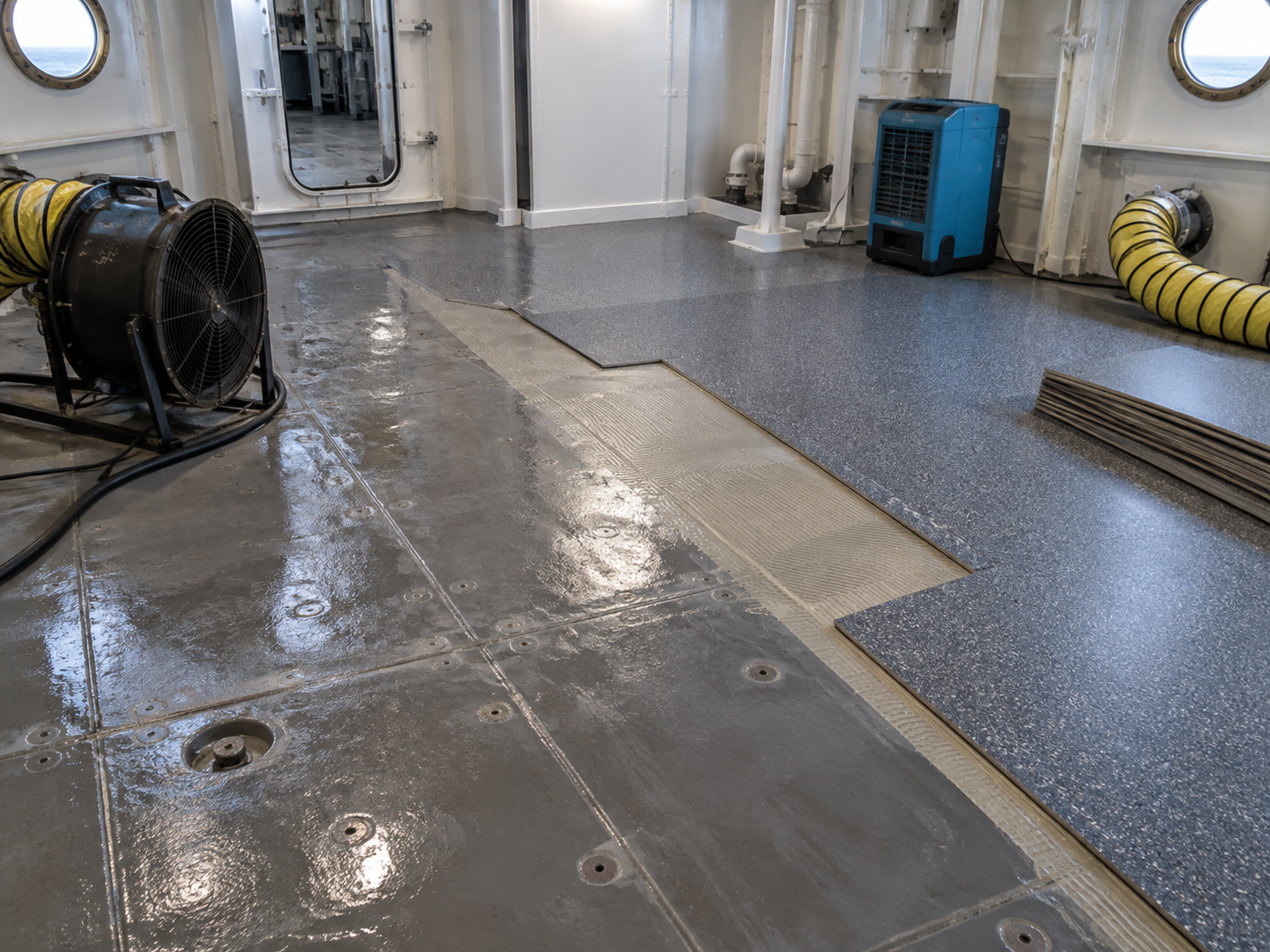
-
FIELD 01
Vessel type, flag, route and classification society.
-
FIELD 02
Space name, deck location, passenger or crew use and access pattern.
-
FIELD 03
Steel deck, existing covering, board or concrete substrate condition.
-
FIELD 04
Adhesive, primer and any resilient layer already specified.
-
FIELD 05
Required layer order, total thickness, finished level and tolerances.
-
FIELD 06
Acoustic, vibration, fire, smoke or toxicity objective.
-
FIELD 07
Point loads, rolling equipment, abrasion and likely impact.
-
FIELD 08
Cleaning chemicals, water, oil, temperature and ventilation exposure.
-
FIELD 09
Passenger stability, firmness, texture and wet slip requirements.
-
FIELD 10
Required drawings, product sheets, certificates, samples and inspection records.
Review Manufacturing and Quality Evidence
Suzhou Yibo Industry & Trade Co., Ltd. was founded in September 2001 in Xiangcheng District, Suzhou. For a shipyard procurement or ferry refit, the risk is matching factory evidence to the approved scenario, so the supplied profile’s more than 6,000 m² site and ISO 9001:2015 quality-management certification are company context rather than a substitute for the model certificate.
The same profile lists marine high sound-insulation floating floors, self-leveling and ordinary deck coverings, damping coating, polyester primary deck coverings, PU leveling covering and imitation teak floor among its product families.

Product development
Advanced equipment and hardware facilities are described as supporting new-product development and improvement of existing products.
Shipyard coordination
The supplied profile names cooperative relationships with Guangzhou Shipyard International, CSSC Huangpu Wenchong, Jiangsu New Yangzi, Dalian Shipbuilding and Shanghai Waigaoqiao.
Quality system
ISO 9001:2015 is a company-level quality-management fact; it does not replace a product certificate or an approved installation drawing.
“Quality first, service first” is the operating principle stated in the supplied Yibo company introduction.
Company profile supplied by Yibo Marine
For procurement, the risk is not simply finding a factory; it is matching factory records, product evidence and the approved vessel scenario. Yibo Marine’s 2001 founding date, 6,000 m² site and ISO 9001:2015 claim provide a company context, unlike an anonymous catalog, while the exact model and certificate remain the deciding proof;
Move from Deck Data to an Approved Flooring Package
A clear process protects shipyard timelines and keeps the technical file consistent. The order can be adapted for a refit or a newbuild package.
Share drawings, photographs, room list, substrate and targets.
Separate passenger, accommodation, service and working-deck needs.
Check layers, thickness, adhesive, certificate and authority.
Agree finish, texture, color, level and installation assumptions.
Keep batch and inspection records aligned with the approved package.
Deliver the data sheets and records required by the agreed review.

Ferries & Workboats Engineering Tools
Ferry Flooring Area and Weight Planner
Calculate required flooring material volumes and estimate total deck weight accurately for ferry projects.
Ferry Flooring Build-Up Thickness Checker
Verify your planned deck layer thicknesses against marine engineering standards before drawing review.
Ferry Flooring RFQ Input Checklist
Ensure all critical project parameters are captured for a precise and efficient quotation process.
FAQ: Ferry Flooring Questions Buyers Ask
What flooring is suitable for a passenger ferry?
Use the surface and build-up that meet the room’s stability, firmness, wet-slip and fire requirements.
How does a marine floating floor reduce noise transfer?
It separates the walking surface from the steel deck with resilient and insulating layers. Bridges, edge details, thickness and installation quality determine the result, so the assembly must be reviewed as a whole.
When should a workboat use a deck covering instead of a floating floor?
Choose a deck covering when leveling, wear or cleanability is the priority and the space does not need the same isolation build-up. Confirm load, height, vibration, wash-down and approval inputs before selection.
Can Yibo match an A-60 deck system?
Yibo supplied one defined six-layer A-60 system record. A match requires the same approved construction or a separately accepted design review.
What is the role of a self-leveling marine deck covering?
It establishes a controlled datum where the substrate is uneven, helping the finish land at the specified level. Depth, moisture, curing, fluidity and compatibility still need room-by-room confirmation.
Which documents should a shipyard request before approval?
Ask for the current product sheet, certificate and scope, system drawing, installation method, substrate and adhesive requirements, sample information, batch details and inspection records. Those documents let the shipyard compare the intended construction with the tested one.
Are SOLAS and class-society requirements the same for every product?
No. They vary by product, assembly, thickness, flag, route and authority.
What information should be sent for a ferry flooring quotation?
Send the vessel and flag, room list, deck and substrate details, areas, thickness or level limits, target performance, finish preference and required documents.
Can PU leveling covering be used in every wet or machinery space?
No universal use should be assumed. Check water, oil, temperature, ventilation, curing and the exact product documentation for that space.
How is imitation teak flooring routed for passenger-facing areas?
Agree layout, joints, substrate preparation, cleaning method and wet-slip requirements with the project team. Appearance alone does not establish passenger-area suitability.
Does a product certificate cover every substrate and adhesive combination?
Usually the certificate is bounded by its named construction and test conditions. Submit the intended substrate, adhesive, thickness and layer order for a scope check; a similar-looking build-up is not automatically interchangeable.
What additional checks apply to passenger-ferry slip resistance?
Review wet and dry walking conditions, drainage, texture, footwear, cleaning residue and the applicable operational requirement. Keep this review separate from fire and smoke evidence, because the wrong surface decision can create a passenger risk even when the fire file is complete.
Send the Inputs for Your Ferry Flooring Review
The specification should include vessel type and use, flag and class, deck location and area, substrate, build-up or thickness, noise/fire performance, acoustic and slip targets, finish, delivery country and required documentation.
Yibo Marine can then return a product-family route and identify which data sheets, samples and certificate scopes need confirmation.
Request a Ferry & Workboat Flooring Review
![Marine PU Floor: Selection & Installation [Guide]](https://yibomarine.com/wp-content/uploads/2026/09/marine-pu-floor-blog-featured-150x150.png)