Get in touch with Yibo Company


Marine Damping Coating
Marine Damping Coating for Steel Decks: DP-SDI at 1.5 mm, DNV, ClassNK and CCS Approved
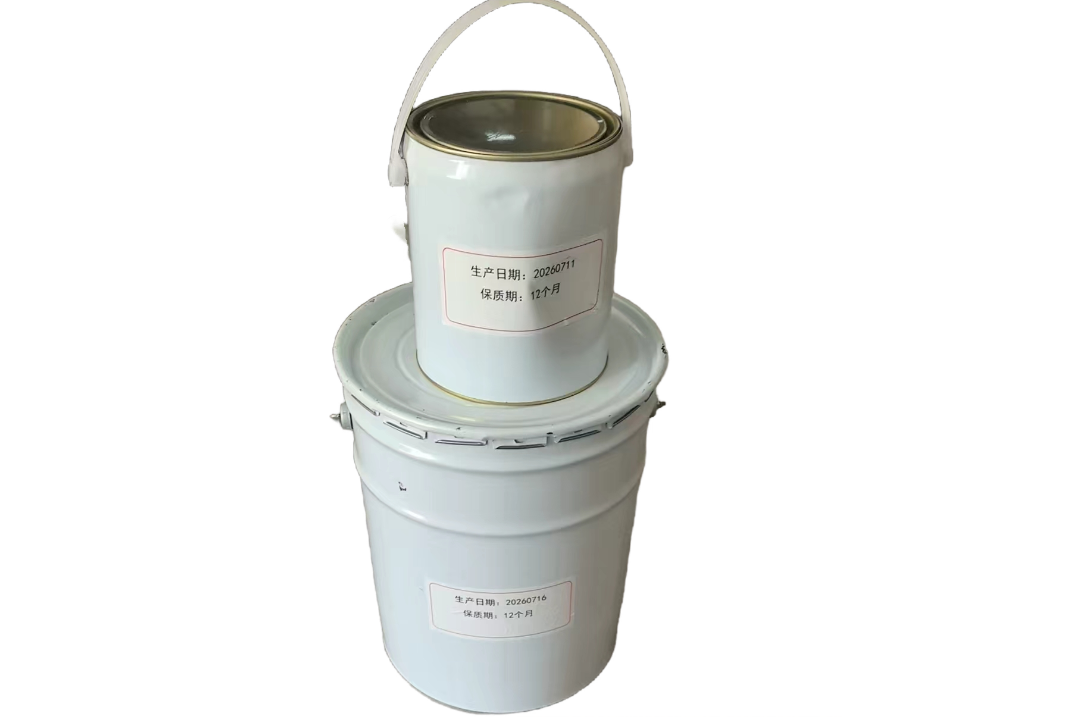
- DP-SDI applied at 1.5 ± 0.5 mm dry film per damping layer
- DNV EC type-examination, ClassNK approval, CCS works approval
- IMO 2010 FTP Code Part 5 and Part 2 tested
- Material and on-board application quoted as one scope
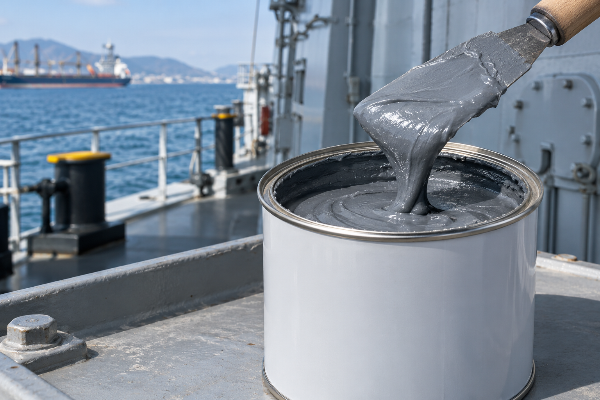
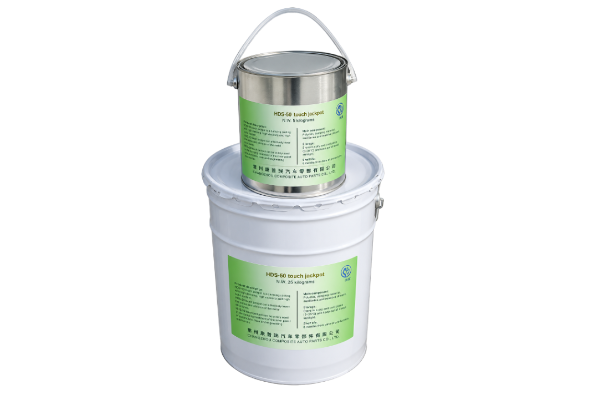
DP-SDI is the two-component, solvent-free marine damping coating we supply to shipyards and apply on board ourselves. It is trowelled over an anti-rust primer on steel decks and bulkhead-adjacent plating, and it is the damping layer inside twenty of our floating floor and deck covering systems. Send us the deck drawing and the noise target, and we will tell you which system build-up meets it.
Send the deck drawing and the general arrangement plan with the weight allowance and the noise target you have to meet.
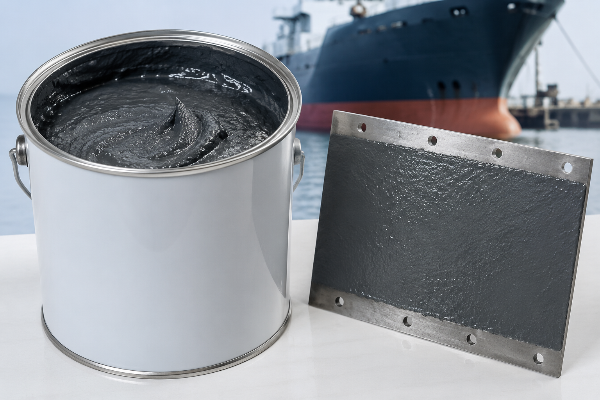
DP-SDI Marine Damping Coating Specifications at a Glance
Dry film thickness
1.5 ± 0.5 mm per damping layer (0.059 ± 0.020 in); 2 mm in system YB-dB-3
Density
≤1,100 kg/m³ on the product data sheet; ≤1,300 kg/m³ on the CCS works-approval annex
Chemistry and application
Two-component, solvent-free isocyanate / polyether-polyol system, applied by hand trowel
Fire testing
IMO 2010 FTP Code Part 5 (surface flammability) and Part 2 (smoke and toxicity)
Mechanical properties
Tensile strength ≥2.0 MPa; adhesion to steel ≥1.8 MPa
Hardness and organic content
Shore hardness 60 ± 5; organic content ≤55%
Class approvals held
DNV (MED Module B and Module D), ClassNK and CCS, each with a certificate number listed on this page
Supply scope
We supply the coating and carry out the on-board application ourselves — one scope, not split across subcontractors
Damping Coating and Structure-Borne Noise Control on Steel Decks
The polymer in DP-SDI, a viscoelastic polyurethane, is strained into the same motion as the structure around it, and in step with that structure it translates a portion of the strain energy directly into low-grade heat rather than returning it to the plate. The practical outcome is that resonances decay faster and the peak vibration amplitude generated at those resonances comes down.
Loss factor for a damping material is measured to ASTM E756-05(2023), and the flexural complex modulus that governs it is measured to ISO 6721-5:2019. Both methods report behaviour across a frequency and temperature range rather than as a single figure, which is why we specify by system build-up and not by a headline number for the coating alone.
Applied as a single unconstrained layer, with nothing stiff bonded over it, DP-SDI works as a free layer treatment: the coating is strained in extension and compression as the plate bends. Sandwiched between the deck and a stiff cover plate, the same material works as a constrained layer, where the cover forces the viscoelastic film into shear and each unit of added mass does more damping work. Across the frequency range where the deck panel is resonance-controlled, a constrained layer dampens it harder than a free layer of the same areal weight, while outside that range the response is mass- or stiffness-controlled and neither arrangement moves it much, which is why damping is specified against a resonance problem rather than against a noise level.
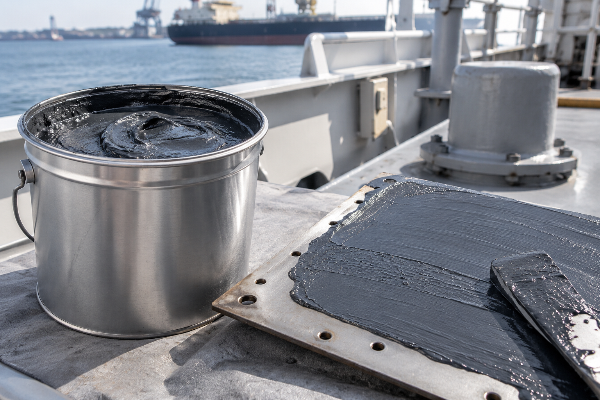
The Damped-Pair Delta: Damped and Undamped Build-Ups Compared
Our catalogue holds two pairs of A-60 rated systems that differ mainly in whether a damping layer is present. They are useful for thinking about direction of effect, but treat them as system-level comparisons.
| Build-up family | Without DP-SDI | With DP-SDI | Difference in Rw |
|---|---|---|---|
| Heavy, AC-JIII deck covering over 50 mm rock wool and steel wire mesh | YB-A60FI-1, 51.5 kg/m², Rw 46 dB | YB-A60FII-1, 78.95 kg/m², Rw 51 dB | +5 dB |
| Lightweight, AC-JIV deck covering over the same core | YB-A60FI-2, 29 kg/m², Rw 45 dB | YB-A60FII-2, 42.95 kg/m², Rw 51 dB | +6 dB |
How to read this table. The damped version of each pair also gains a 15 mm self-levelling layer and considerably increased areal weight. The difference in Rw belongs to the entire system, and no part of it should be attributed to the damping coating on its own.
Where DP-SDI Sits in a Deck Build-Up
-
SEC. 1
On the primed steel deck plate, under a self-levelling deck covering
-
SEC. 2
In the two-layer systems, between the deck and a galvanised steel constraining sheet
-
SEC. 3
Under floating floor cores built from rock wool and steel wire mesh
-
SEC. 4
In accommodation spaces, engine room casings and machinery space overheads
-
SEC. 5
On plating adjacent to generator sets and other structure-borne noise sources
-
SEC. 6
As the damping element inside twenty catalogued floating floor and deck systems
Damping Coating Material Data, Transcribed From Each Certificate
The published figures for DP-SDI, a two-component solvent-free polyurethane damping coating, are not identical across the three documents that carry them: the product data sheet prints one density, the CCS works-approval annex prints a higher one, and the DNV type-examination certificate prints a nominal dry density for each of the two components separately. The table below gives each document's own figure rather than a single reconciled number. Tell us which document governs your submittal and we will quote from that one.
DATA MATRIX // 01
| Document | Density | Film thickness | Other figures on the same document |
|---|---|---|---|
| DP-SDI product data sheet | ≤1,100 kg/m³ | — | Tensile strength ≥2.0 MPa; adhesive force ≥1.8 MPa; hardness 60 ± 5 Shore A; organic content ≤55% |
| CCS Certificate of Works Approval SH25PWA00041, product annex | ≤1,300 kg/m³ | Nominal 1–2 mm | Organic content ≤55%; colour reddish-brown or light |
| DNV EC type-examination certificate MEDB00005WN Rev. 1 | Nominal dry density 1,200 kg/m³ for component A and 1,300 kg/m³ for component B | Maximum dry film thickness 2.0 mm | Mixing ratio A : B = 1 : 6; approved colour brown for A and red for B; maximum organic content 55% |
Two rows there are worth reading twice. The DNV densities are the nominal dry densities of the two components of one product mixed at 1 : 6, not two grades of coating to choose between, and the coating is supplied as one product rather than in density variants. The 2.0 mm maximum dry film thickness on that same certificate is exactly the top of the 1.5 ± 0.5 mm band that nineteen of the twenty catalogued systems specify, and exactly the 2 mm that YB-dB-3 specifies.
The Four System Families That Contain DP-SDI
Every flooring system in the catalogued range carries its own identifying code, and the code tells you which family the system belongs to and therefore how many DP-SDI layers it contains. Of the twenty-three catalogued systems, twenty contain the damping coating; the three that do not — YB-A60FI-1, YB-A60FI-2 and YB-FA60-2 — are floating floors built without a damping layer at all, and they are in the range so that the comparison is available to you.
VISUAL REF
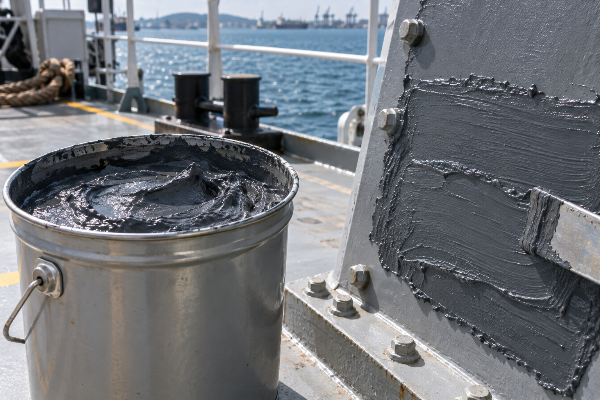
YB-LdB — damping layer plus self-levelling covering
The most basic build-up: one DP-SDI layer on the primed deck plate, followed by one self-levelling deck covering from the AC-J series. There is no rock wool core, so these are the lightest systems in the range, from 13.95 kg/m².
YB-dB — damping layer plus a floating floor core
One DP-SDI layer, a levelling layer, then a 50 mm floating floor core of rock wool at 140 kg/m³ with steel wire mesh reinforcement, finished with a self-levelling covering. This build-up combines the damping layer with a floating floor core for accommodation areas.
YB-HdB — constrained layer, two damping layers
Adds a second DP-SDI layer between galvanised steel sheets above the rock wool core. The steel sheets impose shear on the viscoelastic film, which is the more efficient damping configuration for the added weight.
YB-A60F — A-60 rated floating floor systems
The A-60 rated families, built with AC-JIII or AC-JIV fire-rated self-levelling deck coverings over a mineral wool core. The A-60 rating is a property of the assembly recorded in our catalogue, not a rating carried by the damping coating.
ACTION REQ.
A build-up that is not in the table
If your deck already has a covering, includes an unusual core, or has a noise target that none of the twenty catalogued systems reaches, send us the drawing and the target. We will come back with a build-up proposal, and be quite open with you if a damping coating is simply not the right instrument for the job.
Deck Build-Ups: Where the Damping Layer Sits Between Steel and Covering
A damping layer is never the whole floor. It sits inside a build-up with a prepared steel substrate below it and a deck covering above it, and each of those companion products carries its own approvals. The table below states them separately, because they are not the same.
Layer Order in a Yibo Deck Build-Up
Tech Note ⟳
Why the primer is not a separate approval item.
United States Coast Guard approval guidance for category 164.106 defines a primary deck covering as the first layer of floor construction applied directly on top of the deck plating, inclusive of any primary coat, anti-corrosive compound or adhesive necessary to provide protection or adhesion to that plating, and it treats everything laid above that layer as a floor covering under a separate approval category.
That is how the category boundary is drawn, which is why an anti-rust primer beneath the damping layer does not put DP-SDI outside the primary deck covering description. It is not a statement that the primer itself is type-examined: DNV MEDB00005WN examines the two DP-SDI components, and the primer is a surface-preparation product that belongs to the build-up drawing rather than to that certificate. Send us the primer you intend to specify and we will confirm compatibility against our own application data before the submittal.
01
Prepared steel deck
Prior to the laying of any coating product the steel plate is cleaned and prepared.
02
Anti-rust primer
The first coat in our catalogue build-up, between the prepared deck plate and the damping layer.
03
DP-SDI damping layer
Trowelled over the primer to 1.5 ± 0.5 mm dry film, with no laps or joints in the film.
04
Levelling or constraining layer
Either our self-levelling AC-J covering, or a galvanised steel sheet where the system is a constrained-layer build-up.
05
Floating floor core
In the YB-dB, YB-HdB and YB-A60F families, 30 mm or 50 mm rock wool at 140 kg/m³ with φ5 mm steel wire mesh.
06
Deck covering
The fire-rated or self-levelling finish that the crew walks on.
Approvals by Product: Read This Before You Write a Specification
Product
Class approvals
IMO 2010 FTP Code parts tested
Form
DP-SDI damping coating
DNV, ClassNK, CCS
Part 5 (surface flammability) and Part 2 (smoke and toxicity)
Two-component, solvent-free, hand trowelled
AC-JI self-levelling primary deck covering
DNV, ClassNK, CCS
Part 5 and Part 2
Single component, pumpable
AC-JII lightweight self-levelling covering
DNV, ClassNK, CCS
Part 5 and Part 2
Single component
AC-J600
ClassNK and CCS only — no DNV approval
Part 5 and Part 2
Single component
AC-J1200
DNV, ClassNK, CCS
Part 5 and Part 2
Single component
AC-JIII fire-rated deck covering
CCS only
Part 1 (non-combustibility) — a different part from the one DP-SDI is tested to
Single component
AC-JIV lightweight fire-rated covering
CCS only
Part 1 (non-combustibility)
Single component
AC-JIII and AC-JIV are tested to Part 1 for non-combustibility. DP-SDI is tested to Part 5 and Part 2. These are separate parts of the code and cannot be substituted for one another in a specification.
Sound Damping Performance by System: Rw and Ln,W Values
The twenty floating floor and deck systems below are the ones in our catalogue that contain a DP-SDI damping layer. Each row gives the system's areal weight, its weighted sound reduction index Rw, its weighted normalised impact sound pressure level Ln,W where one is published, and the damping layer arrangement inside it.
Use it the way a naval architect uses it: fix your weight allowance and your noise target first, then read across for the systems that meet both. Four systems reach Rw 55 dB or better, and the lightest of them, YB-A60FIII-2, gets there at 50.38 kg/m² — 22.3 kg/m² below YB-A60FIV-1, which also reaches 55 dB. Four sit under 33 kg/m², the lightest at 13.95 kg/m².
One thing the table settles quickly is that a heavier system is not always the quieter one. YB-A60FII-3 carries 59.15 kg/m² for Rw 50 dB, while YB-LdB-3 reaches the same 50 dB at 44.45 kg/m². Mass helps, but how the mass is arranged decides what you get for it.
The DP-SDI Weight-to-Rw Ledger
| System code | Areal weight | Rw | Ln,W | DP-SDI layers and thickness | Build-up |
|---|---|---|---|---|---|
| YB-A60FII-1 | 78.95 kg/m² | 51 dB | 50 dB | One layer, 1.5 ± 0.5 mm | DP-SDI + 15 mm AC-JIII self-levelling + 50 mm rock wool (140 kg/m³) + φ5 mm steel wire mesh + 25 mm AC-JIII |
| YB-A60FII-2 | 42.95 kg/m² | 51 dB | 55 dB | One layer, 1.5 ± 0.5 mm | DP-SDI + 15 mm AC-JIV lightweight + 50 mm rock wool (140) + φ5 mm mesh + 25 mm AC-JIV lightweight |
| YB-A60FII-3 | 59.15 kg/m² | 50 dB | — | One layer, 1.5 ± 0.5 mm | DP-SDI + 10 mm AC-JI + 30 mm rock wool (140) + φ5 mm mesh + 20 mm AC-JI |
| YB-A60FIII-1 | 63.88 kg/m² | 56 dB | 45 dB | Two layers, 1.5 ± 0.5 mm each | DP-SDI + 15 mm AC-JIII + 50 mm rock wool (140) + 2.0 mm galvanised steel + DP-SDI + 1.5 mm galvanised steel |
| YB-A60FIII-2 | 50.38 kg/m² | 55 dB | 48 dB | Two layers, 1.5 ± 0.5 mm each | DP-SDI + 15 mm AC-JIV lightweight + 50 mm rock wool (140) + 2.0 mm galvanised steel + DP-SDI + 1.5 mm galvanised steel |
| YB-A60FIV-1 | 72.715 kg/m² | 55 dB | — | Two layers, 1.5 ± 0.5 mm each | DP-SDI + 250 × 250 × 1.5 mm galvanised plate (≥75% coverage) + 15 mm AC-JIII + 50 mm rock wool (140) + 2.0 mm galvanised steel + DP-SDI + 1.5 mm galvanised steel |
| YB-A60FIV-2 | 59.215 kg/m² | 55 dB | — | Two layers, 1.5 ± 0.5 mm each | DP-SDI + 250 × 250 × 1.5 mm galvanised plate (≥75%) + 15 mm AC-JIV lightweight + 50 mm rock wool (140) + 2.0 mm galvanised steel + DP-SDI + 1.5 mm galvanised steel |
| YB-LdB-1 | 27.45 kg/m² | 46 dB | 87 dB | One layer, 1.5 ± 0.5 mm | DP-SDI + 15 mm AC-JI self-levelling |
| YB-LdB-2 | 13.95 kg/m² | 44 dB | 87 dB | One layer, 1.5 ± 0.5 mm | DP-SDI + 15 mm AC-JII lightweight self-levelling |
| YB-LdB-3 | 44.45 kg/m² | 50 dB | — | One layer, 1.5 ± 0.5 mm | DP-SDI + 25 mm AC-JI self-levelling |
| YB-LdB-4 | 13.95 kg/m² | 48 dB | — | One layer, 1.5 ± 0.5 mm | DP-SDI + 10 mm AC-J1200 self-levelling |
| YB-dB-1 | 78.95 kg/m² | 51 dB | 50 dB | One layer, 1.5 ± 0.5 mm | DP-SDI + 5–15 mm AC-JI + 50 mm rock wool (140) + φ5 mm mesh + 25 mm AC-JI |
| YB-dB-2 | 42.95 kg/m² | 50 dB | 55 dB | One layer, 1.5 ± 0.5 mm | DP-SDI + 5–15 mm AC-JII lightweight + 50 mm rock wool (140) + φ5 mm mesh + 25 mm AC-JII lightweight |
| YB-dB-3 | 32.4 kg/m² | 51 dB | — | One layer, 2 mm | DP-SDI at 2 mm + 6 mm AC-JII + 50 mm rock wool (140) + φ5 mm mesh + 20 mm AC-JII |
| YB-HdB-1 | 63.88 kg/m² | 54 dB | 48 dB | Two layers, 1.5 ± 0.5 mm each | DP-SDI + 5–15 mm AC-JI + 50 mm rock wool (140) + 2.0 mm galvanised steel + DP-SDI + 1.5 mm galvanised steel |
| YB-HdB-2 | 50.38 kg/m² | 54 dB | 45 dB | Two layers, 1.5 ± 0.5 mm each | DP-SDI + 5–15 mm AC-JII lightweight + 50 mm rock wool (140) + 2.0 mm galvanised steel + DP-SDI + 1.5 mm galvanised steel |
| YB-HdB-3 | 72.715 kg/m² | — | — | Two layers, 1.5 ± 0.5 mm each | DP-SDI + 250 × 250 × 1.5 mm galvanised plate (≥75%) + 5–15 mm AC-JI + 50 mm rock wool (140) + 2.0 mm galvanised steel + DP-SDI + 1.5 mm galvanised steel |
| YB-HdB-4 | 59.215 kg/m² | — | — | Two layers, 1.5 ± 0.5 mm each | DP-SDI + 250 × 250 × 1.5 mm galvanised plate (≥75%) + 5–15 mm AC-JII lightweight + 50 mm rock wool (140) + 2.0 mm galvanised steel + DP-SDI + 1.5 mm galvanised steel |
| YB-HdB-5 | 67.63 kg/m² | 50 dB | — | One layer, 1.5 ± 0.5 mm | 30 mm rock wool (140) + 2 mm galvanised steel + DP-SDI + 1.5 mm galvanised steel + 20 mm AC-JI |
| YB-HdB-6 | 44.43 kg/m² | 53 dB | — | One layer, 1.5 ± 0.5 mm | 50 mm rock wool (140) + 2 mm galvanised steel + DP-SDI + 1.5 mm galvanised steel + 10 mm AC-JII |
How to Read These Numbers
- Every Rw and Ln,W figure above is a system-level rating for the complete build-up. None of them is a performance figure for the DP-SDI coating on its own, and none should be quoted as one.
- Rw and Ln,W are weighted single-number quantities derived from measurements under ISO 717-1:2020 and ISO 717-2:2020 respectively. They are derived quantities, not direct measurements of a coating.
- These are laboratory ratings, and a laboratory rating is not a shipboard result. On board, a host of factors including flanking transmission, boundary conditions and quality of workmanship change what your space can actually achieve.
- Contrary to the way the two columns sit side by side, Ln,W runs in the opposite direction to Rw. A lower Ln,W means better impact sound insulation; a higher Rw means better airborne sound insulation. Reading them the same way will lead you to the wrong system.
- The values are transcribed from our product catalogue exactly as printed. Where a system has no published figure the cell reads —, and we do not interpolate or fill it with a value from a related system.
- Damping layer thickness is not universal across the range. Nineteen systems use 1.5 ± 0.5 mm; YB-dB-3 uses 2 mm.
- The A-60 designation in the YB-A60F system codes is a property of the assembly as recorded in our catalogue. It is not a certification held by the damping coating itself.
Ask Which System Meets Your Weight Allowance
Filter Systems by Weight Ceiling, A-60 and ImpactPricing Basis and Supply Scope for Damping Coating Projects
We do not provide a price list for a damping coating project, because the cost per square metre of a system depends on a range of variables, and the same material is only one component of the assembly. What we can do is define those variables for you, so that you can assemble a comparable enquiry before anyone quotes.
What Your Quotation Is Built From
| Variable | Why it moves the figure | What to send us |
|---|---|---|
| Which system code | The damping layer is a fraction of the build-up. A system with a rock wool core, steel wire mesh and two coverings is a different scope from a damping layer under a single self-levelling coat. | The system code from the table above, or the noise target and weight allowance so we can select one |
| Deck area by space | Material volume and application labour both scale with area, but so does access difficulty, which is space-dependent rather than area-dependent. | Deck plans with the treated spaces marked |
| Number of damping layers | The constrained-layer systems apply DP-SDI twice with a steel sheet between. That is two applications and an extra material in the same build-up. | Whether a constrained-layer system is required |
| Whether application is in our scope | We quote material and application together, as the section below this table sets out. If your yard intends to lay it rather than our crew, that has to be said at enquiry rather than after a figure is issued, because it changes what the figure covers and what we can stand behind. | Whether your yard will apply it or we will |
Material and Application Are One Scope
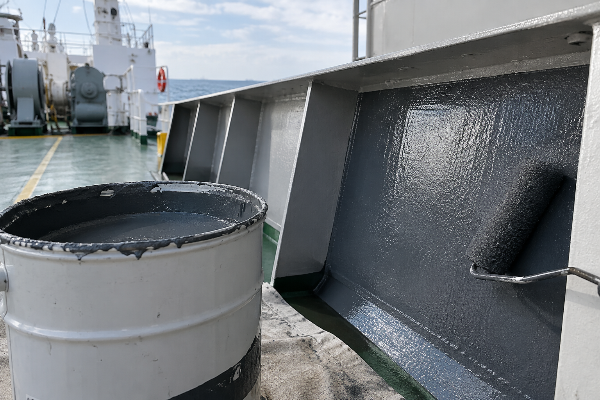
We supply the coating and carry out the on-board application ourselves. Material and application are quoted as one scope rather than split across subcontractors, which is how the delivered projects listed further down this page were executed.
That matters on site as well as commercially. The crew laying the film is the crew holding the film thickness specification and the build-up drawing, so the specification does not have to survive a handover between two companies to reach the deck.
Getting to a Comparable Number
Send the deck plans, the spaces to be treated, the noise target and the weight allowance. We come back to you with a proposed system code from the range above, the supply scope, and the commercial terms in writing. If your requirement needs a build-up we do not have, we state that up front rather than after an order.
Class Approvals and Fire Performance
Marine damping coating is a fire-safety product before it is an acoustic one. It goes into accommodation and machinery spaces where the governing question is what happens in a fire, and the answer has to be a certificate with a number on it, not an adjective.
Certificates Held for DP-SDI
DNV MED Module B
EC type-examination certificate MEDB00005WN Rev. 1, issued under notified body 0098 and valid to 24 November 2029
DNV MED Module D
Production quality system certificate MEDD00000CX Rev. 11, issued 12 June 2025 and valid to 19 January 2027.
ClassNK
Certificate of Approval TA241214E(R)
CCS
Certificate of Works Approval SH25PWA00041, valid to 22 July 2027
ISO 9001:2015
Quality management system certification held by the company, not a certificate for the product.
A validity date is printed above only where our own copy of the certificate carries one on its face; ask us for a current copy of any of them before you build a submittal around it.
Fire Testing Under the IMO 2010 FTP Code
DP-SDI is tested to Part 5 of the IMO 2010 FTP Code, the surface flammability test, and to Part 2, which covers smoke and toxicity. Those are the two parts recorded on our DNV type-examination certificate, against test report FT14182 of 11 June 2014 for Part 5 and test report FT14250 of 8 August 2014 for Part 2, both issued by the Far East Fire Testing Centre in Shanghai.
Where the Coating Is Made
The CCS document above is a Certificate of Works Approval, which is a factory-level approval: it certifies the works that produces the coating rather than one batch of it. DNV Module D covers the same ground from the production quality system side.
Both sit on top of an ISO 9001:2015 certified management system. Production is in-house at our own plant, and so is the crew that applies the coating on board, so no part of the supply scope depends on a subcontractor we do not control.
What Ships with an Order
Check Which Certificate Answers Which Reviewer
Certificate copies for the products in your supply scope are provided with the quotation and again with the order documents, and can also be requested on their own before a specification is written. Where a companion product in the build-up holds a different set of approvals from DP-SDI, the difference is stated in the submittal rather than left for you to find.
"Not to be used as an integrated part of horizontal class A division unless tested as such."
Application / Limitation clause, DNV EC type-examination certificate MEDB00005WN Rev. 1That sentence is on the certificate itself, and it says the same thing this section does. A damping coating that has passed Part 5 and Part 2 is not thereby part of a rated division; the assembly has to be tested as an assembly.
From Drawing to Applied Deck: Our Six-Step Process
01
Send drawings and targets — a deck plan of the areas to be treated, the noise target, and any weight allowance the naval architect has set.
02
System selection — we recommend a system code from the catalogued range and state what it is rated at and what it weighs, or tell you that none of them fits.
03
Written quotation and submittal — supply scope, certificates for the products involved, and the build-up drawing, all in writing before anything is ordered.
04
Production and delivery to the yard — we manufacture the coating under the production quality system covered by the DNV Module D certificate, which certifies manufacture rather than delivery or application; delivery to the yard and the on-board application in the next step sit in one commercial supply scope.
05
On-board application by our own crew — we apply the coating ourselves, working to the film thickness and the layer order set out in the agreed build-up.
06
Handover with documentation — certificates, the as-applied film thickness records and drawings, and the catalogue system code for the classification society survey.
Application Points That Belong in Your Method Statement
| Point | What it means on board | Why it matters |
|---|---|---|
| Hand trowel application | DP-SDI is trowelled, not sprayed. Crew work by hand on the primed plate. | It suits compartment work and awkward geometry, and it avoids the overspray control that a sprayed system needs. |
| Solvent-free, two-component | The two components are mixed on site and cure by reaction rather than by solvent evaporation. | No solvent load released into the compartment during cure. |
| Cures without shrinkage | The layer holds the thickness it was laid at. | The dry film thickness the system rating depends on is the thickness that stays there. |
| Jointless film | A trowelled layer has no joints, laps or fixings. | Nothing for vibration to bypass the damping layer through, and nothing to fail at a seam. |
| Isocyanate chemistry in enclosed compartments | DP-SDI is an isocyanate and polyether-polyol system, and ship compartments are enclosed spaces. | Ventilation and exposure control are required during application and cure. Our crews work to the controls this chemistry calls for, and the yard should plan compartment access accordingly. |
The dry film thickness band is not a workmanship tolerance we set for ourselves. Nineteen of the twenty catalogued systems specify 1.5 ± 0.5 mm and YB-dB-3 specifies 2 mm, and the top of both is 2.0 mm — the maximum dry film thickness printed on the DNV type-examination certificate. A layer laid thicker than that is outside the examined type, and a layer laid thinner is not the build-up the rating in the table above belongs to.
DRY FILM THICKNESS LIMIT: DNV EC type-examination certificate MEDB00005WN Rev. 1; system thicknesses: Yibo product catalogue
We do not publish our internal method statement, exposure limits or protective equipment schedules on a web page, and you should be distrustful of a supplier who does. What we will do is submit the applicable documentation for your yard's health and safety review before our teams come aboard.
Delivered Vessel Projects
The catalogued systems are not a paper exercise. Floating floor and deck covering scopes have gone onto the vessels below, at the yards named, under classification society survey. Our project records name the vessel, the year and the scope; they do not record which system code went into which space, so no specific code is claimed for a specific hull here.
Hulls H1468, H1497, H1498, H1499 and H1500, delivered between 2019 and 2024 under Bureau Veritas class. The scope was not identical across the series: on H1468 the top covering was a European import and on H1497 only part of it was ours, while H1498, H1499 and H1500 took both the floating floor and the covering from us. Five hulls in one series is where a deck covering scope stops being a trial and starts being a repeat supply.
China's first ocean drilling vessel, classed by CCS. Our project record for it covers 2022 and 2023, with floating floor and deck covering material and application in scope. A drilling vessel puts continuous machinery excitation into the structure for the whole of its operating life, which is the load case a damping treatment exists for.
Delivered 2020 to 2021 as part of the ARCTIC LNG 2 project modules.
Accommodation deck systems for the Century cruise vessel series. Passenger accommodation is the most demanding acoustic environment on a commercial vessel, because the customer is asleep in it.
CORP_PROFILE // ISO:9001:2015
Who We Are
Suzhou Yibo Industry & Trade Co., Ltd was founded in September 2001 and manufactures in Huangqiao Street, Xiangcheng District, Suzhou, in a plant covering more than 6,000 m² operating under an ISO 9001:2015 quality management system.
Our range includes marine high sound insulation floating floors, self-levelling deck coverings, damping coating, ordinary and polyester primary deck coverings, polyurethane levelling coverings and imitation teak flooring. We have also established cooperative relationships with Guangzhou Shipyard International, CSSC Huangpu Wenchong Shipbuilding, Jiangsu New Yangzi Shipbuilding, Dalian Shipbuilding Industry and Shanghai Waigaoqiao Shipbuilding and Offshore.
Where a Damping Coating Is Not the Right Answer
A damping coating is a precise instrument, and the surest way to be disappointed by one is to use it for a problem it was not designed to solve. Three situations come up often enough to be worth stating before you specify, because in each of them you are better served by another tool.
| Situation | Why it works against you | What to do instead |
|---|---|---|
|
01
Your target is broadband airborne sound insulation between spaces |
Damping acts on the resonant part of the transmission. It fills in the dips in the sound insulation curve at the structure's resonances, and the benefit is real but bounded. What a damping layer buys you is control of those dips; what it costs you is areal weight. It does not lift the mass-law part of the curve, which is set by areal weight and by mass-spring construction, and the common assumption that a thicker film keeps buying insulation runs into diminishing returns against a real weight cost. |
Specify a marine floating floor system, where a mineral wool core decouples a heavy walking surface from the deck. In our own range, YB-LdB-2 at 13.95 kg/m² is rated Rw 44 dB while YB-A60FIII-1 at 63.88 kg/m² is rated Rw 56 dB. The difference is bought with mass and decoupling, and no amount of extra damping layer substitutes for it. |
|
02
The dominant path is airborne noise through openings, ducts or penetrations |
Treating the plate does nothing for a leak path. A duct penetration, an undressed cable transit or a poorly sealed door will dominate the result no matter what is on the deck, and the deck treatment then gets blamed for the outcome. |
Close out the airborne paths first: penetration sealing, duct attenuation and door specification. Then treat the structure, and the treatment gets to show what it does. |
|
03
You need thermal insulation, or you are constrained on weight or clear height |
A damping layer is not thermal insulation, and it is not free in either currency. Every system in the table above carries a real areal weight, and the heaviest are past 70 kg/m². Build-up height costs the same way: YB-LdB-2 takes the damping layer plus 15 mm of lightweight self-levelling, while YB-A60FII-1 stacks 15 mm self-levelling, 50 mm rock wool and 25 mm self-levelling above it, so it takes about 90 mm out of the deckhead. If the deck allowance or the clear height is already spent, adding a system to it is a naval architecture problem, not a coating problem. |
Bring us the weight allowance and the available build-up height at drawing review rather than after selection. Four systems in our range sit at or under 33 kg/m², and the build-up column in the table above gives the height each one needs. If none of them fits, we will tell you that instead of proposing one that does not. |
Marine Damping Coating Engineering Tools
-
Damping Coating Quantity and Added Weight Calculator
Instantly calculate required coating volumes and assess added structural weight based on deck area and target thickness.
Access Tool -
Floating Floor and Deck System Selector
Evaluate and select the optimal floating floor configuration to meet specific acoustic and vibration attenuation requirements.
Access Tool -
Two-Component Mixing and Coverage Calculator
Determine precise A/B component mixing ratios and estimate total coverage area for efficient material application.
Access Tool -
Class Documentation and Test-Part Checklist
Streamline compliance with comprehensive checklists for marine classification society approvals and material testing.
Access Tool
Request a Damping Coating Quotation
Send us the deck plans with the spaces to be treated, your noise target and your weight allowance. We come back with a proposed system code from the twenty in the table above, the supply scope, and the terms in writing.
Send a Deck Drawing for a Build-Up Recommendation
Please send us the deck drawing, the general arrangement plan and the weight allowance you are working to. If none of our twenty systems fits your requirement, we will tell you that rather than propose one that does not.
FAQs: Marine Damping Coating and Deck Systems
What is a marine damping coating and how does it work?
It is a viscoelastic polyurethane trowelled onto the steel at a dry film thickness of 1.5 ± 0.5 mm, and it works by turning plate vibration into heat inside the film instead of letting the plate hand that energy back. When the plate flexes, the coating is strained with it and dissipates part of that energy rather than returning it, so resonances decay faster and the structure re-radiates less noise into the space. DP-SDI is the two-component, solvent-free coating we supply for this, and in a deck build-up it goes on over an anti-rust primer and under the levelling or covering layer.
What is the difference between structure-borne and airborne noise on a ship?
Structure-borne noise travels through the steel as vibration and becomes audible only when a panel radiates it. Airborne noise travels through the air and is stopped by mass, decoupling and sealing. Damping works on the first path.
What is the difference between constrained layer and free layer damping on a steel deck?
In a free layer treatment the coating is applied with no constraining sheet over it and is subjected to extension and compression as the plate bends. In a constrained layer treatment a stiff overlay, in our systems a galvanised steel sheet, is bonded over the coating so the viscoelastic film is worked in shear instead, which does more damping work per unit of added mass in the frequency range where the panel is resonance-controlled. Our YB-HdB, YB-A60FIII and YB-A60FIV families use the constrained arrangement with two DP-SDI layers.
How thick does a marine damping coating need to be?
For DP-SDI the specified dry film thickness is 1.5 ± 0.5 mm per damping layer in nineteen of our twenty systems, and 2 mm in system YB-dB-3. Thickness is specified as part of a system build-up rather than chosen on its own, because damping performance depends on the layer, what constrains it and what sits above it.
Does a damping coating replace a floating floor?
No, and the two are not competing for the same job. A damping coating reduces structure-borne vibration and the resonant re-radiation it causes. Broadband airborne sound insulation between spaces is bought with mass and decoupling, which is what the mineral wool core and heavy walking surface of a floating floor provide.
Within our range the damping coating is a layer inside those floating floor systems, not an alternative to them.
Which IMO fire test parts apply to a damping coating?
Our DNV type-examination certificate records Part 5, surface flammability, and Part 2, smoke and toxicity, which under the 2010 FTP Code are the two parts that apply to a primary deck covering, because Part 6 of Annex 1 in that edition is intentionally left blank and the deck covering test it carried in the 1998 edition was folded into Part 5. If your vessel is being submitted under United States jurisdiction you may still encounter the older wording, because Coast Guard guidance for approval category 164.106 continues to describe the requirement as Part 6 flame spread together with Part 2 smoke and toxicity and states that a material tested to Part 6 is considered to comply with Part 5; what we hold for the United States is Coast Guard approval number 164.106/EC0098/MEDB00005WN, assigned by mutual recognition of the European approval rather than through a separate Coast Guard test. The fire resistance classification of a complete division is a separate category of test in the same code and is assessed on the assembly rather than on an individual material.
Is DP-SDI approved by DNV, ClassNK and CCS?
Yes, and each approval has a number you can check. DNV MED Module B type-examination certificate MEDB00005WN and Module D production quality system certificate MEDD00000CX, ClassNK Certificate of Approval TA241214E(R), and CCS Certificate of Works Approval SH25PWA00041. For the United States there is also Coast Guard approval number 164.106/EC0098/MEDB00005WN, listed in the Module D appendix and assigned by mutual recognition of the European approval. Companion products in a build-up carry their own approvals, which are listed separately in the deck build-ups section above.
What Rw and Ln,W values do the DP-SDI systems reach?
Across the twenty catalogued systems that contain DP-SDI, published Rw ratings run from 44 dB for YB-LdB-2 at 13.95 kg/m² to 56 dB for YB-A60FIII-1 at 63.88 kg/m². Published Ln,W figures run from 45 dB to 87 dB, and lower is better for impact sound. Every one of those numbers is a laboratory rating for the complete system, not a figure for the coating on its own, and a laboratory rating is not a shipboard result.
How is DP-SDI applied on board?
It is mixed on site from two components and applied by hand trowel over the anti-rust primer on prepared steel, producing a continuous layer with no joints or fixings. It is solvent-free and cures by reaction without shrinkage, so the film holds the thickness it was laid at. Our own crews carry out the application as part of the supply scope.
Is DP-SDI safe to apply inside enclosed ship compartments?
DP-SDI is a two-component isocyanate and polyether-polyol system, and a ship compartment is an enclosed space, so ventilation and exposure control are part of the application plan rather than an afterthought. Hand-applied polyurethane systems sit at the lower end of the risk range compared with spray application, because hand trowelling does not atomise the material the way spray application does. That is a difference of degree and not a clearance: the UK Health and Safety Executive treats isocyanate control as specific to the task and the product rather than settled by the method of application, and an enclosed compartment is the case where that matters most. Its guidance on isocyanates in polyurethane coatings and flooring sets out the control principles that apply either way: ventilation of the space, control of exposure during mixing and cure, and respiratory protection matched to the work.
We apply the coating ourselves rather than handing a two-component chemistry to a yard crew who may not have worked with it, and we forward the applicable documentation for your yard's health and safety review before any of our people come aboard. If your yard's own procedure is stricter than ours, we work to yours.
Do you supply material only, or material plus application?
Our quoted scope is material plus on-board application by our own crew, quoted as one scope rather than split across subcontractors, which is how the FPSO series at Shanghai Waigaoqiao and the drilling vessel Meng Xiang at CSSC Huangpu Wenchong were executed. If your yard needs the split drawn differently, say so at enquiry and we will tell you what we can quote rather than leave you to assume.
How is a damping coating quotation calculated?
From four variables: which system code the build-up uses, the deck area by space, how many DP-SDI layers the system contains, and whether on-board application is in our scope. Send deck drawings with the treated spaces marked, the noise target and the weight allowance, and the figure comes back in writing with the proposed system code and supply scope.
Which vessel types have you supplied?
Floating production storage and offloading units, an ocean drilling vessel, offshore liquefied natural gas modules and cruise vessels, under Bureau Veritas and CCS class. Named hulls, yards and dates are listed above.

![Marine PU Floor: Selection & Installation [Guide]](https://yibomarine.com/wp-content/uploads/2026/09/marine-pu-floor-blog-featured-150x150.png)