Get in touch with Yibo Company

Self-Levelling Screed Underlay for Commercial Marine Decks
- Four AC-J primary-deck models
- Steel, galvanized-steel and aluminium deck inputs
- Model-specific document review
Yibo Marine Systems provides cement-based self-levelling screed underlay for specified interior marine flooring build-ups. Submit the deck substrate, target layer, finish-floor system and project-document requirements; our team will review the applicable AC-J model before preparing a quotation.
Provide the vessel or hull designation, installation area, quantity, destination and required date.
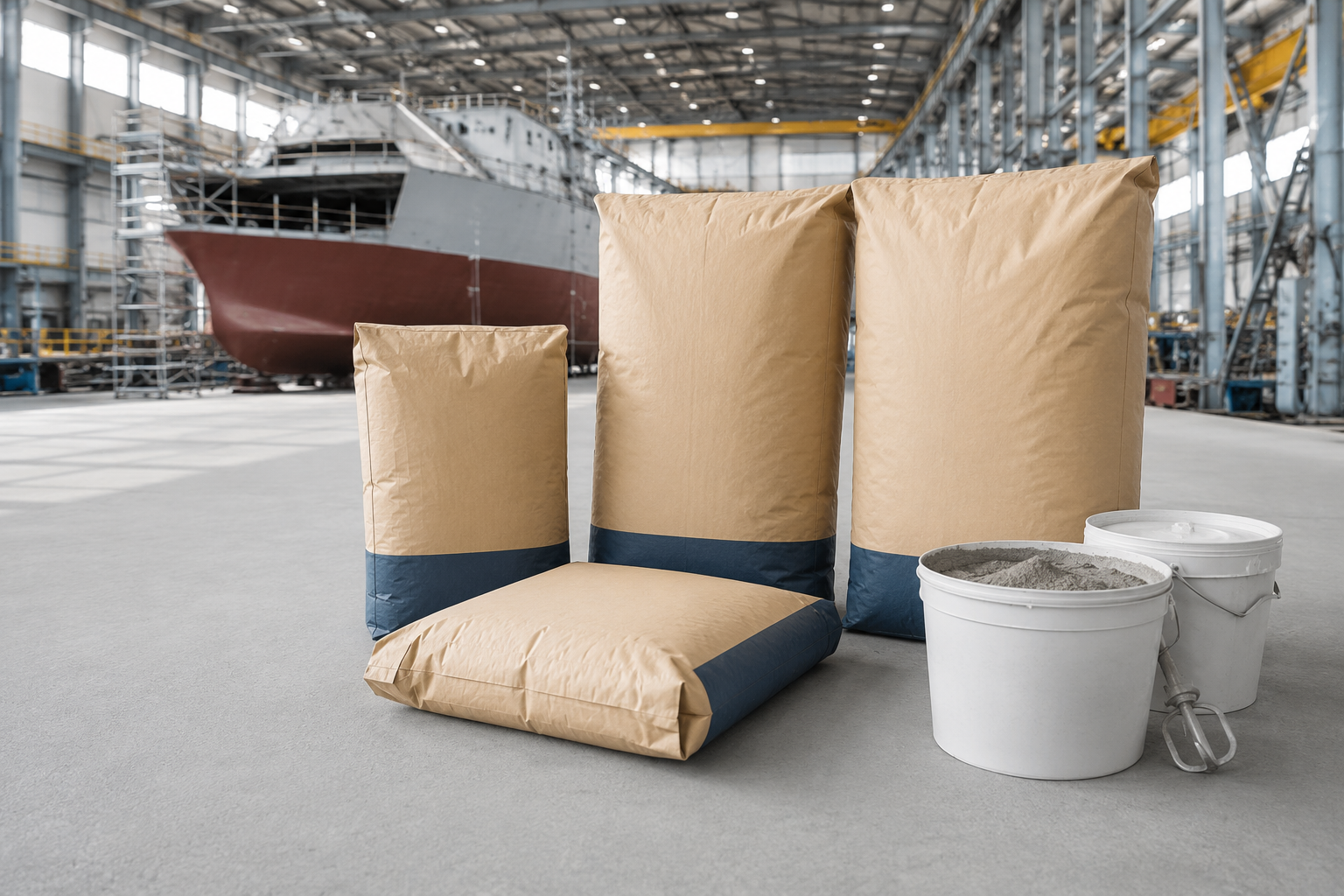
AC-J APPLICATION VIEW
Primary-deck range
AC-J I, AC-J II, AC-J600 and AC-J1200
Catalog density limits
≤600 to ≤1,700 kg/m³, by model
Catalog compressive values
≥20 or ≥30 MPa, by model
Bag weights
5.4, 13, 18 or 25 kg/bag
Marine Deck Levelling Capabilities
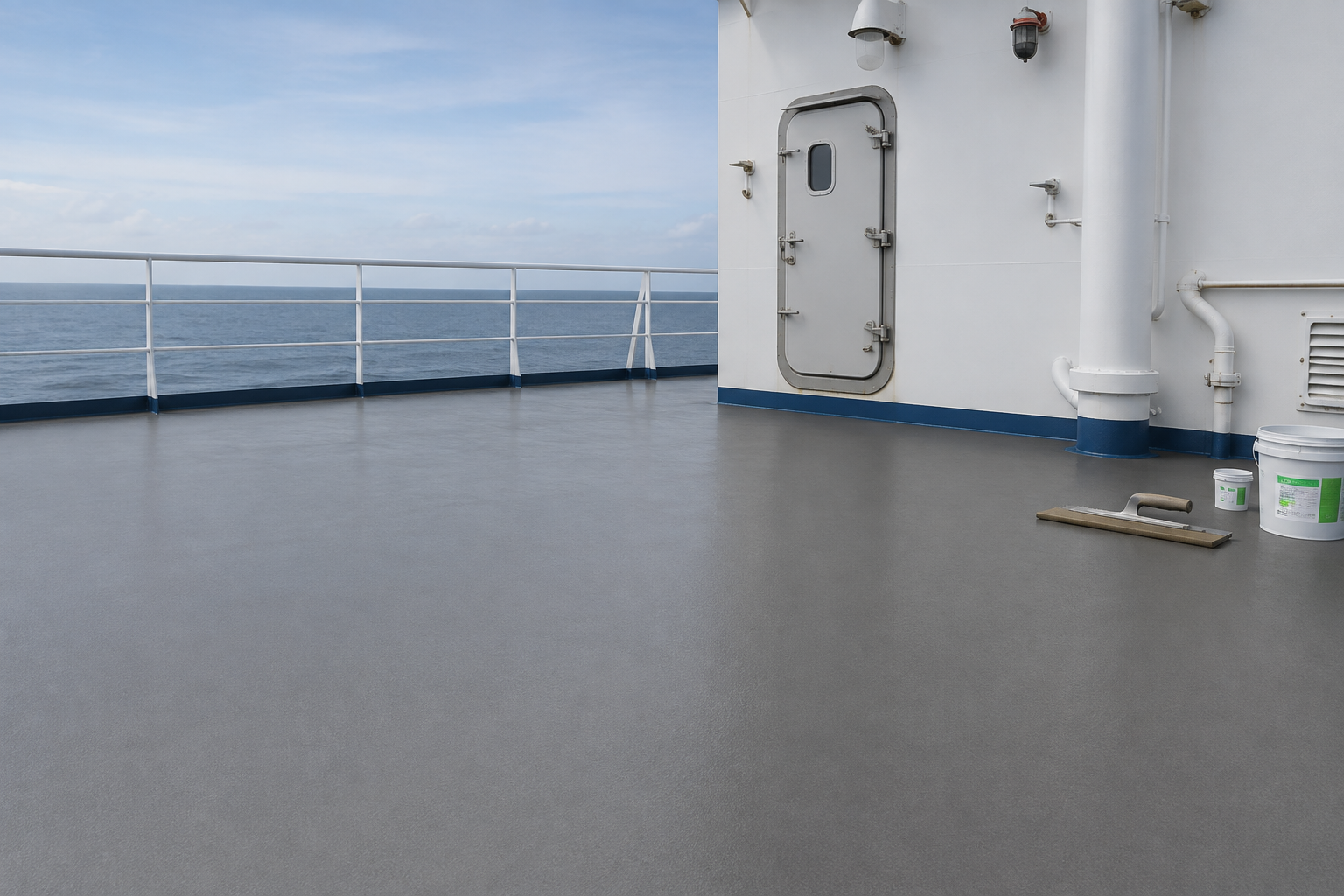
The AC-J family forms the primary deck layer between prepared deck plating and the specified finish-floor system. It addresses marine underlayment selection without treating ship-deck plating as a land-based concrete subfloor.
01 / NODE
Level the specified deck plane
Use the project drawings to define whether the target is flat, level, sloped or contoured. This prevents the word “self-leveling” from overriding drainage, thresholds or the intended finish.
02 / NODE
Screen density and strength together
We review the model’s catalog density, breaking-strength and compressive-strength values as a set. The lightest listed density is not an automatic model recommendation.
03 / NODE
Prepare the document route
We match the requested model with the technical and approval documents available for review. Test basis, certificate scope and project acceptance remain separate checks.
04 / NODE
Layer-position check
United States Coast Guard guidance describes primary deck covering as the first floor-construction layer applied over deck plating, including a required primary coat, anti-corrosive compound or adhesive. Layers above it are treated as floor coverings, so the full build-up matters before product selection.
Deck Substrate and Floor Build-Up Inputs
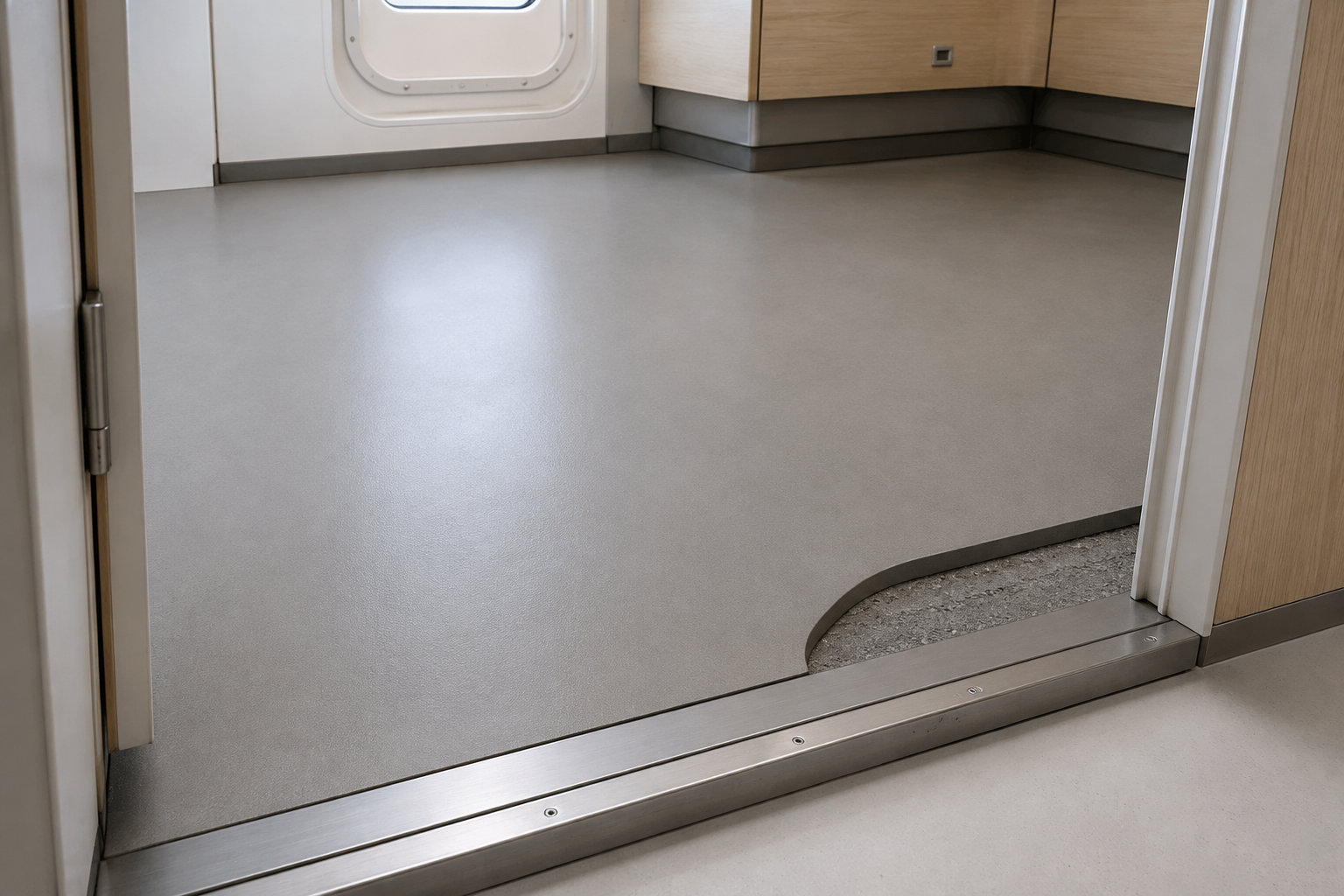
Yibo’s catalog identifies the AC-J primary-deck family for steel, galvanized-steel and aluminium deck surfaces. The review begins with the actual substrate condition and each layer below or above the screed. United States Coast Guard guidance also separates primary deck covering from floor coverings above it, so the layer position must be explicit.
01. SUBSTRATE
Deck material, its condition, and any existing primer or anti-corrosive treatment
02. EXPOSURE
Installation area, room function and exposure conditions
03. TOPOGRAPHY
Target plane, including local low points, thresholds, openings and drainage needs
04. DIMENSIONS
Required screed thickness or total build-up height shown on the project drawing
05. INTERFACE
Finish-floor material, such as vinyl or tile, and its adhesive or coating requirements
06. COMPLIANCE
Required documents for the exact model, including any class, flag, owner or shipyard scope
Do not substitute generic installation data
Search language such as “self-leveling underlayment,” “smooth,” “prime,” “waterproof” and “metal” is too broad for a marine specification. Translate each term into a controlled project input: exact deck material and condition, surface tolerance, primary-coat or primer requirement, exposure condition and documented layer sequence.
Primer choice, water ratio, coverage, working time, cure interval and permitted thickness must come from the technical document for the selected Yibo model and project build-up.
Values from another manufacturer’s marine underlayment are not transferred into an AC-J specification.
Finish-Floor Interface Review
The chosen finish changes the interface questions: required flatness, residual-moisture criteria, surface preparation, adhesive and handover timing.
Layer interface
United States Coast Guard guidance treats materials above the primary deck covering as floor coverings, which makes the interface between those layers a separate review point.2
Sheet and resilient flooring
Send the finish manufacturer’s substrate criteria, joint treatment and adhesive requirement. We use those inputs to identify questions for the primary layer rather than assuming one finish rule fits every vessel.
Tile or bonded finish
Provide the finish build-up, target elevation and movement-detail requirements. The deck geometry and specified interface govern the review.
Resin or coating system
State whether the primary deck covering will remain concealed or become part of the exposed system. That distinction affects the document and surface-finish conversation.

Select the underlay as one layer in a documented marine floor build-up—not as an isolated bagged material.
AC-J SERIES
AC-J Model Specifications and Review Limits
The matrix is drawn from Yibo’s supplied catalog and narrows the review set. It cannot replace the technical data sheet, test basis, intended layer combination or documents required by the project, and no single value should determine selection.
SYS_REF // SUBMITTAL_MATRIX
Density≤1,700 kg/m³
Fluidity≥130 mm
Breaking str.≥8.0 MPa
Compressive str.≥30 MPa
Organic content≤10%
Packaging25 kg/bag
Submittal Matrix
- Density / fluidity (≤1,700 kg/m³ / ≥130 mm) → Mass and placement screening
- Breaking / compressive strength (≥8.0 MPa / ≥30 MPa) → Strength requirement screening
Density≤800 kg/m³
Fluidity≥130 mm
Breaking str.≥5.0 MPa
Compressive str.≥20 MPa
Organic content≤10%
Packaging13 kg/bag
Submittal Matrix
- Density / fluidity (≤800 kg/m³ / ≥130 mm) → Mass and placement screening
- Breaking / compressive strength (≥5.0 MPa / ≥20 MPa) → Strength requirement screening
Density≤600 kg/m³
Fluidity≥140 mm
Breaking str.≥5.0 MPa
Compressive str.≥20 MPa
Organic content≤10%
Packaging5.4 kg/bag
Submittal Matrix
- Density / fluidity (≤600 kg/m³ / ≥140 mm) → Mass and placement screening
- Breaking / compressive strength (≥5.0 MPa / ≥20 MPa) → Strength requirement screening
Density≤1,200 kg/m³
Fluidity≥130 mm
Breaking str.≥8.0 MPa
Compressive str.≥30 MPa
Organic content≤10%
Packaging18 kg/bag
Submittal Matrix
- Density / fluidity (≤1,200 kg/m³ / ≥130 mm) → Mass and placement screening
- Breaking / compressive strength (≥8.0 MPa / ≥30 MPa) → Strength requirement screening
Comparison Boundary
The catalog pages do not state one common method, specimen preparation, curing age or conditioning basis for these rows. A density limit is not a substitute for the complete test basis, and the weight-strength trade-off must be checked against the intended build-up.
Project Pricing and Supply Inputs
Project pricing depends on the selected model, calculated quantity, packing plan, destination and document scope. A useful quotation also needs schedule inputs so production, logistics and transit can be checked against the required date.
Technical inputs
- Vessel, hull or project reference
- Installation area and substrate
- Target build-up and finish flooring
- Selected model or selection priorities
- Required society, flag, owner or shipyard documents
Commercial inputs
- Total area and estimated quantity
- Delivery country, port or shipyard
- Required-on-site date
- Preferred packing and shipment arrangement
- Contact details for technical clarification
Early mass estimate, not a quotation
The load estimator multiplies area, nominal thickness and selected catalog density. It does not calculate waste, bag yield, water addition, installed thickness approval or freight.
How We Work: From Deck Build-Up to Technical Review
Keeping model selection, quantity planning and document scope connected gives engineering and procurement a common brief. The same inputs carry forward into commercial and schedule discussions.
PROCESS_AXIS // 05_STEPS
01
Provide the project basis.
State the vessel or hull, deck area, substrate, intended space and target floor build-up.
02
Define the selection priorities.
Share mass, strength, geometry, finish-interface and document requirements rather than reducing the choice to one catalog value.
03
Compare the AC-J shortlist.
Yibo checks the supplied inputs against the catalog fields and identifies the technical questions that remain open.
04
Follow the evidence route.
Confirm the model designation, test basis, certificate scope and any class, flag, owner or shipyard requirement.
05
Confirm quantity and logistics.
Area, agreed thickness basis, packing, destination and required date then move into the quotation discussion.
Keep the selected build-up intact
A change to substrate treatment, primer, screed thickness, finish flooring or exposed-surface role can change the technical review. Record revisions against the same vessel and area reference.
Yibo Manufacturing Base and Marine Flooring Scope
SYS_DATA // FACILITY PROFILE
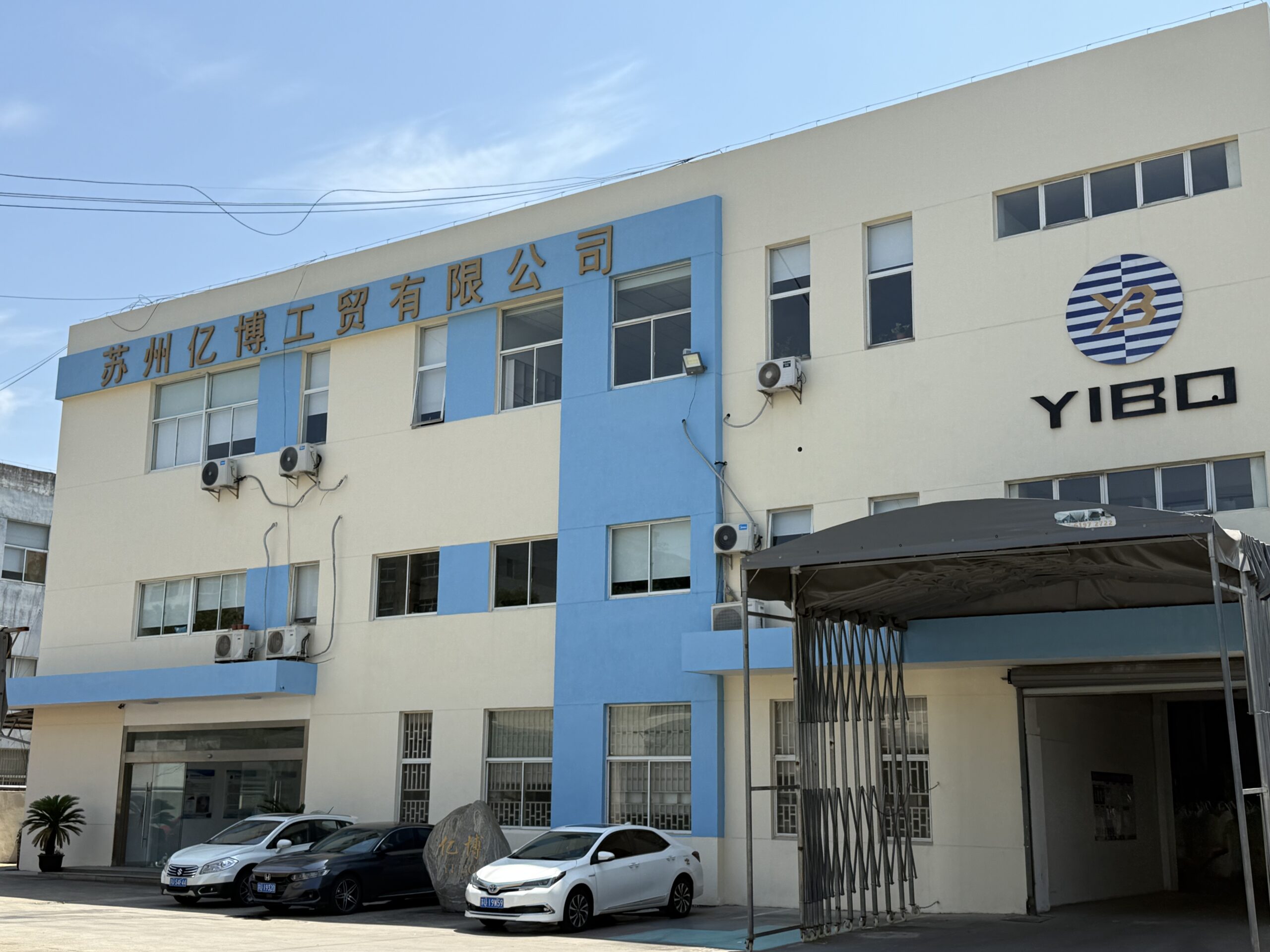
Founded in September 2001, Suzhou Yibo Industry & Trade Co., Ltd. is based in Huangqiao Street, Xiangcheng District, Suzhou.
The company profile states that its facility covers more than 6,000 m² and lists primary deck coverings, floating floors, damping coatings, ordinary deck coverings, polyester systems, polyurethane levelling systems and imitation teak floors.
It also states ISO 9001:2015 quality management system certification.
VIEW MAIN
VIEW SUB
Scope of the photographs
The images identify the company location and material-handling environment. Model capacity, batch output and customer-project results are confirmed through project documents rather than inferred from a photograph.
Selection Boundaries and Adjacent Deck Systems
This page’s primary-deck matrix covers AC-J I, AC-J II, AC-J600 and AC-J1200. A different product route applies when the specification calls for an A-60 fireproof deck structure, acoustic floating floor, damping layer, polyurethane levelling system or exposed decorative surface.
Keep AC-J III and AC-J IV separate
The catalog positions AC-J III and AC-J IV lightweight as fireproof deck-covering variants for A-60 cabin-floor structures with rock wool. Their values and displayed recognition are not merged into the four-model primary-deck table.
Route acoustic and finish needs separately
A primary deck screed does not establish airborne-noise, impact-noise, damping or exposed-finish performance. Identify those requirements so Yibo can route the inquiry to the relevant floor-system family.
Landscape context, not Yibo ownership
A published ultralight primary deck-covering patent describes a deck-layer structure in which the covering operates as part of a build-up. It is cited only as industry-landscape context and does not establish Yibo ownership, specification or approval.
Pause the model choice when
- “self-leveling” does not necessarily mean the specified deck plane is globally level;
- the lowest catalog density is not necessarily the right choice for the complete requirement;
- a catalog recognition mark does not establish a current certificate for the requested model;
- the target thickness or deck geometry is not defined;
- the finish-floor manufacturer’s substrate requirement is unavailable;
- the screed will be exposed, used in a wet area or expected to form a drain slope;
- the approval request does not name the model, vessel context or required authority;
- a fire division, floating floor or damping system is being treated as a single material choice.
Self-Levelling Screed Underlay Engineering Tools
Deck Underlay Load Estimator
Deck Underlay Submittal Checklist
Model Screening Matrix
This page covers Yibo’s cement-based marine primary deck covering family. Its job is to create the specified primary layer over ship-deck plating before the selected finish-floor build-up.
AC-J600 is listed at ≤600 kg/m³, followed by AC-J II at ≤800 kg/m³, AC-J1200 at ≤1,200 kg/m³ and AC-J I at ≤1,700 kg/m³. Density is only one selection input; strength, fluidity, build-up and document scope also require review.
No single ranking is appropriate from the catalog table. The models carry different listed density, fluidity, strength and bag-weight values, while the common test basis and complete approved configuration still need document review.
No. The project may require a flat plane, a local fall, a contour or a defined transition, so send the drawing and intended finish before choosing the placement approach.
The catalog names steel, galvanized-steel and aluminium deck surfaces. Surface condition, primer, preparation and interface details must be confirmed for the selected model and project.
Identify the finish material, adhesive or coating system, target elevation, moisture or surface criteria and any movement or drainage detail. This lets the primary-layer review address the real interface.
They are not published here because the supplied catalog page does not establish those fields for each model. Request the applicable technical document and confirm the approved thickness basis before quantity planning.
No. The test framework, a classification-society approval, EU marine-equipment conformity and project acceptance are separate evidence routes; verify the exact model and current document scope.
Use the certificate number or product/company search fields and check current validity through DNV Approval Finder. If the document cannot be verified, contact the stated DNV issuing unit.
Provide deck area, nominal screed thickness and the model density selected for screening. The result is theoretical dry-layer mass, not bag quantity or an installed-load approval.
Send the project reference, installation area, substrate, build-up, model or selection priorities, quantity, destination, required documents and required-on-site date. Yibo can then review technical questions alongside the commercial request.
Discuss those adjacent variants when the specification calls for the catalog’s A-60 fireproof deck-covering route with rock wool. Keep that route separate from the four-model primary deck covering comparison.
![Marine PU Floor: Selection & Installation [Guide]](https://yibomarine.com/wp-content/uploads/2026/09/marine-pu-floor-blog-featured-150x150.png)