Get in touch with Yibo Company
Primary Deck Covering for Shipyard-Ready Deck Builds
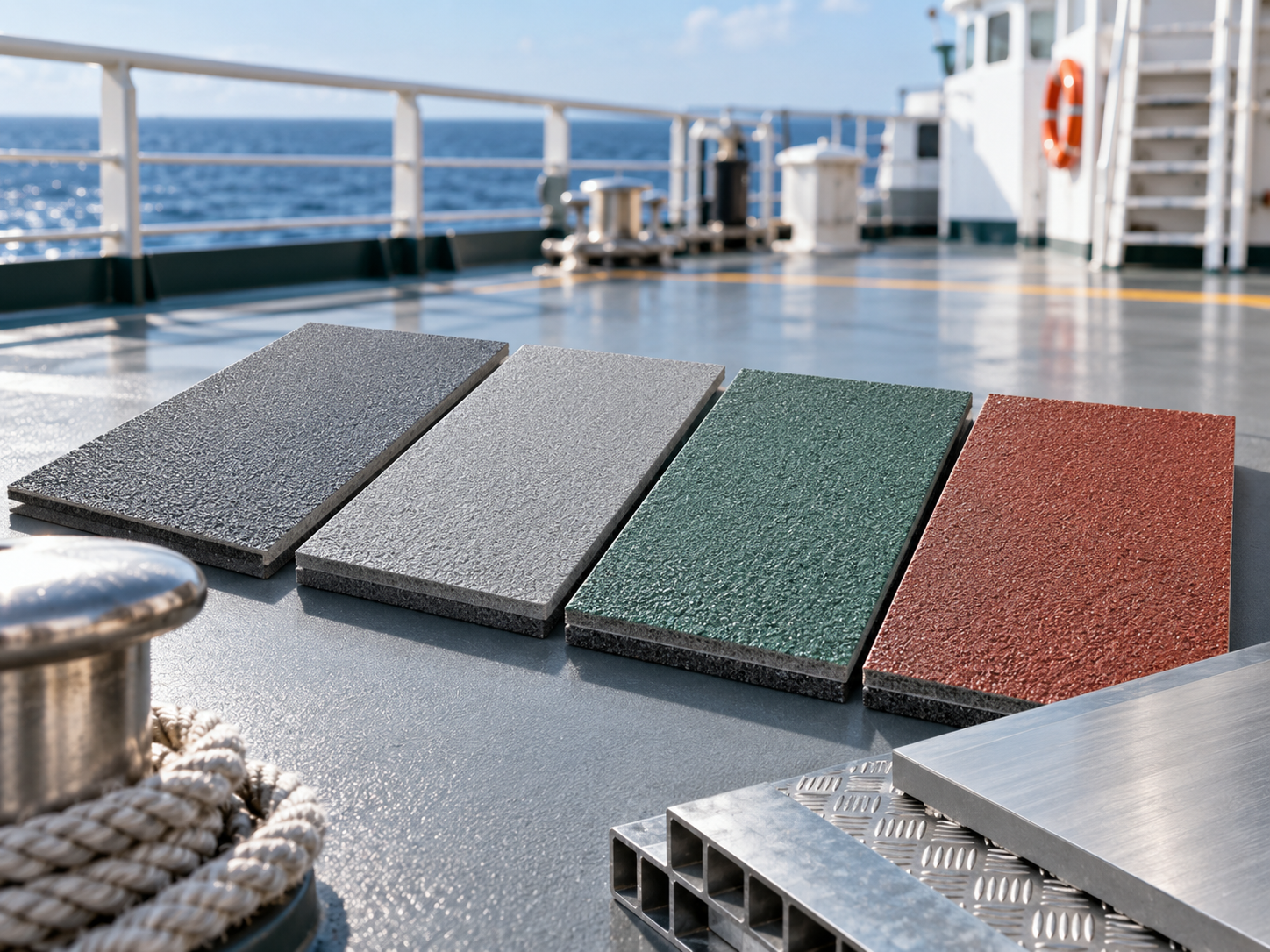
Choose a primary deck covering by vessel space, substrate, layer build-up and document scope—not by density alone. The Yibo Marine range supplies ordinary primary covering models with a model-level technical review for shipyards, marine contractors and owners.
One page for the primary-covering decision
This comparison is engineered around the risk of an incorrect answer in the layer stack. The difference is a model-and-document review that prevents procurement and engineering starting from separate, unverified baselines. For SOLAS routes in the United States, 46 CFR 164.106 illustrates the primary deck-covering testing and inspection boundary; the vessel’s authority still controls the final acceptance route.
Because the structural reason for deck disputes is risk in the layer stack, this review uses Yibo Marine inputs, ISO 9001:2015 records and the current certificate scope.
Product family
Ordinary, non-self-leveling primary deck coveringsModel set
YB-1, YB-3, YB-4 and YB-7Deck substrates
Steel, galvanized steel and aluminum subject to assembly reviewDocument path
Technical sheet, certificate scope and lot recordsBuild the covering around the vessel brief
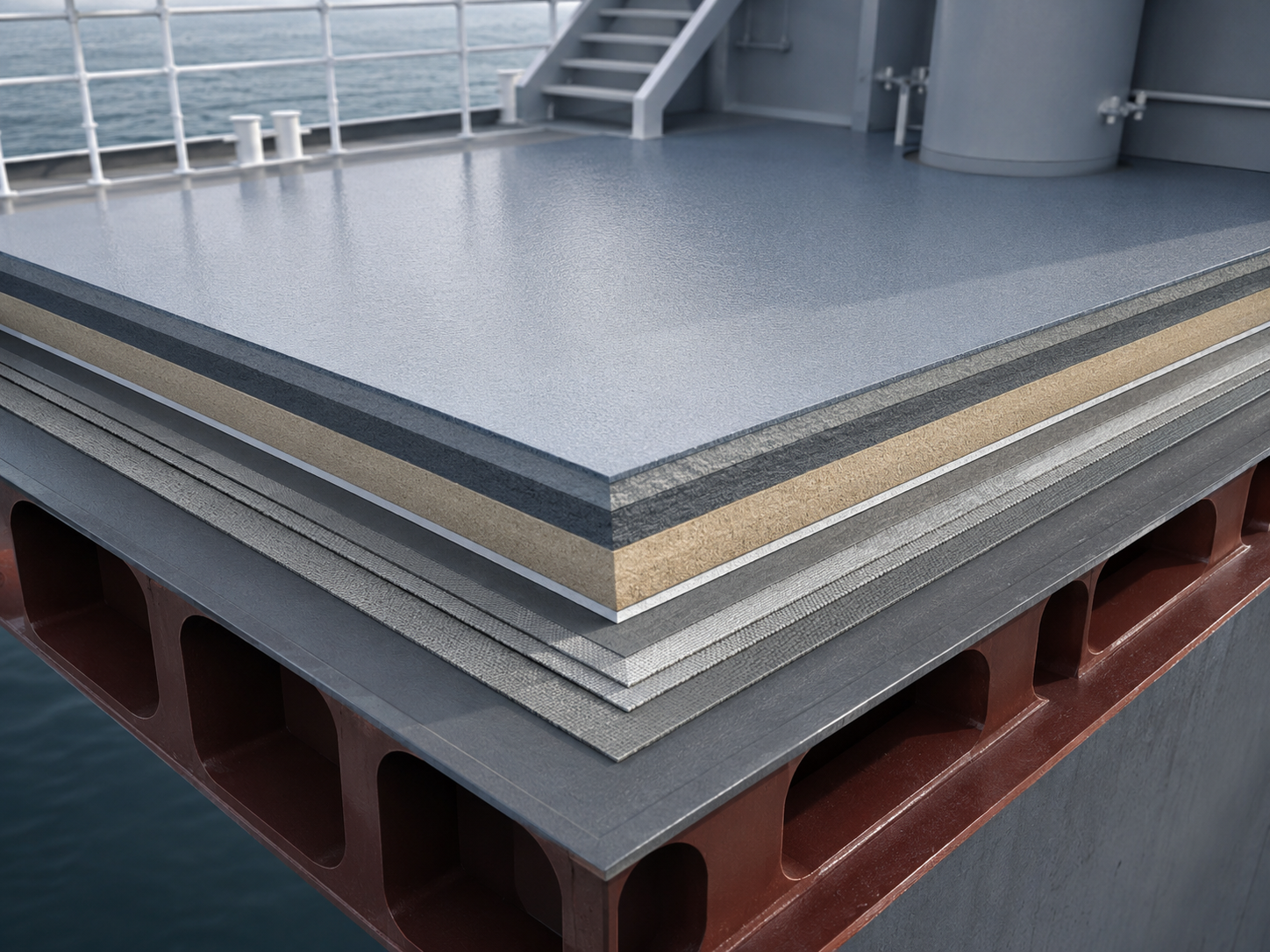
Primary deck covering is the prepared layer between a marine deck substrate and the prescribed finished deck build-up. Model choice depends on the space, load and surface brief, the approved layer stack, and the documents needed to meet the flag or class.
Regulatory Notice: As a useful reminder, United States Coast Guard structural fire-protection guidance shows that a material name does not replace review of the complete tested construction.
Unlike a generic marine flooring listing, this page keeps primary covering, self-leveling and A-60 assembly language separate. An input-led review exposes the risk before a purchase order is released.
Ordinary primary layer
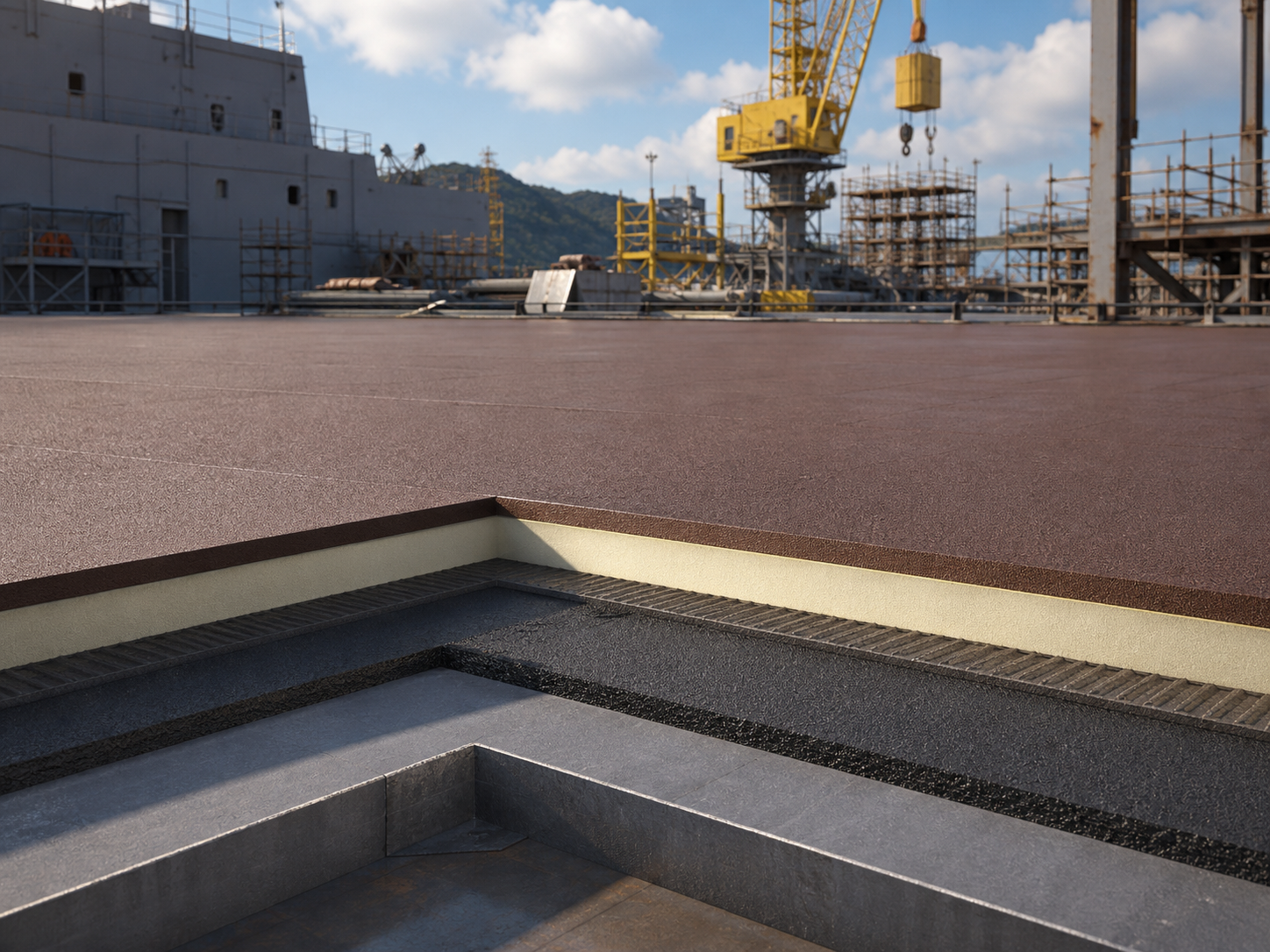
Use the YB model range when the project needs a defined primary covering rather than a self-leveling or floating-floor system.
Model-level comparison
Density, strength, organic-content limit and package weight are shown together so engineering and procurement can review the same baseline.
Scope-aware routing
Self-leveling, floating, polyurethane leveling and imitation-teak systems follow different layer and finish decisions; ask for a separate review when those requirements apply.
Confirm the substrate before choosing the bag
The supplied catalog names steel, galvanized steel and aluminum decks as application substrates. Surface preparation, primer, adhesive, layer thickness, joints and the final finish must be verified against the agreed tested assembly. For aluminum or other non-standard construction, United States Coast Guard assembly guidance supports treating the substrate, supporting construction and finish as one approval question.
This review uses Yibo Marine inputs and ISO 9001:2015 quality records because the structural reason for many deck disputes is an undocumented layer-change risk. Match the certificate scope and installation record to the actual substrate before the right call is made.
01
Traceability from material batch to project documents
02
Installation responsibility and maintenance compatibility
03
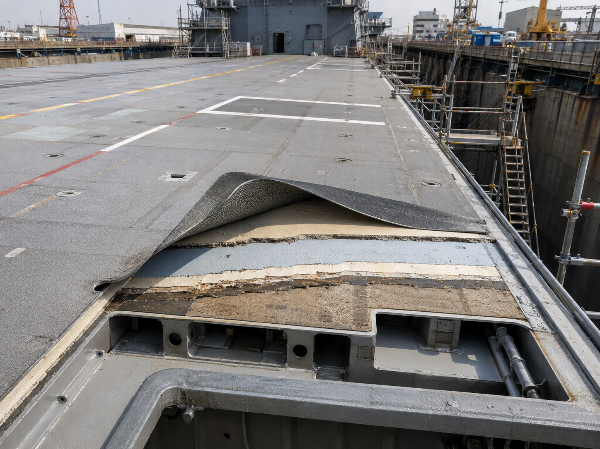
Deck material and plate condition, including repairs or uneven areas
04
Primer and adhesive specification, batch and compatibility
05
Required layer thickness, edge details and transitions
06
Space use, wet exposure, cleaning agents and non-slip needs
Note
Aluminum deck note: aluminum acceptance is an assembly question. Review the covering, floor finish and supporting construction together with the responsible authority or class surveyor.
SPECIFICATION / SCOPE CONTROL
Plan the finished surface as part of the system
A primary covering may be technically appropriate while the finished surface is inappropriate for the space. Before releasing a recommendation record the cleaning regime, oil exposure, wet-service expectation, walking traffic and the non-slip or appearance requirement. Keeping the specified finish in the same record as the 46 CFR 164.106 scope ties the covering decision to the tested construction.
SEC // 01
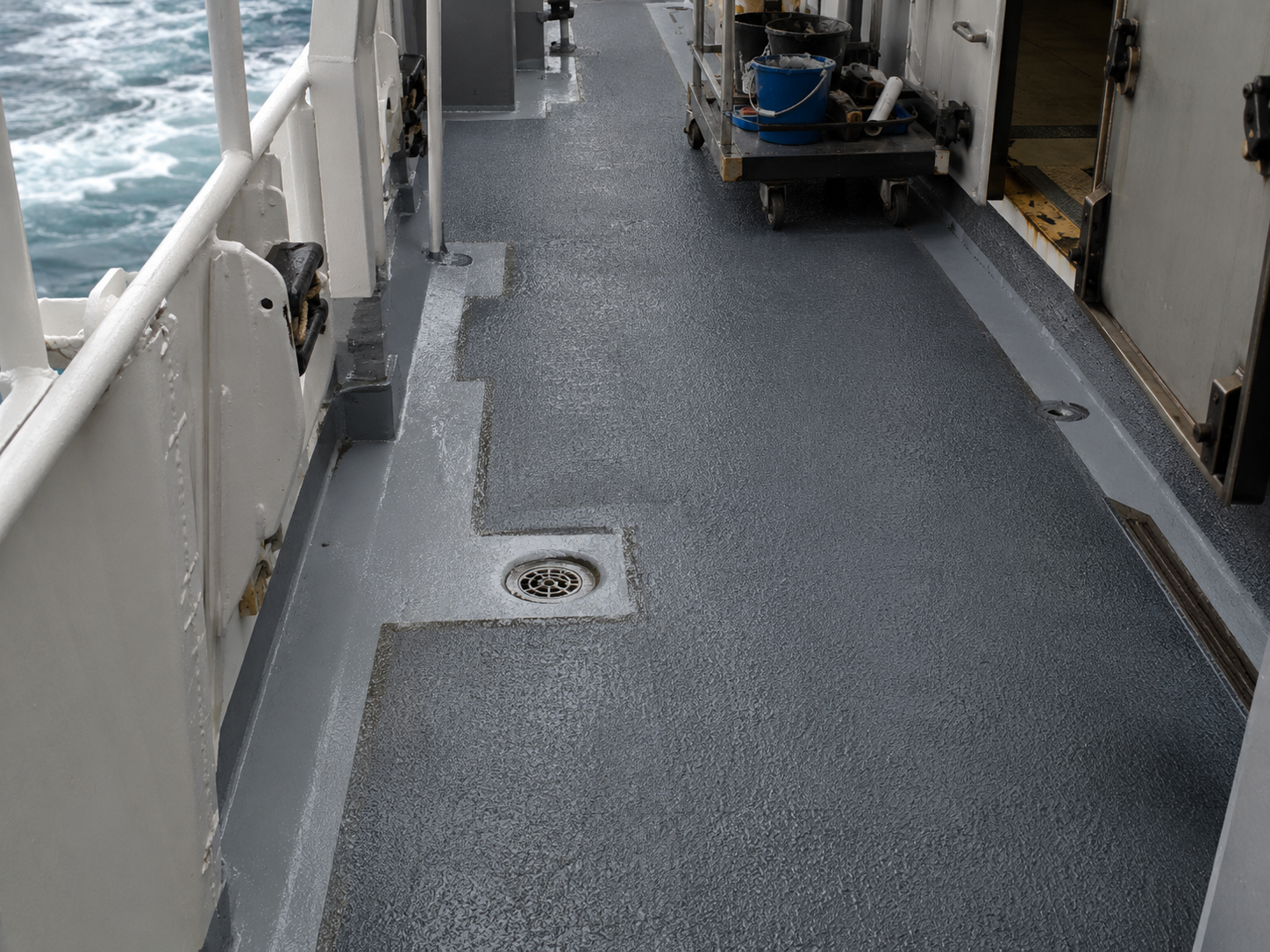
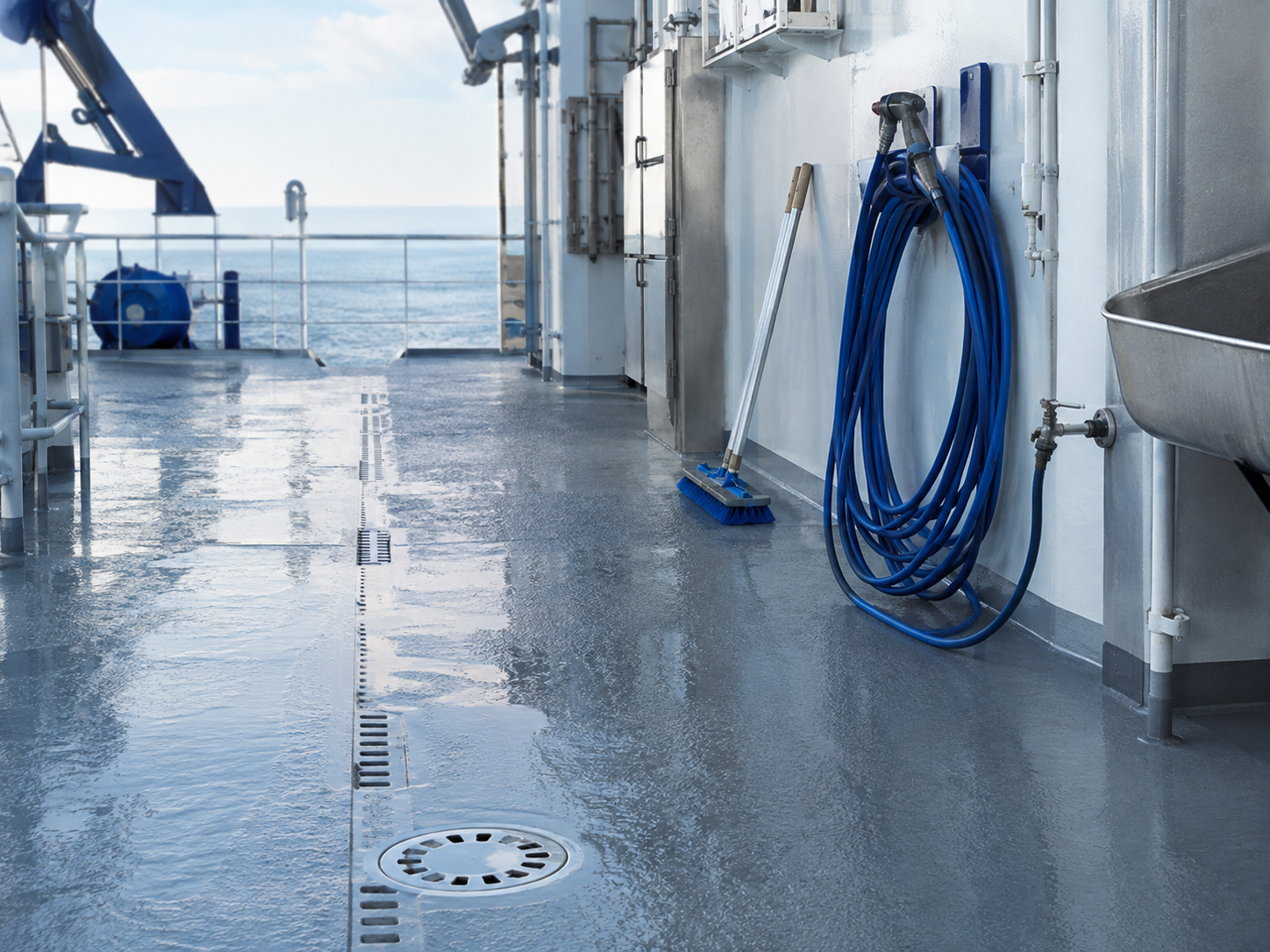
Wet and service areas
Identify drains, wash-down areas and the cleaning products used by the crew so the final layer is selected with its operating environment in view.
SEC // 02
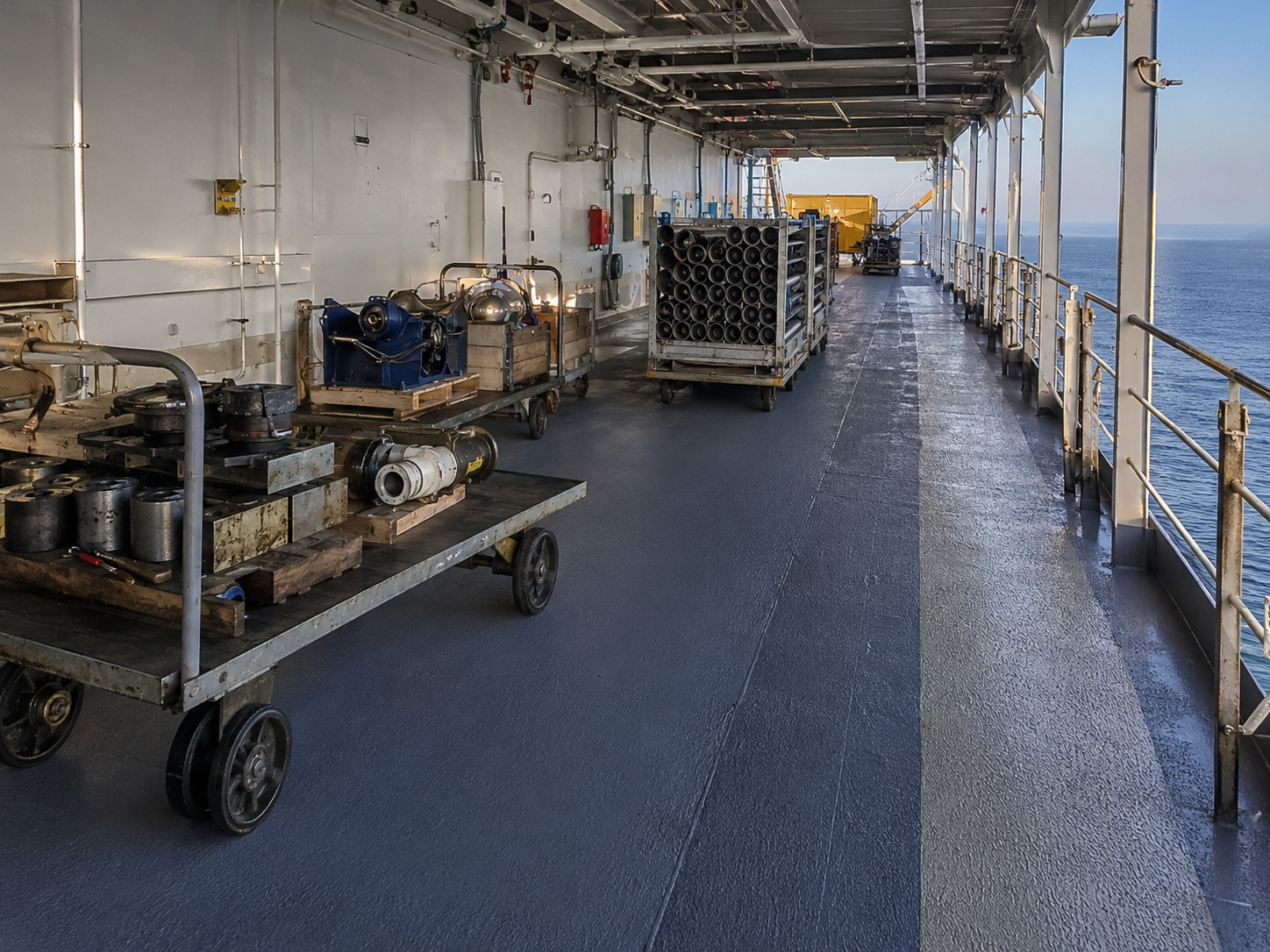
Traffic and equipment
Describe carts, pallets, wheeled loads and access routes; these details influence thickness, protection and repair planning.
SEC // 03
Handover documents
Keep the approved layer description, batch identification and installation record with the vessel project file.
Request a custom document review when the finish or cleaning regime changes.Compare Yibo primary deck covering models
Regulatory & Document Baseline
The values below are the supplied catalog and technical-sheet baseline for the four ordinary primary-covering models. Validate the current technical sheet, certificate scope and project-specific layer build-up prior to purchase. Use the primary-covering scope in 46 CFR 164.106 as a regulatory checkpoint, not as a substitute for the current Yibo model sheet or vessel-specific authority review.
Risk Matrix & Verification
Yibo Marine’s matrix supports procurement and class review because a certificate reference, a density row and a strength row answer different questions about risk. Confirm against the current document pack rather than treating one number as the whole acceptance decision.
Supplied model baseline; values are maximum or minimum as shown in the technical material.
| Model | Density | Strength baseline | Organic content and package | Document reference |
|---|---|---|---|---|
| YB-1 | ≤ 1300 kg/m³ | Breaking ≥ 3 MPa; compressive ≥ 8 MPa | ≤ 10%; 39 kg/set | DNV.GL and CCS references supplied |
| YB-3 | ≤ 1000 kg/m³ | Breaking ≥ 3 MPa; compressive ≥ 8 MPa | ≤ 10%; 38 kg/set | DNV.GL, CCS and NK references supplied |
| YB-4 | ≤ 800 kg/m³ | Breaking ≥ 3 MPa; compressive: confirm current sheet | ≤ 10%; 19 kg/set | DNV.GL and CCS references supplied |
| YB-7 | ≤ 2100 kg/m³ | Breaking ≥ 5 MPa; compressive: confirm current sheet | Organic: confirm current sheet; 50 kg/set | CCS reference supplied |
| YB-4 | Density cross-check: ≤ 800 kg/m³ | Breaking cross-check: ≥ 3 MPa | Package cross-check: 19 kg/set | Reconfirm current technical sheet |
| YB-7 | Density cross-check: ≤ 2100 kg/m³ | Compressive cross-check: ≥ 15 MPa | Package cross-check: 50 kg/set | Reconfirm current technical sheet |
When weight is the priority
Start with YB-4 or YB-3 as candidates, then confirm against the required strength, layer thickness and tested assembly instead of treating low density as approval.
When a denser baseline helps
YB-1 and YB-7 provide a different density and strength baseline for spaces where the project brief calls for it.
When the sheet is incomplete
Pause the model decision and request the current technical sheet; an unresolved value is a review item, not a safe assumption.
Wrong material choice costs you rework; a lighter product is not a substitute for a tested assembly, and primary and self-leveling systems are not interchangeable.
Receive a project-specific supply review and quotation
Pricing is based on the selected model, deck area, layer build-up, substrate preparation, packaging and delivery destination. A Yibo Marine quotation follows once the vessel deck drawings and documentation requirements are confirmed.
Requirements Checklist
- Send the deck plan, vessel type and project stage.
- List the flag, classification society and acceptance route.
- Identify substrate, primer, adhesive, thickness and final finish.
- Request the current technical-sheet and certificate pack.
Mechanical and fire fit
A model that is lighter is not automatically acceptable if the mechanical, fire and tested-assembly scope differs.
Layer-change control
Changing a primer, adhesive, thickness, substrate or final finish can change the approved stack.
Current document pack
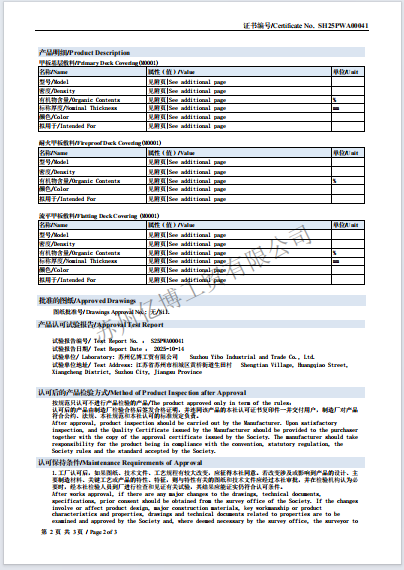
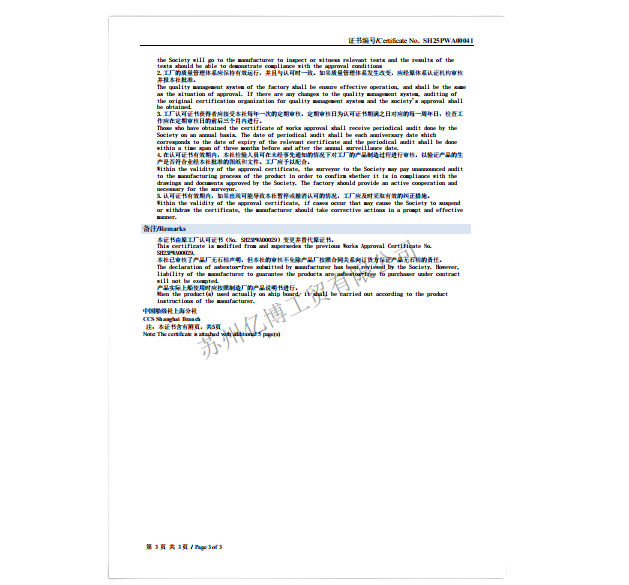
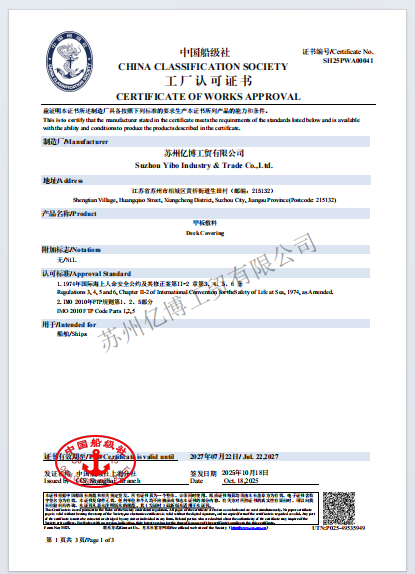
Buyers need a current certificate/technical-sheet pack rather than a generic “SOLAS approved” label.
Quality records that support a controlled handover
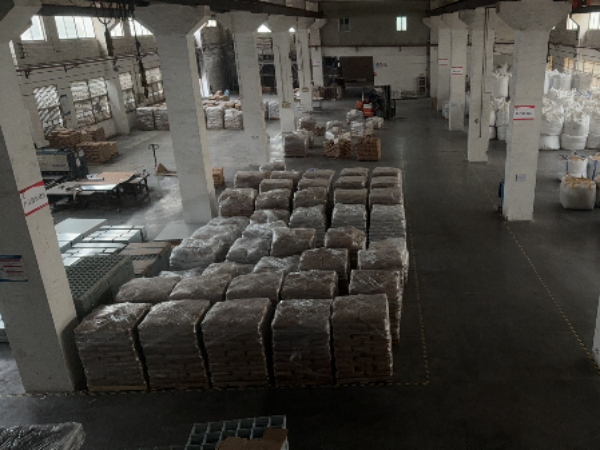
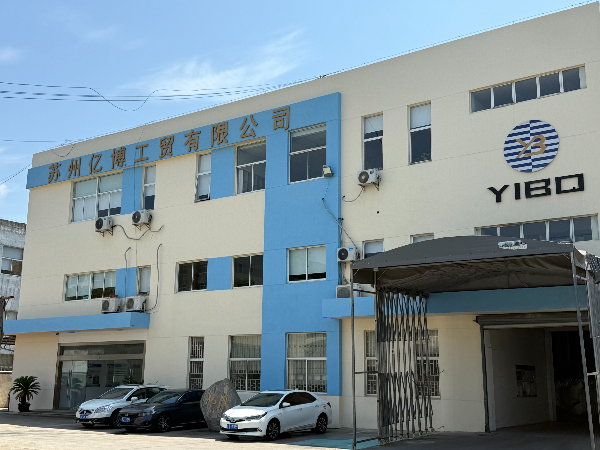
Suzhou Yibo Industry & Trade Co., Ltd was founded in 2001 in Suzhou, China, and the supplied company brief describes a facility of more than 6,000 m² with ISO 9001:2015 quality-management certification. Its company brief also lists marine primary coverings, self-leveling coverings, damping coatings, floating floors, polyurethane leveling coverings and imitation-teak floors in the wider range.
Inspection Point
Certificate references
Supplied records identify MEDB0000124 for YB-1, MEDB0000125 for YB-3 and MEDB000014B for YB-4, issued 2021-09-06.
Status Check
Renewal checkpoint
The three supplied Module B records show 2026-09-05 expiry dates; verify renewal status and the exact project scope before acceptance.
Compliance
Production quality system
Supplied records identify MEDD00000CX Rev.11 as a DNV quality-system certificate with an expiry date of 2027-01-19.
Critical Notice
Acceptance boundary: “SOLAS compliant” is not a substitute for the vessel’s tested assembly and authority review. The page uses the regulatory scope in 46 CFR 164.106 and the United States Coast Guard structural fire-protection guidance to keep primary-covering, A-60 assembly and aluminum decisions distinct.
Process & Documentation
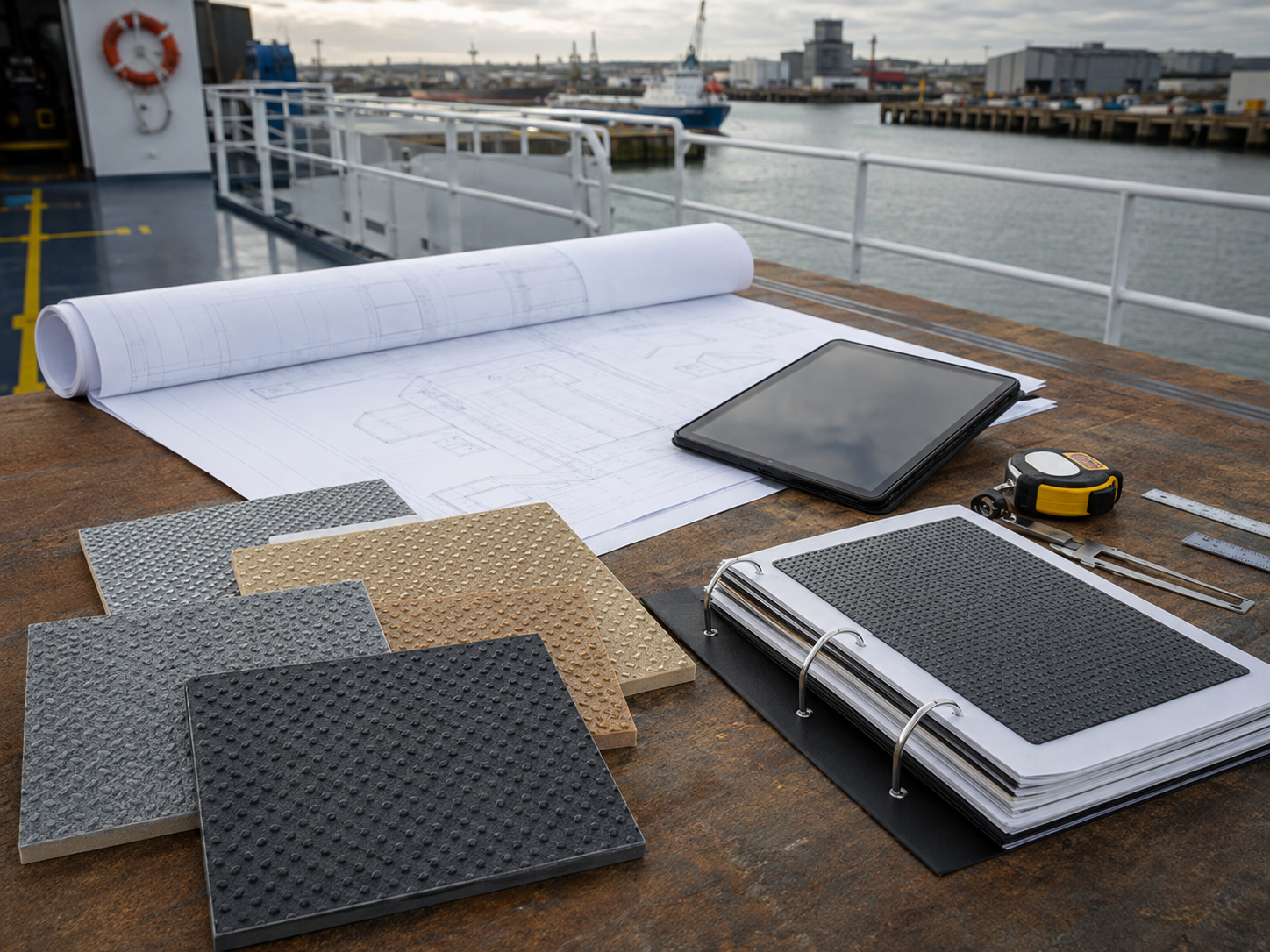
How we move from drawing review to documented supply
A clear input list reduces rework between the shipyard, installer, owner and surveyor. That same verification checklist can support model selection, quotation and handover, and you can request a custom document review through the technical CTA.
-
STEP // 01
Receive the brief.
Record vessel, space, deck substrate, area and project stage.
-
STEP // 02
Identify the acceptance route.
Document flag, class, fire boundary and language requirement.
-
STEP // 03
Confirm the layer stack.
Identify primer, adhesive, thickness, joints and final finish.
-
STEP // 04
Contrast models.
Verify density, strength, package and current technical-sheet data.
-
STEP // 05
Draft the document pack.
Correlate certificate scope, batch records and installation instructions.
-
STEP // 06
Handover for installation.
Retain the approved build-up and traceability record with the project.
Marine flooring experience with a documented project lens
The supplied project materials list relationships with Guangzhou Shipyard International, CSSC Huangpu Wenchong, Jiangsu New Yangzi, Dalian Shipbuilding Industry and Shanghai Waigaoqiao Shipbuilding. These names are shown as company-provided portfolio context; request the relevant model, scope and document record for your own vessel.
“The right model begins with the deck build-up and the acceptance route, then moves to the bag size.”
Project Reference
FPSO H1498-1500
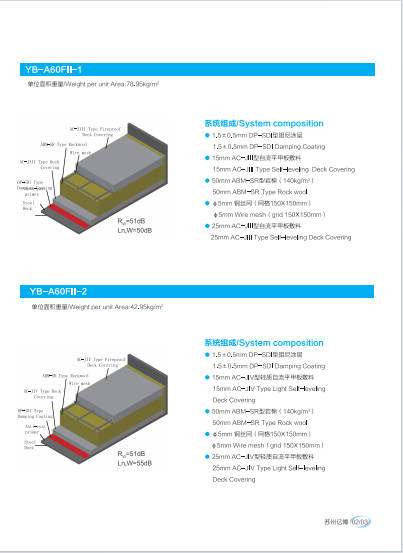
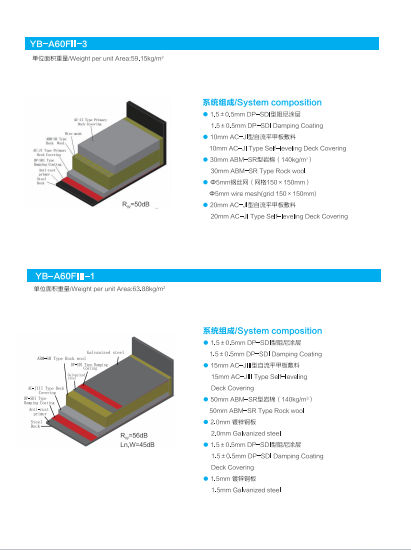
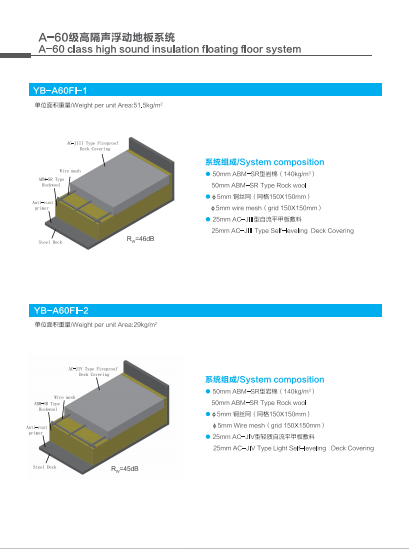
The supplied catalog lists model YB-A60FIII-1 + DP-SDI + AC-JI for an FPSO project. This is a floating-floor assembly reference, not a YB-1, YB-3, YB-4 or YB-7 primary-covering claim.
Project Reference
ARCTIC LNG 2 PROJECT
The supplied catalog lists YB-Epoxy Floor E60 + YB-S22 for this project. It is retained as a separate epoxy/polyurethane portfolio reference, not as primary-covering proof.
Action Required
Document-led follow-up
Ask for the project-specific model, certificate scope, batch record and installation details before using any portfolio example in a new specification.
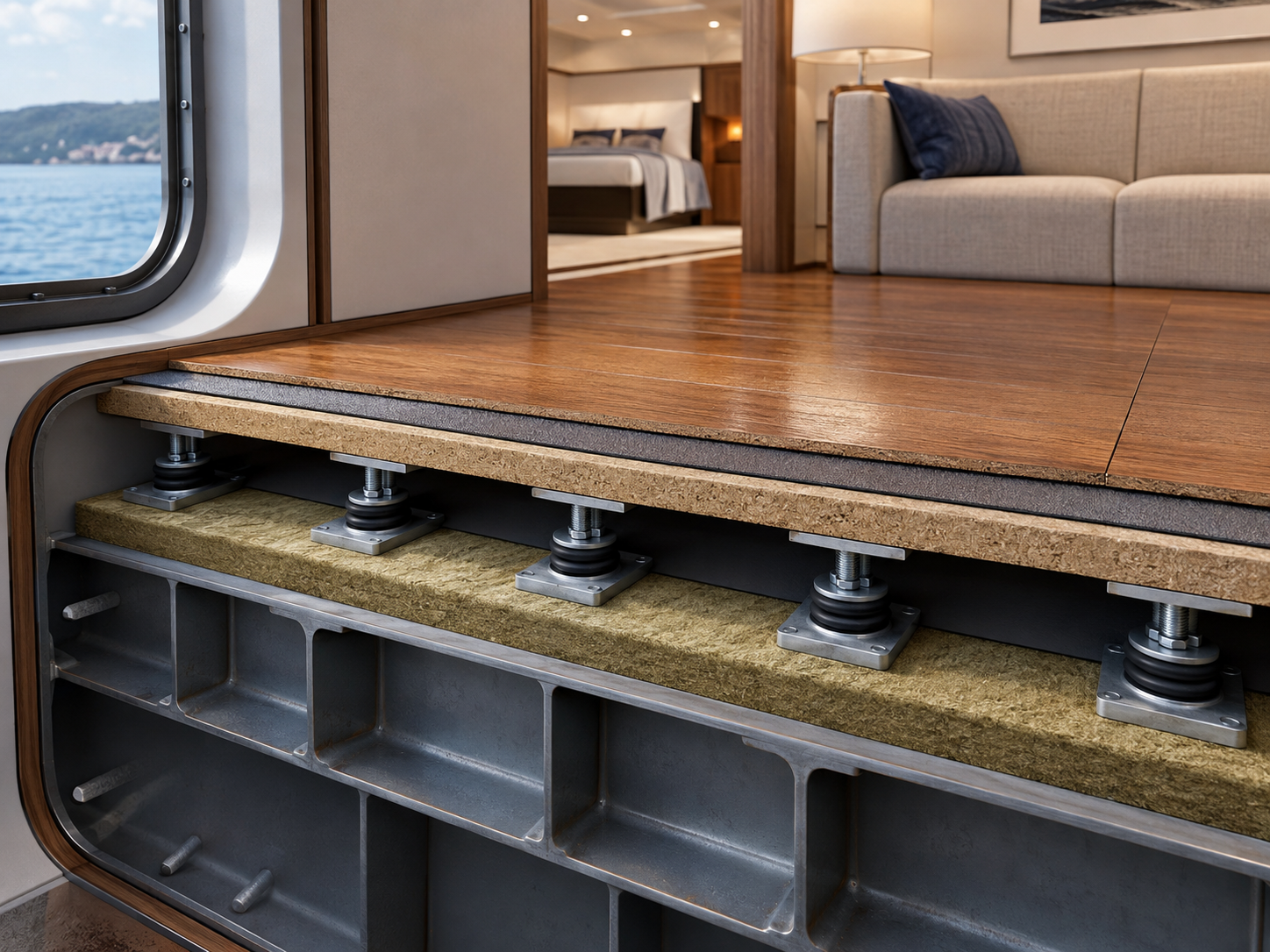
When another deck solution fits better
Primary deck covering is not the answer for every deck build. Route the brief to the system that matches the required acoustic, leveling, fire-assembly or finish outcome.
The right call is to route by tested scope, and what buyers get wrong is treating every deck finish as the same product decision.
01
Self-leveling build-up
Choose a self-leveling deck covering when flow, leveling and a defined finish layer are central to the specification. Review the separate self-leveling deck covering system path; the two systems are not interchangeable.
02
Floating or acoustic floor
Use a floating-floor solution when airborne or impact sound, resilient supports and a complete floor assembly drive the brief.
03
A-60 or special fire assembly
For an A-60 boundary, evaluate the full tested assembly rather than relabeling a primary covering as an A-60 deck system.
Primary Deck Covering FAQs
questions to settle before the technical review
What is a primary deck covering?
A prepared deck-covering layer beneath the specified marine finish.
Which Yibo models are on this page?
YB-1, YB-3, YB-4 and YB-7 form the ordinary primary-covering range shown here. Self-leveling, floating and polyurethane systems are handled separately.
Can I choose the lightest model automatically?
No. Compare density with strength, layer thickness, space use and the tested assembly required by the vessel authority.
Can a primary covering be called A-60?
Not on product name alone. A-60 is a tested deck-assembly scope, so the covering, supporting construction and finished surface must be matched to the approved build-up.
What must a shipyard send for a quotation?
Send the deck drawing, substrate, area, vessel and space, flag, class, primer, adhesive, thickness, final finish and document requirements.
Does an aluminum deck change the review?
Yes. Aluminum construction requires the tested assembly and floor finish to be reviewed together; the substrate cannot be treated as a simple material swap.
Are the listed certificates current?
Supplied YB-1, YB-3 and YB-4 Module B records show 2026-09-05 expiry dates. Request the current certificate pack and verify renewal status before acceptance.
What does the model matrix help with?
It gives engineering and procurement one place to compare density, strength, organic-content limit, package weight and document references before the detailed review.
Can Yibo supply other marine floor systems?
Yes. Yibo’s wider range covers self-leveling coverings, damping coatings, floating floors, polyurethane leveling coverings and imitation-teak floors; each follows its own layer, finish and document review, so route that brief separately before a model is selected.
How do I request the current technical sheet?
Use the technical-review request and include the vessel and layer details. Our team can then route the request to the relevant model and document scope.
![Marine PU Floor: Selection & Installation [Guide]](https://yibomarine.com/wp-content/uploads/2026/09/marine-pu-floor-blog-featured-150x150.png)